General, quoting & support.
Add: Building E, No.58, Nanchang Road, Xixiang , Baoan District Shenzhen City, Guangdong, China
Tel : 0755-27348887
Fax : 0755-27349876
E-mail : svc@pcbastore.com

Exploring Different Types of PCBs: Materials & Applications
PCBA Store / 2026-05-14
Contents [hide]
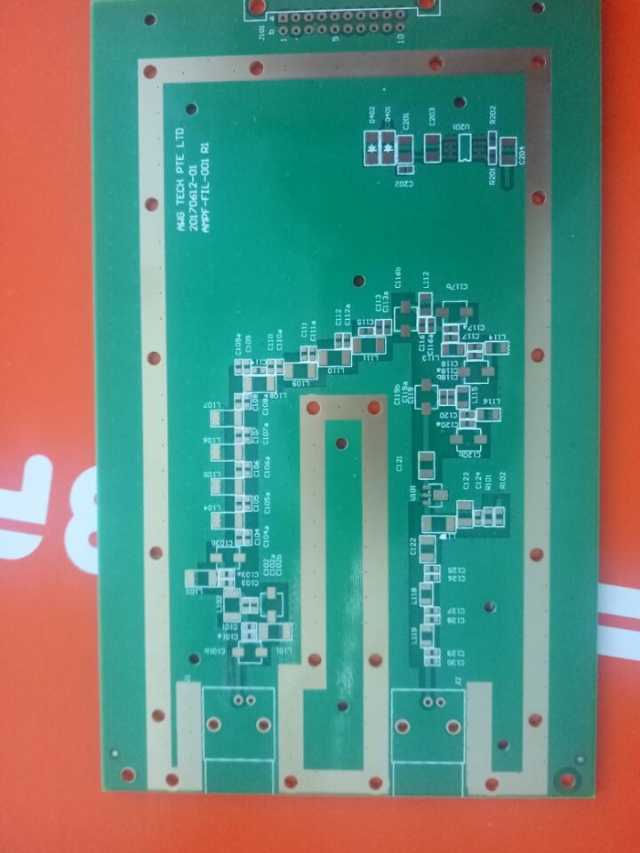
Professional Overview of PCB Types and Materials
At PCBA Store, we understand that printed circuit boards are the backbone of modern electronics. From consumer gadgets to medical devices and industrial systems, PCBs deliver electrical connections that make designs real. We’re proud to serve global customers with PCB manufacturing and assembly China solutions that cover everything from prototype PCB assembly to full-scale production in multiple materials and formats.
This guide breaks down key PCB types — rigid, flexible, and multilayer — along with material choices and where they fit best in real-world applications. We’ll highlight opportunities in industries like medical (PCB medical), LED lighting (PCB for LED lights), and advanced electronics, and show how you can get an efficient flex PCB online quote or flex PCB quote easily for your project.
What Is a PCB and Why Material Matters
A printed circuit board (PCB) is a computer component utilised to connect together and support components such as semiconductors. PCBs are made as flat soft layers of material which are printed with a circuit of copper wires on one or more sides and then embedded in a solid material, called the PCB base material, to create a mechanical support for the board and to provide a rigid structure. The PCB material and its construction affect product lifetime, production cost, signal integrity and environmental resistance. There are a wide variety of PCB base materials that can be utilised from standard cost-effective FR-4 materials to more complex flex circuits made of polyimide material and for high frequency applications dedicated signal transmission laminates.
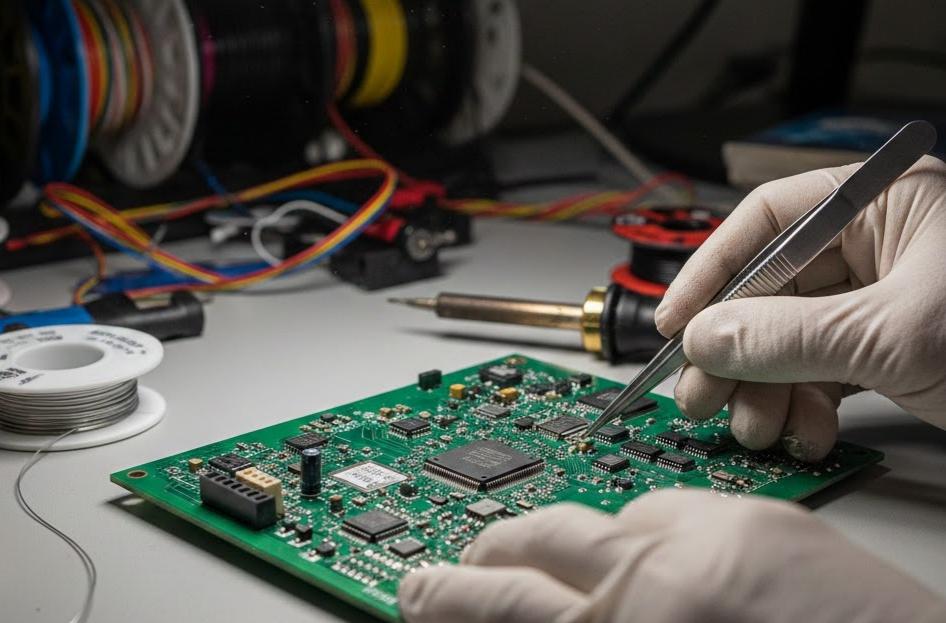
Common PCB Materials
Material | Typical Uses | Key Characteristics |
FR-4 | Standard rigid PCBs | Balanced cost & performance |
Polyimide (PI) | Flexible PCBs | High temperature & excellent flexibility |
PET Film | Low-cost flex applications | Good moisture resistance |
PTFE (Teflon) | High-frequency RF boards | Excellent dielectric properties |
Metal Core (Aluminum/Copper) | LED lighting, power boards | High thermal management |
Each material serves different designs. For example, flexible circuit board material choices are critical when a PCB must bend or twist without failure, such as in wearables or compact instruments.
PCB Types: Rigid, Flexible, and Rigid-Flex
Rigid PCBs
Rigid PCBs use solid substrates like FR-4 or high-frequency laminates. This type is the most common due to durability and cost efficiency. They provide stable mechanical support and a predictable signal environment — ideal for consumer electronics, industrial controls, and PCB assembly prototype runs.
Advantages:
· Low cost and predictable performance
· Easy to design and manufacture
· Wide availability of materials
Typical applications: Motherboards, power supplies, consumer products, automotive systems.
Flexible PCBs (Flex PCBs)
Flexible PCBs are constructed with flexible substrates of polyimide (PI) material. They allow users to design flexible printed circuit boards which can be bent, twisted, or folded. They can be constructed entirely of flexible material, or contain both rigid and flexible material in the same PCB (rigid-flex).
Key Benefits of Flexible PCBs (“flex PCB materials” in design):
· Flexibility for dynamic use (wearables, foldable devices)
· High vibration resistance
· Lightweight, thin profile suitable for compact systems
Multilayer Flexible PCBs:
When design complexity increases, multilayer flex boards can connect multiple layers together using via to enable dense routing. These high layer count flex boards are still routable but require more cautious and thoughtful design to ensure reliable performance under stress.
Thinking about a design that will bend or fold? Get a quote for a flex PCB online to determine budget early on. Designing products such as hand held medical devices or small wearables that will flex and twist require flex PCBs.
Rigid-Flex PCBs
Rigid-flex PCBs feature rigid PCB sections bonded together with flexible PCB sections creating a single PCB that can be used for designs which require both rigidity and flexibility. Rigid-flex is typically used in high technology applications that require movements in the PCB. Aerospace and industrial automation applications represent the bulk of rigid-flex PCB usage due to their high-reliability requirements. Due to these factors, the use of rigid-flex over a standard PCB with separate connectors and cables provides an easier assembly solution and greater ruggedness.
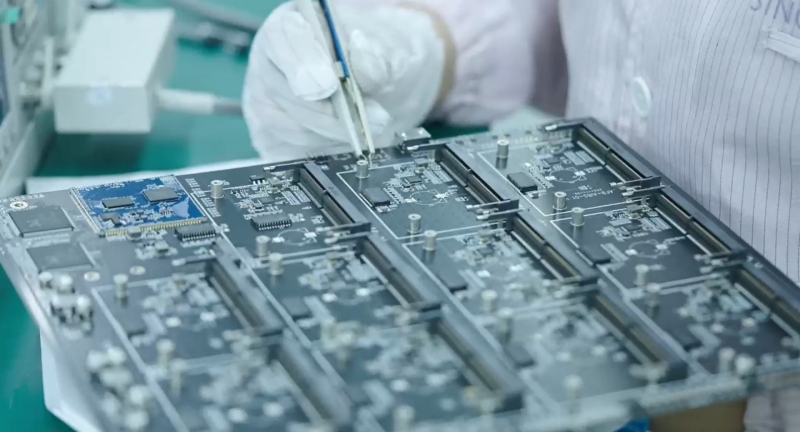
Multilayer PCBs: Advantages & Applications (multilayer PCB application)
Multilayer PCBs stack three or more copper layers separated by insulation. They are essential where complex routing and high-speed signals are required. Typical materials use FR-4, PTFE, or specialty laminates depending on signal fidelity needs.
Multilayer PCB advantages include:
· Higher signal routing density
· Improved electromagnetic compatibility (EMC)
· Strength and stability under thermal cycling
· Integration of power and ground planes
Common applications: High-density computing systems, communication equipment, industrial instrumentation.
Industry Focus: Medical and LED Lighting PCBs
Medical Electronics (PCB medical)
Because of the high demands for reliability, regulatory traceability, and close tolerances, many medical devices require more than just the usual level of quality from their printed circuit boards. This is particularly important for instruments, such as those used in the operating room, imaging equipment, and patient monitoring gear. Boards for these applications typically are fabricated with FR-4, rigid-flex, or flex substrate material depending on the specific requirements for flatness, flexibility, and motion. In addition, application specific inline visual inspection (AOI), X-ray, and functional testing typically are performed to assure proper device function.
Designing for medical applications also places strong emphasis on cleanliness, traceability, and consistency — typical requirements when working with a reputable China PCB assembly service.
LED Lighting PCBs
In order to efficiently dissipate heat, LED lighting systems require appropriate thermal management. Metal core PCBs, often incorporating aluminium into the core, provide an efficient method for thermal dissipation, helping to prolong the life of LEDs and maintain lumen. When designing such PCBs, consideration must be given to thermal properties, the thickness of copper used, as well as the choice of substrate. If these criteria are not carefully chosen, they may result in a PCB that leads to early failure of the LED.
Material Selection Guidance
Choosing the right PCB base material depends on:
· Electrical performance (signal speed, impedance control)
· Thermal demands (heat dissipation)
· Mechanical needs (rigidity vs flexibility)
· Environment (temperature, moisture, vibration)
Our engineering team helps optimize material choice while balancing cost and manufacturability.
PCB Manufacturing & Assembly Services: Your Path to Realization
We offer full printed circuit board solutions — from design review through PCB board assembly, SMT and through-hole processes, to final testing and delivery. Our China PCB assembly factory supports small prototype runs to large volumes with online tools for rapid quoting and order tracking.
Our capabilities include cutting-edge HDI, multilayer and flex fabrication, and high-yield turnkey PCB assembly with rigorous inspection standards. You can quickly obtain both a PCB quote and an assembly quote using our instant systems, reducing cycle time from concept to delivery.
Take the Next Step with Our PCB Solutions
Whether you’re validating a new design with prototype PCBA or planning production with PCB manufacturing and assembly in China, PCBA Store provides fast turnaround, reliable quality, and dedicated support. Upload your files now for an instant quote and see how our expertise can streamline your PCB project from concept to reality!
FAQ
How do I get an instant quote for my PCB or PCBA project?
Do you provide a flex PCB online quote system?
Absolutely. You can upload your Gerber files and parameters through our online quoting system to get accurate pricing instantly.
What information do I need for an online PCB assembly quote?
Typically, you’ll need PCB design files, BOM, desired quantities, and assembly preferences (SMT/THT). Submitting complete data speeds up the quote process.
What industries benefit most from specialized PCB types?
Are medical PCBs different from consumer PCBs?
Yes. PCB medical solutions require higher reliability, testing standards, and often strict regulatory compliance compared to general consumer electronics.
Can I order PCBs for LED lighting systems?
Yes. Boards like metal core types are ideal for LEDs because of their superior thermal performance (“PCB for LED lights”). We can quote and manufacture these based on your design.
What support comes after placing an order?
Do you offer after-sales tracking and quality guarantees?
Yes — our tools allow online tracking of fabrication and assembly, and quality guarantees help ensure deliveries and PCB performance meet expectations.
You Might Like:
Previous article:Trends in China PCB Assembly Industry



