General, quoting & support.
Add: Building E, No.58, Nanchang Road, Xixiang , Baoan District Shenzhen City, Guangdong, China
Tel : 0755-27348887
Fax : 0755-27349876
E-mail : svc@pcbastore.com
Industrial Control PCB Assembly RFQs: Key Differences
PCBA Store / 2026-10-13
Contents [hide]
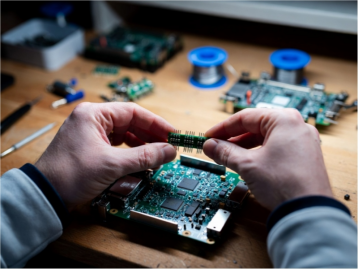
A quote for a controller board and a quote for a lighting driver may both say “assembly and test.” That wording hides quite different work. Before you compare the totals, you need to know what each board is expected to do on the test bench. This is where an industrial control PCB assembly RFQ becomes useful: it connects the board's job to the work included in the price.
Three Board Roles Behind an Industrial RFQ
The board's job is the useful distinction. With a controller, we're interested in what enters an interface and what response comes back. With a lighting driver, the load becomes central to the test. An automation board may need a sequence of inputs to reveal its behavior. Your design can combine these roles; calling it a controller won't remove its lighting output from the acceptance work.
"Functional test included" is an attractive line in a quotation. What does it buy you? We'd look for the connectors exercised, the load attached and the firmware version used, not just the words themselves. Until you can compare that work, the lower total may represent a smaller test rather than a better price.
Board Role | Detail That Changes the Quote | Useful Acceptance Evidence |
Controller | Interfaces and output loads | Response at the specified connector pins |
Lighting driver | LED load and dimming method | Output current under agreed conditions |
Automation board | Sequence and fault behavior | Recorded input, response, and reset results |
Our industrial control PCB assembly services cover surface-mount, through-hole, and mixed assembly at PCBA Store. A shared assembly route doesn't mean these boards share a test procedure. For quotation purposes, the board role explains why one build needs a load fixture while another needs a communication interface.
Controller Boards: The Interface Is Part of the Product
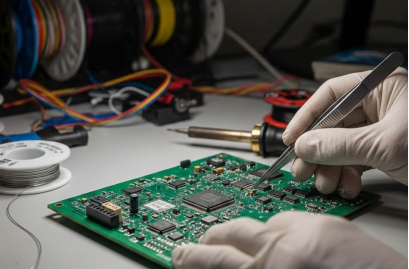
A boot screen can leave an important gap. Suppose your controller starts through USB on the bench, but uses another connector inside the machine. You have seen the processor start; you haven't seen that installed interface communicate. We'd keep that distinction visible in an industrial controller PCB assembly quote by naming the connections reached during production testing.
Connector Fit and Test Access
Connector fit reaches beyond the footprint. You might have a correctly fitted part whose mating plug collides with an enclosure wall. Show us the cable's approach as well as the connector orientation, so the assembly review has that context. Test access deserves the same treatment: a fixture cannot probe a pin you have left inaccessible.
Firmware and Release Conditions
Programming needs its own owner. If your team supplies firmware, identify the version and how the assembler should verify it after loading. A successful download isn't necessarily a successful application test. The board may still need a sensor input, an output load, or a communication response before it can be released.
For the controller portion of an RFQ, a short set of explicit responsibilities is more useful than the instruction “fully tested”:
· List the connector pins that need a measured response.
· Name the firmware revision and who supplies the programming files.
· Supply the limits that turn a reading into a pass or failure.
· Ask for a separate fixture price and a per-board test price.
A firmware update can reopen the test discussion. Perhaps your new release waits for a sensor response that the old fixture never supplied. We need that change brought back into the procedure, even if the PCB layout hasn't moved. Record the software revision beside the test revision so you can identify what the quoted work covered.
Lighting Drivers: A Powered Board Is Only the Beginning
Output current is the question a driver test must answer. Lighting a small indicator on the board won't answer it. Tell us the intended LED load and the conditions under which you need a current reading. If your product sends a dimming command through a separate connection, we'd also need that connection represented in the fixture.
Temperature needs a test arrangement, not just a number. A driver that sheds heat through its mounting surface presents a different bench problem from a freely supported board. Include the mounting detail when requesting the test, and name the measurement location. We'd use the acceptance limit from your design; we can't establish it from mask color or board size.
The dimming check needs a measurable result. "Dimming works" invites an operator to look at the light and make a judgment. Instead, you can name a command setting and the response to record. Decide whether a single point is enough or several points matter. That choice changes the procedure, and it should be visible when you compare quotations.
Our industrial controller PCB assembly capabilities include functional testing to your procedures. At PCBA Store, that also gives us a basis for discussing the driver portion of a build. Bring the required load and pass limits into the quotation review, with fixture preparation shown separately if it belongs to the first order.
Automation Boards: Follow the Machine Sequence
Sequence gives an industrial automation PCB test its meaning. Consider a sensor input that should switch an output, followed by a reset that should release it. We would want both responses checked, including the state left after reset. A "power on: pass" entry stops before either event and would leave that acceptance question open.
The whole machine doesn't have to accompany every board test. You can approve a fixture that represents the required inputs and loads, with a written boundary around what the result covers. We'd make that boundary part of the discussion with your engineers. Machine safety approval remains a separate question; a board fixture can't settle it for you.
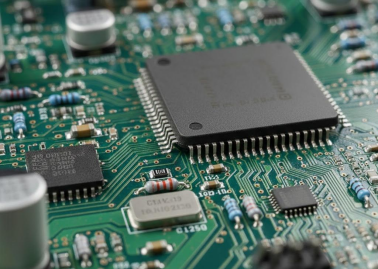
Inspection contributes another kind of evidence. We can use AOI for visible placement and soldering checks, and X-ray to examine hidden joints on suitable packages. Those images won't show you the board reacting to a sensor command. In reviewing an industrial automation PCB production partner, ask where inspection ends and your powered test begins.
Reading the Price After the Scope Is Clear
Price comparison comes after those board questions. If a fixture is needed, an empty line against fixture preparation leaves you with work still to assign. Component purchasing needs an owner, too. Our turnkey, partial-turnkey and consigned assembly options at PCBA Store let you divide that work between your team and ours, then compare prices on the same supply basis.
Repeat pricing needs its own explanation. Once a fixture exists, you still pay for the work of using it, though its initial preparation needn't be treated as a fresh task on every identical order. Timing has a similar dependency: our assembly turnaround starts with the required parts and information ready. An outstanding firmware file belongs on your schedule as much as an outstanding component.
A Quote You Can Use for the Next Build
The RFQ should let your team say what a passed board has demonstrated. A controller's interface response differs from a driver's loaded output, and an automation sequence adds its own acceptance work. Put those distinctions beside the prices. You'll have a useful comparison now and a record to revisit when a revision changes the next build.
If test scope is holding up your RFQ, contact us with the intended board role and the checks still under discussion, so we can review the assembly work with your team.
FAQ
Can One RFQ Cover Several Industrial Boards?
Yes. Keep a separate scope for each board within it. Shared purchasing terms are useful, but a controller's interface checks shouldn't quietly become the test plan for a lighting driver.
Does a Controller Need Firmware Before Assembly?
Assembly and programming are separate activities. If programming or functional testing is included, agree when the correct firmware must arrive and how its revision will be identified on completed boards.
What Load Should a Lighting Driver Test Use?
We need the load arrangement approved by your design team. A fixture may represent it if you've agreed what that substitution covers. Leaving the output unloaded answers a different question from measuring the driver with its intended LEDs connected.
Does X-Ray Replace Functional Testing?
No. We use X-ray to examine physical details such as joints beneath a package. You need a powered procedure to see whether an input produces the required response. The package selection and your acceptance scope determine whether both belong in the build.
Why Can the First Batch Cost More per Board?
Initial setup can weigh heavily on a small lot. We'd ask you to compare the one-time preparation charges with the work charged for each board. That makes the repeat price easier to discuss, provided the design and test scope stay the same.
Previous article:From PCBA to Box Build: Defining an OEM RFQ



