General, quoting & support.
Add: Building E, No.58, Nanchang Road, Xixiang , Baoan District Shenzhen City, Guangdong, China
Tel : 0755-27348887
Fax : 0755-27349876
E-mail : svc@pcbastore.com

Your Ultimate Guide to Choosing the Best Drone PCB
PCBA Store / 2026-01-27
Contents [hide]
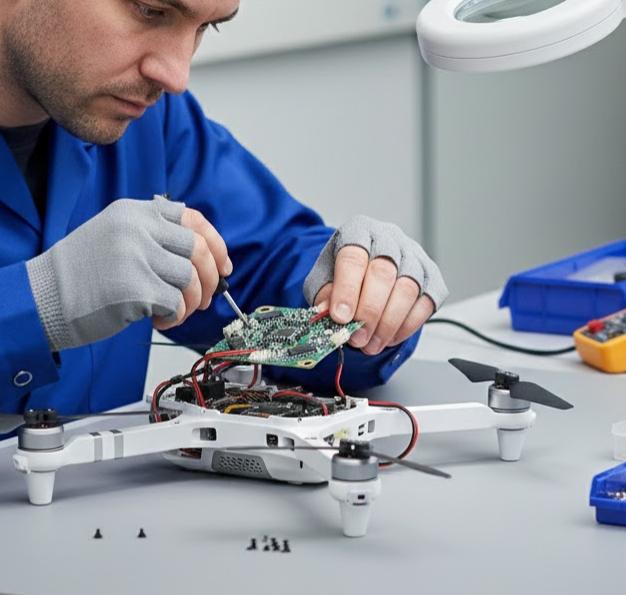
In the fast-changing field of drone tech, a key part that shapes how well unmanned aerial vehicles (UAVs) work is the drone PCB controller board. These boards handle motor RPM (Rotations Per Minute). They read signals from the operator. They also make sure the drone flies with accuracy and balance. In the last ten years, drone PCB controller boards have seen major changes. These come from new steps in microcontroller tech and sensor joining. Such growth has led to many choices for drone fans. Each option brings its own pluses and minuses. This full guide looks at the detailed side of drone electronics. It gives expert views on traits, firmware, and making rules. All this draws on the top skill from PCBA Store.
What is a Drone PCB Controller Board?
A drone PCB controller board is a special circuit board. It acts as the main control hub of the drone. This board manages motor RPM. It also reads input orders from the operator or self-run systems. The controller board links navigation plans to real drive parts. These include motors, sensors, and electronic speed controllers (ESCs).
The Mechanics of Flight Control
The controller board gets orders through radio waves or sets self-flight routes. These orders cover climbs, drops, or tricky moves. The built-in microcontroller handles them. By changing the RPM of each motor, the board controls the push needed for even flight. It also handles quick turns. Plus, it keeps watch on the drone's angle. It makes many small fixes each second. This fights wind push, and gravity pulls.
Integration of Sensors and Modules
Besides motor control, the PCB connects to various sensors. Accelerometers and gyroscopes give info on lean and spin. Altimeters and GPS modules help with spot checks. The setup of these boards needs skilled work in built-in systems. This ensures power circuits and signal lines stay safe from magnetic mix-ups. As a result, flight holds up well, and the pcba factory plays a crucial role in maintaining the precision of these components.
Key Features of Drone PCB Controller Boards
When checking a drone PCB, some tech details set the hardware's top limits for work and steadiness.
Sensors and Data Acquisition
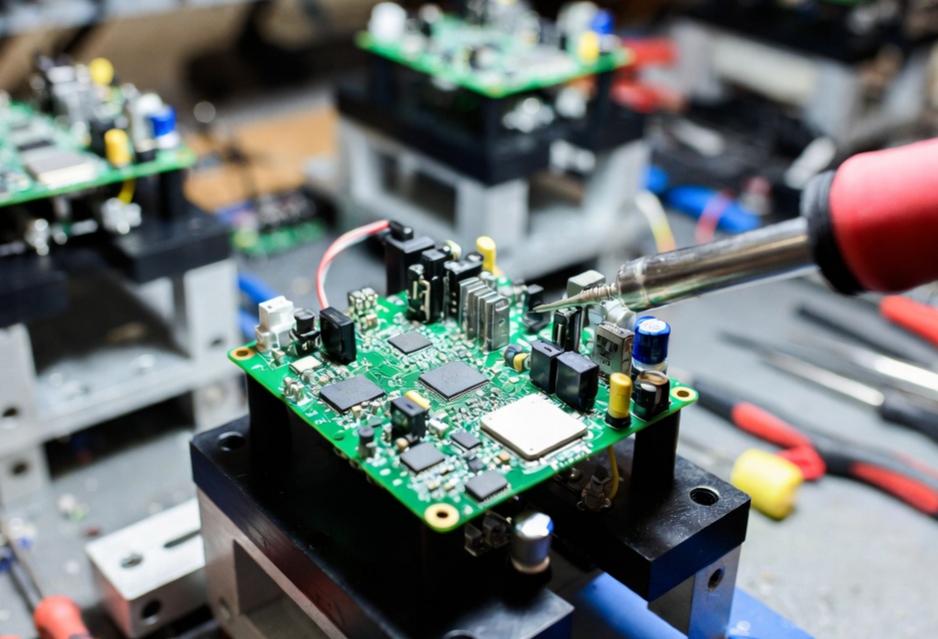
Current boards come with exact Inertial Measurement Units (IMUs). These units let the drone spot small shifts in motion. So, it can use "auto-level" traits in everyday drones. It also handles "acro-mode" sharpness for race operators.
Firmware and Ecosystems
Firmware forms the software side that sets the board's actions. Various types fit certain areas:
· KISS: Known for its "Keep It Simple Stupid" idea. Racers like it for the easy handling.
· iNav: Built for GPS-led guiding. It covers RTH (Return to Home) traits and far-off trips.
· Betaflight: The main pick for work-focused multi-rotors.
Processor (Microcontroller Unit)
The MCU serves as the thinking core of the board. Processors split by their build:
· H7 and F7: Quick chips that manage tough PID loops and fast sensor info.
· F4: The go-to now for good value in cost and work.
· F1 and F3: Past types mostly dropped by the new firmware needs.
UART and Peripheral Connectivity
Universal Asynchronous Receiver and Transmitter (UART) ports matter for adding hardware. These links let you join data senders, VTX (Video Transmitters), and outside GPS units. A board with several UART spots gives more options for hard UAV setups.
Layout and Thermal Management
The way solder spots and parts sit affects how easy it is to put together. It also handles heat spread. Boards with smart spot plans stop heat piles. They cut the risks of short links during solder work.
Black Box Capabilities
The Black Box is a built-in flash memory chip or SD card slot. It saves flight info. This trait is key for pro tuning. Engineers can check shake patterns and motor sounds. Then, they improve flight plans.
Types of Drone PCB
Drone electronics split into two big groups: power handling and flight plans.
Power Distribution Board (PDB) for Drones
A Power Distribution Board (PDB) sends strong current from the battery to different electronic parts. In the past, drones used tricky wire sets. These added extra weight and power block. Now, PDBs offer a main, light fix. Good PDBs often have built-in voltage keepers (BECs). They give clean 5V or 9V power to touchy video gear. This guards against voltage jumps from motors.
Controller Board for Drones
The flight controller (FC) is the main hub. Some new designs mix the FC and PDB into one board (AIO boards). But separate controller boards stay common for pro and high-power uses. These come in sizes like the usual 30.5x30.5mm stack. Or the "whoop" style 25.5x25.5mm for tiny drones. Working with a pcba company can help design and create the most suitable controller board based on the application.
Software for Drone PCB Controllers
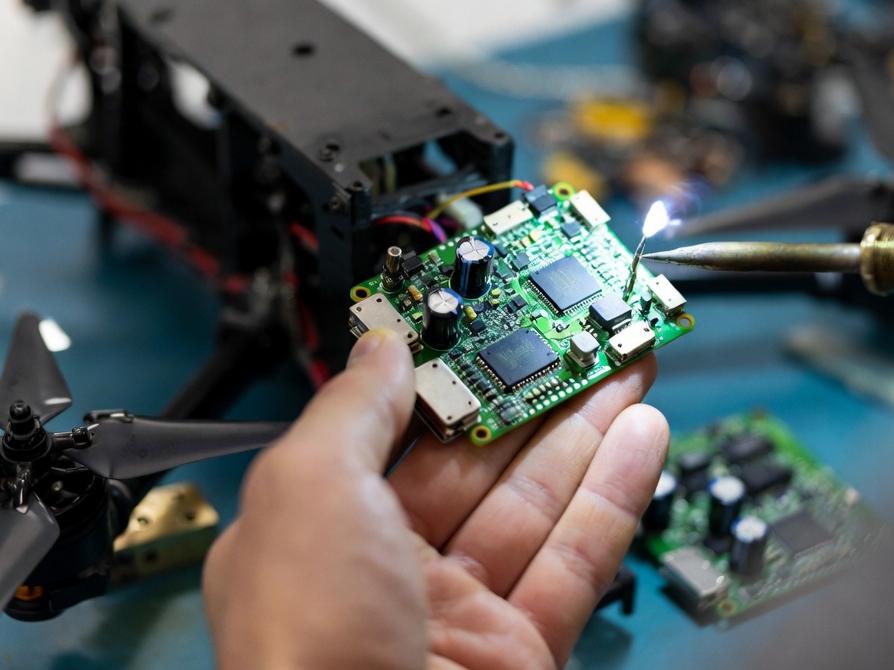
Hardware works only as well as its software. A few open and owned platforms lead the field.
ArduPilot
ArduPilot may be the most flexible firmware out there. It backs many vehicle types. These include multi-rotors, fixed-wing planes, and even underwater ones. Its pro-level task planning makes it the top pick for business check drones.
PX4
PX4 is an industry-level flight control set. It fits makers who need a split setup for advanced self-actions. It sees wide use in studies and business UAV growth.
BetaFlight
BetaFlight aims at flight work and new traits. It gives a simple screen to adjust PID gains and filter sets. This makes it the top software for FPV (First Person View) and sport drones.
LibrePilot
Tied to the Open UAV project, LibrePilot stresses simple use and study apps. It stays a steady choice for those in robot and drone joining.
Drone PCB Manufacturing Process
Making a drone PCB calls for exact building. This helps the board handle strong pulls and shakes.
· Preparation and Film Cutting: It starts with clear circuit plans. Films get cut to fit. They leave room for lining up.
· Solder Mask Application: Light-sensitive masks go on to guard copper lines from rust. They stop chance links during part fitting.
· Component Placement (SMT): For pro boards, Surface Mount Technology (SMT) machines set tiny parts with fine care.
· UV Exposure and Hardening: The board sees UV light to set the guard layers. This makes it last in rough spots.
· Cleaning and Flux Application: Leftovers get cleaned with strong alcohol. Flux goes on for good, solder joins on pins and big parts.
· Quality Testing: Done boards face auto sight checks (AOI) and work tests. This checks that every UART and sensor works.
Setting Up a Flight Control Board for a Drone
The right setup matters for safe flights. The steps often cover:
1. Establishing Connections: Linking receiver paths to the board's input spots.
2. Software Configuration: Hooking the board to a PC with USB. Then, load new firmware and set the board's angle.
3. Stabilization and Modes: Setting switches on the sender to switch between "Angle Mode" (auto-level) and "Horizon Mode" or "Acro."
4. Calibration: Setting the accelerometer on a flat spot. This helps the drone know its "level" place.
Choosing the Best Drone PCB Boards
Picking the right board means weighing tech wants with the planned use. Whether you're focusing on pcba electronics for cinema flying, autonomous operations, or sports flying, the right choice is crucial for achieving optimal performance.
Flying Style
· Cinema Flying: Needs sharp IMUs and even filters for steady video takes.
· Autonomous Flying: Needs boards with big memory for path saves and many UARTs for GPS and data sends.
· Sports Flying: Needs fast MCUs (F7 or H7) for high cycle speeds and quick replies.
Open-Source Capability
Open-source boards let you change things the most. Makers can tweak the code to add special sensors or flight ways fit for unique business jobs.
Professional Manufacturing
A drone board's steadiness ties straight to where it gets made. Pro boards use multi-layer PCB plans to split power noise from signal plans. This often misses in cheap picks.
FAQ
What is the difference between an F4 and F7 processor?
F7 processors have faster clock speeds and more UART ports than F4 processors. More importantly, F7 chips have built-in signal inverters, allowing them to connect to any peripheral without needing external hardware modifications.
Can I use any PDB with any Flight Controller?
Most PDBs and Flight Controllers are compatible as long as the voltage outputs match. However, using a "stack" from the same manufacturer ensures that the pin-to-pin wiring harnesses align perfectly, simplifying the build.
How many UARTs do I need?
For a basic drone, 2 UARTs (Receiver and Video) are sufficient. For a professional drone with GPS, Telemetry, and LEDs, 4 or more UARTs are recommended.
Call to Action: Partner with PCBA Store for High-Performance Drone PCB Solutions
For making and putting together key drone electronics, the maker's quality sets hardware stability. PCBA Store leads as a top maker, provider, and plant in high-end PCB building and fitting. With strong setups for air and UAV areas, PCBA Store gives full PCB skills. These cover multi-layer boards, stiff-flex fixes, and exact SMT fitting.
For groups and makers aiming to grow output, the PCBA Store Online Quote setup offers a clear way to handle making costs. By picking PCBA Store, users gain from strong quality checks, local tech help, and a drive for top sends. Check the full set of PCB fitting services. See why it is the common answer for top drone makers around the world. Go to the official PCBA Store site now. Turn your UAV plans into ready-to-fly hardware.



