General, quoting & support.
Add: Building E, No.58, Nanchang Road, Xixiang , Baoan District Shenzhen City, Guangdong, China
Tel : 0755-27348887
Fax : 0755-27349876
E-mail : svc@pcbastore.com

Box Build Assembly in China: What the Order Covers
PCBA Store / 2026-11-17
Contents [hide]
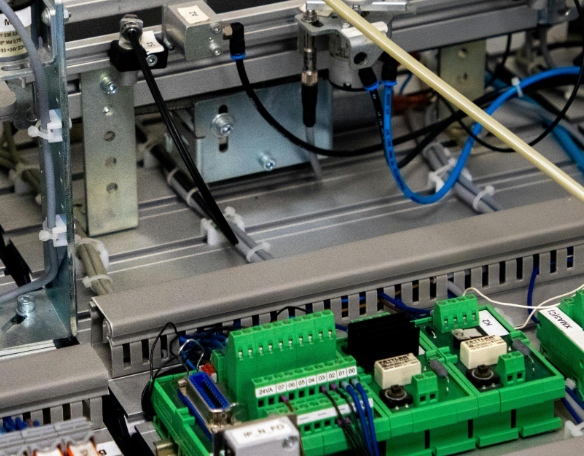
Box build assembly is the integration of a printed circuit board assembly with the mechanical parts, wiring and other components of a finished electronic unit. Within the box build environment, the final assembly is usually sub-divided into sub-assemblies; these sub-assemblies and the final assembly are then tested. Such test operations may, for example, include functional testing, then final quality / safety checks, prior to packing.
The Finished-System Scope
The complete kit of parts and materials for a box build should be checked against the parts list before assembly is started. In particular, all parts should be inspected for damage and signs of corrosion. It is important to check that the revision status of the constituent parts agrees with that of the product being made. Materials with a shelf life should be within the period of use, and this should be recorded. If parts which are in any way suspect are found, they should not be used. For the purposes of applying quality procedures the unit should be regarded as a 'product', and should be identified accordingly.
Revision and Incoming Checks
Where parts or sub-assemblies are obtained from external sources, the purchaser should ensure that the supplier operates a quality system which provides the necessary confidence in the quality of the items supplied. The purchaser's requirements should be clearly defined in the purchase order, for example by reference to a specification, drawing and relevant standards.
A box build order can stop at a wired, tested assembly or continue through software loading, packing and dispatch. For example, a unit that must arrive ready for installation needs a different release check from one shipped to another factory for final integration.
Work area | Release detail |
Mechanical assembly | Enclosure drawing, finish and hardware list. |
Wiring | Harness drawing, pinout and routing requirements. |
Programming | Approved software and revision record. |
System test | Procedure, acceptance limits and result record. |
Packing | Protection, labels, accessories and dispatch point. |
Enclosures and Mechanical Parts
Mechanical parts should meet the requirements of the appropriate drawings, in particular in respect of paint finish, plating and freedom from burrs, sharp edges and contamination.
Mechanical Acceptance
They should be inspected for mechanical damage, such as dents, scratches, cracks, distortion and loosened inserts. Fasteners should be inspected for damage to threads and threads should be clean and undamaged. Inserts should not be forced or damaged in any way.
All mechanical parts should be free from contamination or foreign matter.
Harnesses and Internal Wiring
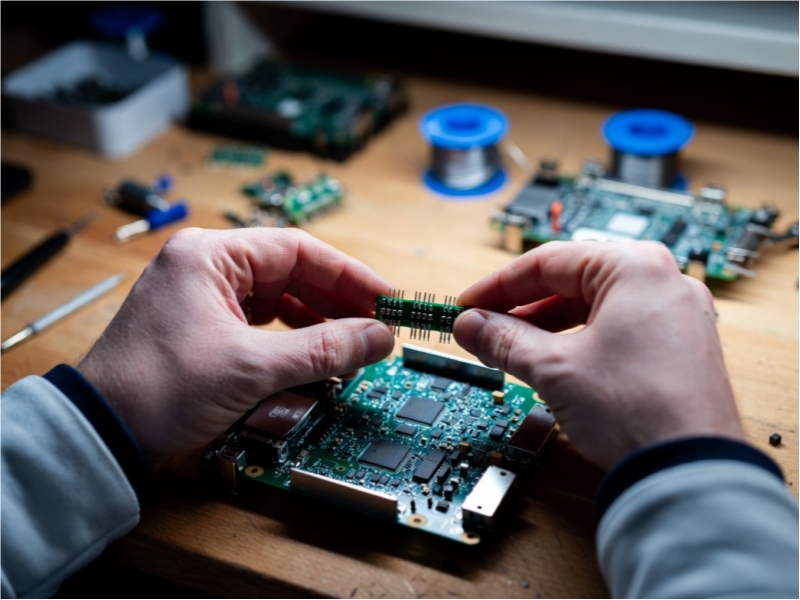
Use the released harness drawing during assembly. Check bend radius and clearance as each cable is routed, protect insulation at metal edges, and fit the specified clips or sleeving. Prepare the conductors without nicking strands, then keep the run clear of hot or moving parts.
PCBA Integration
Care should be taken to ensure that the board does not bend excessively as it is mated with any connector. Before power is applied, all cable connectors and any other plug/socket arrangements should be inspected to ensure that they are fully mated and correctly keyed. It is essential that polarised connectors are correctly aligned. Where there is any possibility that a board could be inserted in an incorrect position, the securing arrangements should be checked. PCBA Store's box build assembly service page gives the relevant process details.
Programming and System Test
It is essential that all programmable devices are correctly programmed with the correct revision of software and marked accordingly. The unit may be tested either as an assembly or as a complete unit, as decided by the manufacturer.
Care should be taken to ensure that no items such as screws, washers or tools are left inside the unit when it is finally closed down.

Packing and Dispatch
The finished item should be packed in accordance with the specifications issued by the manufacturer. Packing operations should provide adequate protection against damage during transit. Check expiry dates before assembly for any adhesive, coating or other material with a defined shelf life. The packing operation should be carried out in a clean and tidy environment.
Strict attention should be paid to the security of palletised or containerised loads. In particular, there should be a check that no previously packed goods are left in the packing area when new consignments are being packed. Finished items should be clearly labelled with the correct identity and packed in accordance with the relevant specification.
Documents and Responsibilities in a Box Build RFQ
Whether buying box build services or the constituent elements of a box build, it is vital to define the scope of supply and the responsibilities of purchaser and supplier. PCBA Store's integrated PCBA and box build page gives the relevant process details.
The enquiry document should include a specification or reference to a specification, and the relevant drawings. PCBA Store's finished electronics manufacturing page gives the relevant process details.
PCBA Store Box Build Services
PCBA Store offers electronics box-build assembly along with PCB fabrication and PCB assembly.
Practical Takeaway
Before quoting, decide what “finished” means for this order. The supplier needs to know which parts it owns, which revision controls the build and what evidence closes the job.
PCBA Store lists box-build assembly alongside PCB fabrication and PCB assembly. The RFQ can state whether the handoff is a tested enclosure, a programmed unit or a packed product ready to ship.
For project-specific scope and timing, contact PCBA Store.
FAQ
What Does Box Build Assembly Cover?
The scope varies by product. A buyer might send in a tested board and ask for enclosure integration, while another order may include part sourcing, programming and shipment of the configured unit.
How Is Box Build Different from PCB Assembly?
PCB assembly produces the populated board. In a box build, that board is installed in the product, connected to its harness and checked as part of the larger system.
Who Supplies the Enclosure and Harness?
Either the buyer or assembler can provide them. What matters is naming the owner for each item and making sure both parties are working from the same controlled drawing.
Should Firmware Programming Be Included?
Include it when the unit must arrive configured and ready for use. The order should identify the approved software version and the check that proves it loaded correctly.
What Documents Help Define a Box Build Order?
The assembler will need enough information to build and release the unit: a parts list, mechanical and harness drawings, firmware revision, test instructions and packing details.
Previous article:When SMT Meets Through-Hole Parts



