General, quoting & support.
Add: Building E, No.58, Nanchang Road, Xixiang , Baoan District Shenzhen City, Guangdong, China
Tel : 0755-27348887
Fax : 0755-27349876
E-mail : svc@pcbastore.com

How Low-Volume PCBA Production Is Organized
PCBA Store / 2026-11-11
Contents [hide]
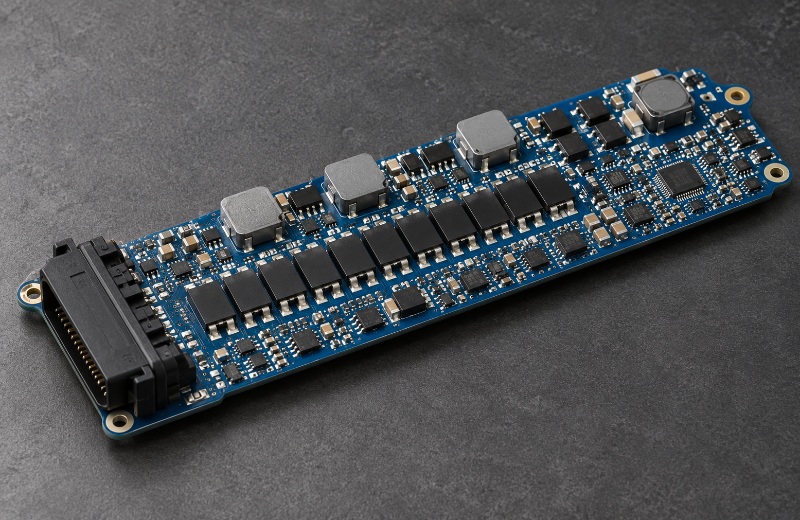
One board may settle a fit or firmware question. It still passes through data review, parts handling and inspection, so the route should reflect both the tiny batch and what the team plans to learn from it.
A One-Board Order Is a Scheduling Problem
A factory can panelize several small boards, run a flexible line or handle selected steps manually. The right choice depends on the board and batch; asking for “the automated route” by itself does not answer the cost question.
The first decision is what the unit must prove. Our low volume PCB assembly options at PCBA Store start from one piece, but an engineering sample and a pilot lot have different jobs. Set the quantity around that job before trying to optimize the unit price.
What Changes Between One Board and Fifty
At one piece, setup cost lands on a single unit. With fifty, some of that work is shared. Yet the arithmetic does not erase material shortages, inspection time or a line changeover.
Request prices at quantities you may actually order: perhaps one engineering unit, a pilot lot and the next planned build. One quote number cannot show how the economics change.
Finished Quantity and Purchased Quantity
One assembled board and one purchased component set are different quantities. Some parts arrive in packaging or minimum buys larger than the finished order needs. Ask what happens to the unused balance: return it, hold it, or charge it with this build? A no-MOQ assembly offer does not set the component supplier’s minimum.
Component packaging affects preparation even on a single board. At PCBA Store, we accept reels, cut tape, tubes, trays, and loose or bulk parts. You therefore have several ways to supply a prototype, but identify the packaging in advance. The same part number on cut tape and on a reel does not necessarily take the same handling work.
Panelization and Line Choice
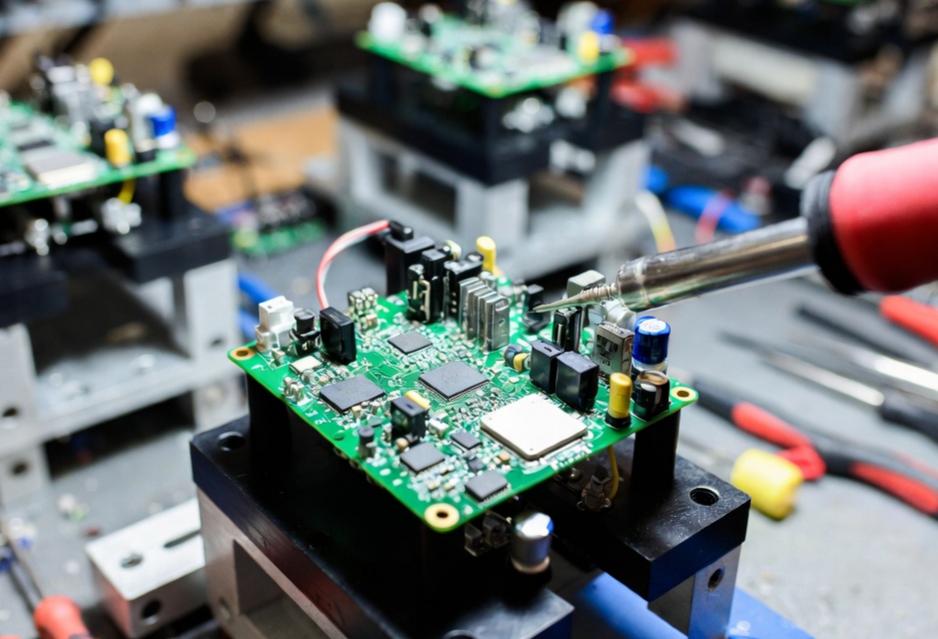
Some small outlines need panel rails and fiducials for machine handling. Then the team must solve the new problem: where can components sit, how will the panel separate, and could depanelization strain an edge connector?
Handling Size Is Not Finished Size
The finished outline and the handling outline are different drawings. A tiny board can sit in a larger panel or carrier during assembly and still fit its intended enclosure afterward. Keep both outlines in the review. An edge connector that fits the product may leave little room for panel separation.
Build Choice | Potential Benefit | Limit to Check |
Panelized small boards | A stable handling outline | Separation stress and edge clearance |
Automated placement | Repeatable placement after setup | Preparation effort at very low quantity |
Manual operations | Access to unusual or few joints | Work instructions and inspection |
A pilot after the prototype | More evidence of repeatability | A working sample is not volume qualification |
Manual and automated operations can coexist in a small build. A machine may place the SMT population while an operator handles a connector. Ask which steps change when quantity grows; “automatic” is not a complete description of how the prototype was made.
Inspection Scope on a Small Lot
The inspection plan should travel with the product revision. Define acceptance for the actual joints and functions, then decide which checks apply to each unit. Running a prototype on the same machine as a larger lot does not establish identical test coverage.
“Tested” needs a method and a pass condition. AOI can check visible placement features; X-ray addresses different hidden features; a functional test exercises the board using an agreed procedure. Choose the combination for the design instead of assuming a small quantity receives all available tests.
Keep a short build record with the sample. If the next unit behaves differently, the useful facts are:
· PCB and BOM revision used for that unit.
· Approved substitutions and any rework.
· Inspection results and the exact functional test performed.
Compare PCBA prototype inspection options with your test plan. At PCBA Store, functional testing follows your procedures; sending a board with no defined sequence or pass limits leaves that part of the job unresolved.

Parts Readiness Before Production Starts
One unresolved part can keep the whole job waiting. Before release, settle the manufacturer part number and any approved alternative. If stock availability drives a substitution, check footprint and orientation as well as the electrical requirements; an available part is not automatically an acceptable one.
The turnaround clock at PCBA Store starts when the parts and production data are ready. That includes PCB files, the BOM and placement information. Put sourcing ahead of that date in your schedule. Sending an inquiry on Monday does not necessarily put a board on the assembly line on Monday.
What the First Build Leaves for the Pilot
Bring-up findings need to reach the next release. Did the team change the drawing, substitute a part, or alter the test? Record the answer with the prototype. Otherwise the pilot may start from the old files and repeat an issue already solved on the bench.
Good: the single unit works. It still says little about lot variation or line capacity. A pilot batch is the next useful check when repeat production matters.
A bench adjustment is worth recording even if the sample now works. If bring-up required a jumper or a special test lead, decide whether it belongs in the next design or only in the laboratory. Do not let that detail disappear when the working prototype is handed to the pilot team.
A Quantity Matched to the Next Decision
The right batch size follows the next engineering decision. Use a few units for bring-up when that is enough; use a pilot to examine repeatability. Buying more of an unsettled revision can leave your team with more rework rather than better evidence.
Material ownership also affects the next order. At PCBA Store, we offer turnkey, kitted and partial-turnkey sourcing. Identify which parts your team supplies, and which we should obtain, so leftover stock and a repeat order can be discussed against the same BOM.
Our prototype PCB assembly services cover the first build; your manufacturing plan also needs a place for what comes next. Keep open pilot questions beside the bring-up results. A functioning sample is useful evidence, but it does not close every repeat-production question.
To discuss a one-piece prototype and its likely follow-on build, contact PCBA Store with the quantities and what each stage needs to prove. We can clarify the material and assembly scope for that plan.
Frequently Asked Questions
Can a PCBA Factory Build Only One Prototype?
Yes. At PCBA Store, we accept assembly orders from one piece. We still need to resolve the parts, setup and test scope for that board, so request a project quote rather than treating the minimum quantity as a fixed-price promise.
Why Is One-Piece PCBA More Expensive per Board?
One unit carries the setup cost alone. More units can share some of that work, provided the design and route remain compatible. How much the unit price falls is a quotation question, not a fixed percentage.
Does One-Piece Production Use a Different Quality Standard?
Agree acceptance for the product and record the checks for this lot. A small quantity should not silently remove an agreed test. If coverage changes, have the order identify the change explicitly.
When Does Quick-Turn Assembly Lead Time Start?
It commonly starts after required materials and production data are complete. Confirm the supplier’s exact readiness definition, since initial inquiry time and build time are not the same.
Should a Prototype Order Use the Production Panel?
Sometimes. Reusing the production panel can help evaluate handling early, provided the prototype quantity and design support it. Check edge clearance and separation before making that choice.
Previous article:Ceramic PCB Substrates: When FR-4 Falls Short



