General, quoting & support.
Add: Building E, No.58, Nanchang Road, Xixiang , Baoan District Shenzhen City, Guangdong, China
Tel : 0755-27348887
Fax : 0755-27349876
E-mail : svc@pcbastore.com
Ceramic PCB Substrates: When FR-4 Falls Short
PCBA Store / 2026-11-10
Contents [hide]
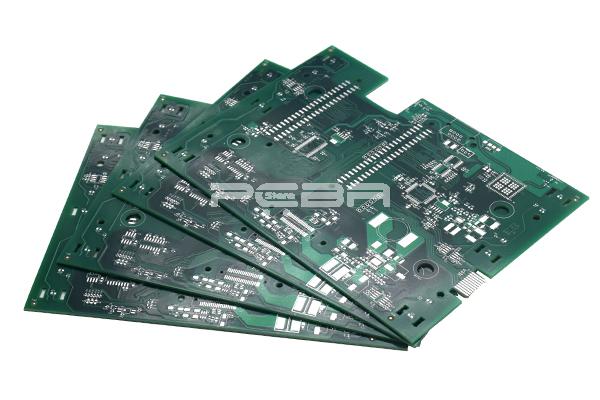
A power device running hot can send a design team straight to a ceramic PCB discussion. Pause at the mounting interface first. If heat is getting stuck between the board and its heat sink, a more conductive substrate may leave the real problem untouched. Here is how we would frame the material comparison for a professional build.
Where the Heat Stops Moving
A control board running cool in a ventilated cabinet has little reason to move off FR-4. The case changes when power density climbs or the heat has no short path out.
The work divides into two jobs: making the substrate and assembling components onto it. Our PCB assembly scope at PCBA Store includes rigid, flex and rigid-flex boards. For ceramic, ask us about the exact construction before placing an order; those general board categories are not an offer to manufacture a ceramic substrate.
Alumina, AlN and the Complete Heat Path
The thermal path can defeat an attractive conductivity number. Imagine the board conducting heat well, only for a poor contact underneath to hold it up. The device still runs hot. For that reason, we would compare the complete assembly before spending more on the substrate.
The grade makes a large difference. Take two Rogers examples at 20°C: curamik Power, an alumina construction, has a conductivity of 24 W/mK; the AlN-based curamik Thermal is rated at 170 W/mK. Use those figures only for those grades. Writing either number beside an unspecified ceramic would make the comparison look more certain than it is.
The table gives your team a starting shortlist. After that, “ceramic” needs to become a named grade with a thickness and copper construction. Until those are known, the drawing still leaves important parts of the heat path open.
Candidate | Reason to Consider It | Question Still Open |
FR-4 | Existing construction meets operating limits | Is heat escaping through the intended path? |
Alumina ceramic | Electrical insulation and ceramic construction are needed | Does this grade meet the thermal budget? |
AlN ceramic | Higher conductivity is valuable in the proposed stack | Do interfaces and mounting preserve that benefit? |
Temperature Rise Across the Substrate
The layer thickness changes the answer even when the material stays the same. In the simple one-dimensional model, R = t/(kA): thickness t divided by conductivity k and area A. Double t with k and A unchanged and that layer’s resistance doubles. The board still needs an assembly model for spreading and interfaces.
For a first comparison, hold thickness, area and mounting fixed. Then the change in conductivity has a clear meaning. If the ceramic proposal also changes the mounting interface, start a second comparison. Otherwise a claimed material benefit may quietly include an interface change—or overlook a worse one.
Where DCB and AMB Enter the Discussion
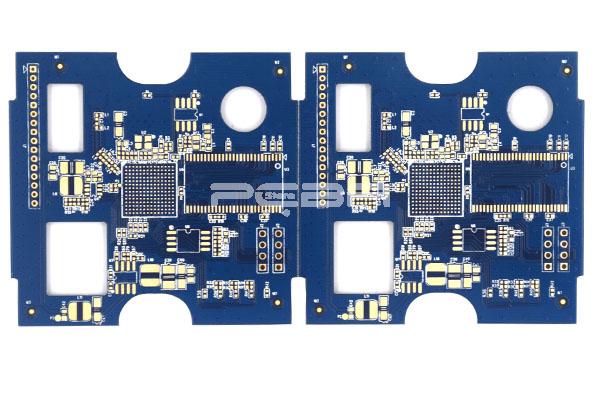
The joining terminology can hide how much remains unspecified. DCB expands to direct copper bonding, AMB to active metal brazing. Both concern copper on ceramic. You still have to choose the ceramic and copper pattern, then identify the attachment layers around them. The acronym is not the finished module.
Cycling performance needs the actual construction in view. Put ceramic grade, copper pattern and thickness, flatness, edges and attachment layers in the review. Ask what reliability evidence applies to that combination. Evidence for a different copper layout or ceramic is not automatically evidence for yours.
Before committing that stack, confirm ceramic substrate assembly compatibility with PCBA Store. The point is to establish whether the particular material and attachment route fit our assembly service, rather than assume that DCB or AMB substrate production is included.
Metallization Is Only Part of the Stack
Attachment is another decision after the copper pattern is finished. Are you placing packaged components, attaching bare dies, or mixing the two? Put that distinction in the project brief. A surface that suits one soldered package does not establish compatibility with every die-attach material or process.
A clamp deserves scrutiny as much as a material data sheet. Picture its load landing partly on an unsupported ceramic edge. Tightening it might improve one thermal contact while damaging the substrate elsewhere. Have the ceramic specialist review the support; an old FR-4 tightening instruction is not a justified limit for this assembly.
Different Applications, Different Thermal Limits
Heat leaves an LED package through its board and luminaire. In a power module, isolation and cycling stress join the thermal problem. A laser package may care about temperature stability. Same word, “heat”; different path.
Use a fixed operating case when comparing materials. An open bench and a sealed product enclosure are different thermal environments. For the comparison, record:
· Dissipated power and duty cycle at the intended load.
· Ambient temperature, airflow and mounting contact.
· Allowed component temperature and the required operating margin.

Ceramic Handling on the Assembly Floor
Panel separation needs an answer before boards arrive. Identify the supported area and the separation method with the fabricator. Where will force enter the ceramic? Which edge features are allowed? The handling plan must suit that substrate, even if the outline resembles an earlier FR-4 product.
For ceramic PCB assembly requirements, send PCBA Store the proposed stack-up and attachment arrangement. Our SMT and through-hole services provide a starting point for the discussion. They do not settle this board’s ceramic compatibility. Please get that specific route confirmed before making it part of the production plan.
The Material Choice Comes Back to the Heat Path
The material decision comes back to the original temperature problem. If ceramic removes a measured bottleneck and the mounting review is satisfactory, qualification has a clear purpose. If the existing FR-4 construction already meets the limits, explain what the change is meant to achieve before adding that work.
One useful review layout is quite literal: mounting drawing on one side, thermal calculation on the other. Check that each interface appears in both. A missing contact layer is easier to resolve there than after the substrate and assembly tooling have been ordered.
For a proposed ceramic build, contact PCBA Store with the substrate and attachment details before committing the design. We can then discuss compatibility for the construction your team actually intends to use.
Frequently Asked Questions
When Should a Designer Consider a Ceramic PCB?
Compare the temperature drop across the substrate with the drop at the heat-sink contact. That identifies which part deserves attention. Ceramic may help the former; it cannot, on its own, repair a poor contact in the latter.
Is AlN Always Better Than Alumina?
No. AlN may be attractive where substrate conduction limits the design. If an interface dominates, the extra conductivity may contribute less than expected. Check cost and mounting suitability against the two actual constructions.
What Do DCB and AMB Mean?
DCB means direct copper bonding; AMB means active metal brazing. Both identify a copper-to-ceramic joining route. Neither abbreviation tells you the copper pattern, ceramic grade or remaining attachment stack.
Can a Ceramic Substrate Be Handled Like FR-4?
No. Review support and separation as ceramic operations. In particular, do not assume the bending used to separate an earlier FR-4 panel is acceptable. Get a handling method for the actual substrate.
Can PCBA Store Confirm a Ceramic Build?
A ceramic project needs an explicit capability review. Our general PCBA service does not establish an offer to fabricate ceramic substrates or support every ceramic attachment process.
Previous article:PCB-to-PCB Soldering vs Board Connectors



