General, quoting & support.
Add: Building E, No.58, Nanchang Road, Xixiang , Baoan District Shenzhen City, Guangdong, China
Tel : 0755-27348887
Fax : 0755-27349876
E-mail : svc@pcbastore.com

Medical-Grade PCBs: Key Design, Materials, and Manufacturing Standards
PCBA Store / 2026-04-23
Contents [hide]
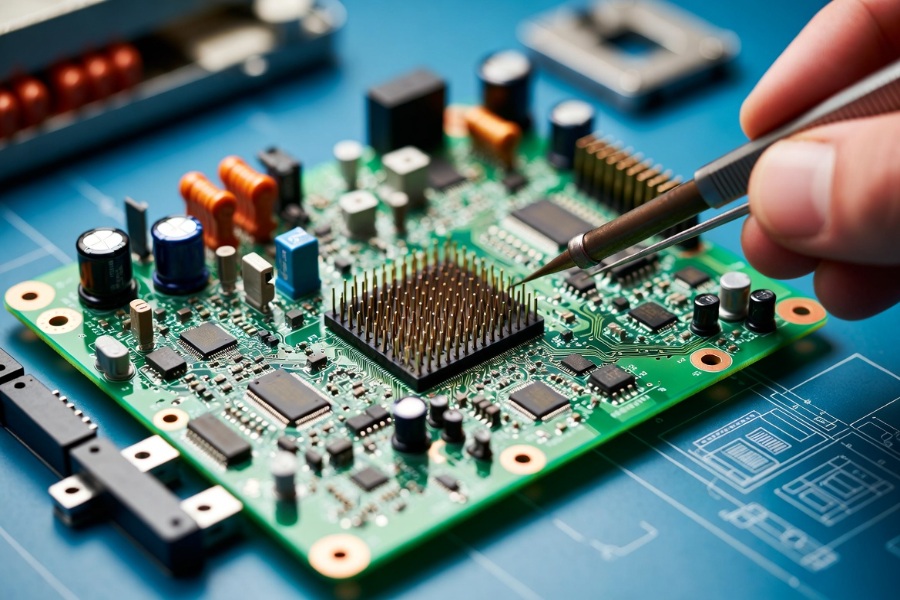
The blend of health care and electronics has brought a time of great accuracy. In this time, the core of each testing tool and life-aid setup is a Printed Circuit Board (PCB). Unlike items for everyday use, where a breakdown might cause a small hassle, a breakdown in medical PCB uses can lead to major life changes. At PCBA Store, we know that health electronics need a degree of quality that goes beyond usual factory standards. We focus on no-error results and full tracking.
Introduction to Medical PCBs and Their Role in Medical Devices
A PCB for medical devices acts as the basic structure for current health tech. These boards do more than hold parts. They are exact tools built to work in settings vital to patients. For example, they handle fast processing in MRI and CT machines. They also manage very low power use for devices like heart pacemakers that go inside the body. So, these boards must keep their strength in many different situations.
The range of uses is wide. In testing, PCBs help with quick blood checks. In surgery rooms, they run robot arms and laser cutters. In the growing area of body-worn health tools, they allow ongoing checks for sugar levels and heart function. Since these setups work in areas centered on people, the strength of the PCB for medical uses forms the main link between new software ideas and safe results in care settings.
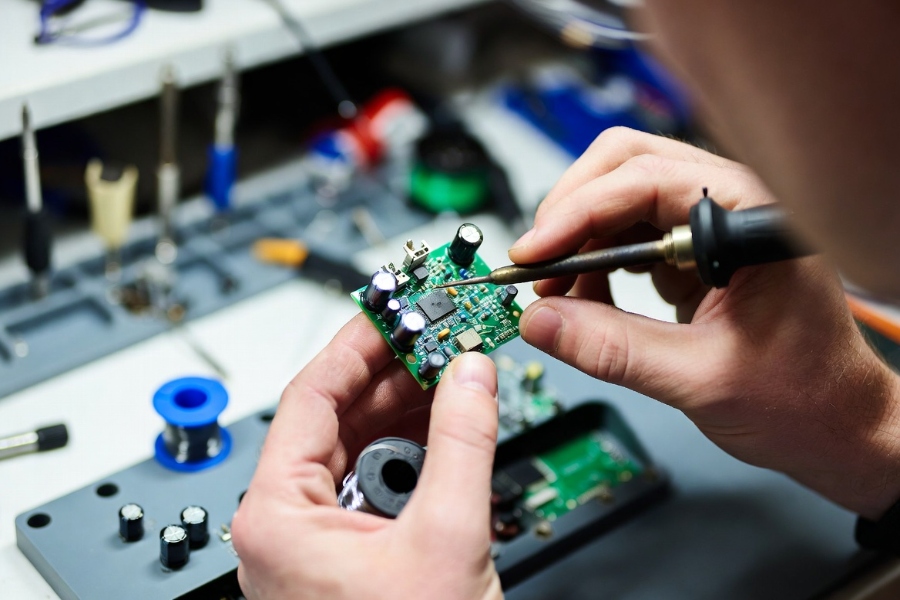
Key Design Considerations for Medical PCBs
Creating for the health field calls for a change in thinking. It moves from adding many features to putting strength first. The main difference comes from the setting where the tool works.
· Signal Integrity and Precision: Testing gear often handles tiny signals. Think of brain wave or heart readings. These are easy to disturb by electrical noise (EMI). So, PCB plans must focus on protection and path layouts. This helps avoid data errors.
· Thermal Management: Many health tools, especially image systems, create a lot of heat. Planning with heat paths and special copper layers makes sure the board does not wear out over time.
· Miniaturization and Biocompatibility: As tools shift to less invasive or body-worn types, boards need to be smaller but more detailed. For some top-class devices, the stuff used must handle chemical stability. This is key for long stays inside the body.
Materials and Processes in Medical-Grade PCB Production
Choosing base materials is vital for the lasting power of a medical PCB. We often use stuff that gives strong resistance to chemicals and heat stability.
Common Material Specifications
Material Type | Characteristic | Application |
High-TG FR-4 | High glass transition temperature | Surgical tools, high-heat environments |
Polyimide | High flexibility and heat resistance | Wearables and flexible medical sensors |
Ceramic Cores | Excellent thermal conductivity | High-power laser medical equipment |
Teflon (PTFE) | Low dielectric loss | High-frequency wireless medical monitors |
To match the push for smaller sizes in the field, we add High-Density Interconnect (HDI) setups. We use tiny paths and thin base layers. This lets us fit more PCB layers for medical applications in a slimmer form. As a result, it supports the detailed paths needed by current chip systems (SoCs).
Standards and Certifications for Medical PCB Manufacturing
In health settings, quality is not optional. It is a must by law. Following rules makes sure each board made is safe for patient use.
· ISO 13485: This sets the top mark for quality systems in health tools. It sets firm rules for planning, making, and tracking.
· IPC Class 3: Many fields use Class 2. But health electronics mostly need IPC Class 3. It calls for more checks and tighter limits on solder links and coatings. This ensures steady work without stops.
· IEC 60601-1: This rule covers basic safety and key requirements for health electrical equipment. It focuses on power leaks and protection layers.
· FDA Requirements: For boards going to the US, papers must comply with FDA 21 CFR Part 820. This makes sure each part in the setup traces back to its first maker.
Medical PCB Assembly Services and Testing Protocols
Medical PCB assembly services go beyond just attaching parts to a board with solder. It is a full check process. In our shops, we use a step-by-step testing plan. This makes sure everything works at 100%.
· Turnkey PCB Assembly: We handle the whole cycle. This starts from getting parts to the last checks. It lowers risks from supply line issues.
· Automated Optical Inspection (AOI): It looks for correct placement and solder flaws.
· X-Ray Inspection: This is key for BGA (Ball Grid Array) parts. It checks hidden solder spots under packed chips for perfection.
· In-Circuit Testing (ICT) and Flying Probe: These checks confirm the power work of each path on the board.
· Cleanroom Assembly: For touchy health sensors, we offer set spaces. They stop dust or bits from entering during the PCBA steps.
Choosing a Reliable Medical PCB Manufacturer and Assembly Partner
When picking a teammate for PCB manufacturing and assembly China services, look past just cost. A solid teammate joins your build group. Main traits to seek include:
· Engineering Support (DFM): The skill to give "Design for Manufacturing" notes. This helps make the board for better output and strength.
· Global Compliance: Proof of ISO 13485 and IPC Class 3 marks.
· Transparency: A clear view of the supply line and taking steps. This makes sure no fake parts enter the health tool.
· Scalability: The power to manage small test runs and big sales starts.
Summary: Best Practices for Medical PCB Success
Gaining ground in the health electronics field needs a mix of careful planning, strong materials, and firm rules. By focusing on signal strength, following IPC Class 3 rules, and using advanced check plans, builders can make sure their tools work perfectly in key life moments.
At PCBA Store, we promise to be more than a maker. We are a focused team in health advances. Our skills in packaging and full assembly make sure your health tech is safe, rule-following, and set for the world market.
Contact Us for Your Medical PCB Needs
Set to make your health idea real? If you need fast PCB board assembly prototypes or large medical PCB assembly services, our group is ready to help with rules and tech needs. Visit PCBA Store today for an online quote and see the accuracy of top health making.
FAQ: Solving Your Medical PCB Challenges
Why is ISO 13485 crucial for my PCB assembly partner?
ISO 13485 is a quality system just for health tools. Unlike ISO 9001, it stresses risk handling, clean making conditions, and tracking more. Teaming with a marked maker like us makes sure your papers meet groups like the FDA or EMA.
Can flexible PCBs be used in implantable medical devices?
Yes, bendy and stiff-bendy PCBs often go into implants. They fit into curved body spots. But these need special body-safe covers and stuff (like Polyimide). They must not release gas or break down in body settings.
How do you ensure the components used in medical PCBA are not counterfeit?
We use a firm supply line plan. This means getting parts only from approved sellers. We do sight checks too. If needed, we run X-ray or open tests. For health jobs, we give full tracking reports for each part on the BOM (Bill of Materials).
You Might Like:
What to Expect From a Quality Rigid Flex PCB Manufacturer
Emerging Trends in Popular PCBs Used in Artificial Intelligence



