General, quoting & support.
Add: Building E, No.58, Nanchang Road, Xixiang , Baoan District Shenzhen City, Guangdong, China
Tel : 0755-27348887
Fax : 0755-27349876
E-mail : svc@pcbastore.com
PCB vs PCBA vs Main Board: What Are You Ordering?
PCBA Store / 2026-10-16
Contents [hide]
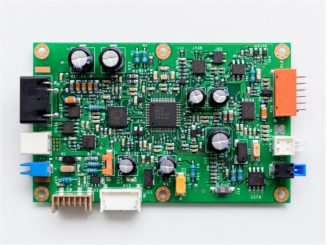
An order for one hundred main boards sounds precise until one team expects bare circuit boards and another expects programmed assemblies. The quantity is clear; the product is not. PCB, PCBA, and main board describe different aspects of the same electronics project. Understanding those differences helps OEM buyers and distributors agree what will arrive, what still needs work, and which product version they are receiving.
Three terms answer two different questions
PCB stands for printed circuit board. In a fabrication order, it normally means the bare board with its conductive structure and specified finish, ready for component assembly. PCBA stands for printed circuit board assembly and commonly refers to the populated board after components have been fitted and soldered.
Main board describes the board's role within a product. It usually identifies a principal control or processing assembly, but its exact function depends on the system. It is not a manufacturing stage and does not, by itself, tell a buyer whether components, firmware, testing, or accessories are included.
The distinction is easier to use when separated into two questions: what has been manufactured, and what job does it do? PCB and PCBA help answer the first. Main board helps answer the second. An assembled main board can therefore be both a PCBA and the product's principal control board.
Term | What it primarily identifies | What an order still needs to define |
PCB | The circuit board structure | Fabrication revision and board specification |
PCBA | A board with assembled components | Population variant, test, and configuration scope |
Main board | The board's role in a product | Exact assembly identity and delivery condition |
A PCB order usually stops before components
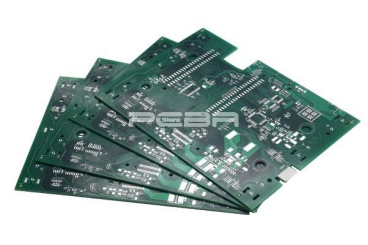
A bare PCB contains the paths and features that support the circuit design. It can have pads, holes, vias, solder mask, and markings without carrying the devices that make the circuit operate. A finished fabrication order can therefore be complete even though the board cannot perform the intended electronic function yet.
The quotation boundary matters more than casual conversation. Engineers may call a populated assembly a PCB during a meeting, and everyone present may understand them. A purchasing description should be less dependent on that shared context, especially when a new supplier or distributor joins the project.
OEMs can source fabrication and assembly through the same partner without merging their definitions. PCBA Store provides both stages through its one-stop PCB service. The order should still identify whether the delivery is a bare board, an assembled board, or an additional level of integration.
Layers and sides do not settle the question
Layer count describes the board's conductive construction. Assembly sides describe where components are placed. Neither term establishes that component procurement, programming, or functional testing is included in an order. A detailed fabrication specification can still describe only an unpopulated board.
The same caution applies to photographs. A picture can help identify a board layout or connector arrangement, but it does not replace a part number and revision. Similar-looking boards can carry different components or belong to different product variants.
PCBA identifies the assembled board
The practical PCBA meaning is a printed circuit board with the specified components assembled onto it. The abbreviation can also describe the assembly activity, as in a request for PCBA services. Context determines whether someone means the process or its physical output.
A PCBA board does not automatically include every operation needed before installation. Some projects require firmware programming, calibration, cleaning, coating, or a particular functional test; others leave some of that work to the OEM. These are scope decisions, not benefits guaranteed by the abbreviation.
Component supply is another separate question. Turnkey arrangements can include sourcing, while consigned assembly uses parts supplied by the customer. Partial turnkey divides the supply responsibility. All three can produce a PCBA, so the term alone does not establish who buys the parts.
Population variants need separate identities
One bare-board design can support more than one populated version. For example, a product family may use different fitted components or optional interfaces on the same PCB layout. This is an illustrative possibility, not a reason to assume two visually similar assemblies are interchangeable.
An assembly identifier should therefore distinguish the populated variant from the bare-board revision. The PCBA board assembly options used for a project should correspond to the approved BOM and assembly information, including any locations intentionally left unpopulated.
The word complete needs a stated boundary. An assembly may be complete against its manufacturing instructions yet await OEM programming or integration. Describing that handoff plainly prevents the receiving team from treating an unfinished product function as an assembly defect.

Main board describes a role inside the product
The main PCB meaning is tied to the system architecture. In a robot module, the principal board might coordinate processing and interfaces while separate boards handle power or sensors. In another device, several of those functions may share one assembly. The name does not guarantee a particular arrangement.
A main printed circuit board is therefore not a universal part category with a standard component set. Its role can be clear within one OEM's product family and ambiguous outside it. Purchasing teams should use the exact product and assembly identifiers rather than rely on main board as the only description.
The term motherboard is related but should not be assumed to mean the same thing in every industry. In computing it has a familiar platform meaning. Industrial equipment and specialized electronics may use their own names for the principal assembly, with interfaces and configuration determined by that product.
An assembled main board can use several manufacturing technologies. The relevant main PCB assembly capabilities may involve SMT, through-hole components, or both. Those choices follow the design; being the main board does not establish a special assembly method or quality class.
The delivery description that removes ambiguity
The order description should combine identity with delivery condition. An illustrative wording is: “Populated controller assembly, assembly revision C, BOM variant 02, with the agreed firmware and functional test completed.” The example is not a specification to copy unchanged; it demonstrates which uncertainties a description can resolve.
A receiving team should be able to answer a short set of questions:
· Is the shipment bare PCB or populated PCBA?
· Which part number, revision, and population variant apply?
· Is programming or other configuration included?
· Which agreed checks are complete before shipment?
· Are cables, housing, or other accessories included separately?
These details also make comparisons more useful. A low bare-board price cannot be evaluated as though it includes components and assembly. Likewise, an assembly price and a programmed, tested module price may cover different work. The naming convention should reveal that difference before the commercial discussion proceeds.
Clear terminology makes the handoff easier
PCB names the board structure, PCBA names the assembled board, and main board describes its function in a larger product. The terms overlap in ordinary conversation, but an OEM order benefits from keeping those meanings visible.
The next step is a precise delivery description tied to the correct assembly identity. Once that is agreed, engineering, purchasing, and receiving teams can discuss the same item without depending on a photograph or a familiar nickname.
If the requested supply stage is unclear, contact PCBA Store to clarify whether your project needs bare boards, populated assemblies, or further product integration.
FAQ
What is PCBA?
PCBA means printed circuit board assembly. It commonly refers to the populated board and can also describe the activity of assembling components onto a PCB. The surrounding context makes the intended meaning clear.
Is a main board always a PCBA?
A working main board is normally a populated assembly. However, the name describes its role, so an order should still state whether it calls for the bare board or the assembled version.
Does PCBA mean the board is programmed?
No. Programming and configuration need explicit agreement. A board can be fully populated while still awaiting software or settings needed for its intended operation.
Can one PCB design produce different PCBAs?
Yes. Different approved component populations can use the same bare-board design. Distinguish the assembly variants through controlled identifiers and their corresponding BOMs.
Is every PCBA a main board?
No. A populated board may perform a supporting role, such as power conversion, sensing, or an interface function. Its manufacturing state and its system role are separate descriptions.



