General, quoting & support.
Add: Building E, No.58, Nanchang Road, Xixiang , Baoan District Shenzhen City, Guangdong, China
Tel : 0755-27348887
Fax : 0755-27349876
E-mail : svc@pcbastore.com

PCBA Functional Testing Methods Explained
PCBA Store / 2026-06-25
Contents [hide]
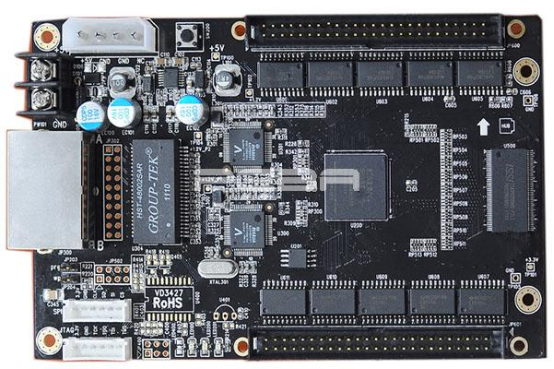
Modern electronics manufacturing depends on reliable validation before products reach mass production. Across industrial control, telecom, medical devices, and IoT hardware, buyers expect stable performance from every unit delivered. At PCBA Store, we integrate structured PCBA testing into our production flow to help engineering teams reduce risk, shorten verification cycles, and improve first-pass yield. In this article, we explain how different PCBA functional testing methods work in real manufacturing environments and how they support scalable B2B production.
Why PCBA Functional Testing Is Critical in Manufacturing
PCBA functional testing ensures that assembled boards operate exactly as designed under real electrical and load conditions. In modern supply chains, visual inspection or basic continuity checks are not enough. Buyers need confidence that every testing circuit board performs consistently before shipment.
We treat functional testing as a final verification layer after SMT assembly and in-circuit checks. This step simulates real operating environments, including power input behavior, signal response, communication interfaces, and load stability. The goal is not only to detect defects but also to confirm full system reliability under production conditions.
In high-mix manufacturing, functional testing also reduces hidden risks caused by component variation, solder quality fluctuation, or design tolerance issues. For this reason, it has become a standard requirement for global OEM and ODM projects.
How In Circuit Testing Improves Early Defect Detection
In-circuit testing is one of the most important steps before functional validation. It focuses on component-level verification and ensures that each electrical node meets design expectations.
In our production workflow, in-circuit testing helps identify:
· Open and short circuits on the PCB
· Incorrect component values or missing parts
· Solder joint defects after SMT assembly
· Polarity and orientation errors
This step is essential because it isolates manufacturing issues early in the process. Without it, defects may move downstream and increase debugging time during testing circuit boards at the system level.
In-circuit testing is especially effective for high-density designs where manual inspection is not sufficient. It provides fast electrical verification with high repeatability, which is critical for stable mass production.
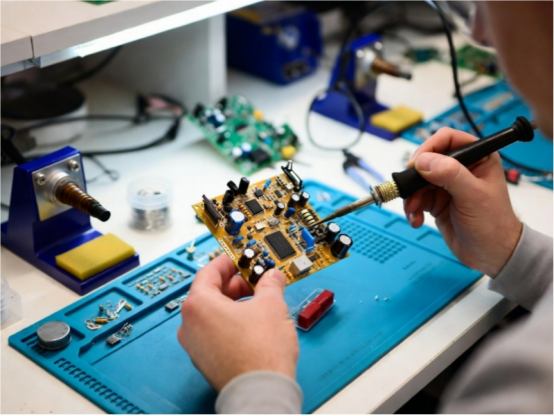
Role of PCB Testing Jig in Production Efficiency
A PCB testing jig is a customized fixture used to connect and stabilize PCBs during testing. It ensures consistent electrical contact between test points and measurement systems, reducing operator dependency.
We design testing jigs based on board layout, connector type, and functional requirements. In high-volume PCBA production, this tool directly impacts throughput and test accuracy.
Key functions of a PCB testing jig include:
· Secure alignment of the PCB during test cycles
· Stable signal transmission between the board and the test system
· Fast switching between test units in batch production
· Reduction of manual handling errors
A well-designed jig can significantly improve test efficiency. In our experience, optimized fixtures can reduce testing time per unit by up to 40–60% compared to manual probing methods.
Key Circuit Board Testing Methods in Production
Different products require different circuit board testing methods depending on complexity, application, and reliability requirements. We apply a layered testing strategy to ensure complete coverage.
The table below summarizes common approaches used in PCBA production:
Testing Method | Purpose | Application Stage | Strength |
In-Circuit Testing | Component-level fault detection | Post-SMT | High accuracy for defects |
Functional Testing | System operation validation | Final stage | Real-world performance check |
AOI Inspection | Visual defect detection | SMT line | Fast non-contact inspection |
Boundary Scan Testing | Digital circuit validation | Pre-functional | Complex IC verification |
Power-on Testing | Electrical stability check | Final QA | Load behavior validation |
Each method plays a specific role. In modern production environments, no single method is sufficient. Instead, we combine multiple techniques to achieve stable quality output across all testing circuit boards.

How Testing Circuit Boards Works in Real Production Flow
The process of testing circuit boards follows a structured and repeatable sequence. We implement it as part of a controlled manufacturing pipeline rather than an isolated step.
The typical workflow includes:
First, PCB fabrication and SMT assembly are completed under controlled conditions. After assembly, in-circuit testing is performed to identify component-level issues. Next, boards move into functional testing, where real operating conditions are simulated. Finally, the final inspection confirms electrical stability and mechanical integrity.
This structured approach ensures that defects are detected at the lowest possible cost stage. It also reduces rework cycles and improves delivery consistency for B2B customers.
In complex projects such as industrial controllers or communication modules, this multi-stage testing model is essential to maintain system reliability.
Integrated Testing Strategy at PCBA Store
At PCBA Store, we combine PCB fabrication, SMT assembly, and testing into a unified workflow. This integration allows us to maintain traceability across every production stage and reduce communication gaps between engineering and manufacturing teams.
Our testing capability includes:
· In-circuit testing for component validation
· Functional testing for system-level verification
· Customized PCB testing jig design for batch production
· DFM support to improve testability during the design stage
· Turnkey PCB assembly with full QA integration
By controlling both assembly and testing internally, we reduce external dependency risks and improve consistency across prototypes and mass production.
This integrated approach is particularly important for clients scaling from prototype validation to full production, where small design variations can significantly impact yield.
Why Structured Testing Improves Product Reliability
Product reliability and performance are directly affected by structured testing because failure can be identified after field implementation. Defects might arise only during field implementation without the appropriate testing, which will result in high maintenance expenses.
It is evident that there is an increase in product failure because structured PCBA testing increases detection capabilities for electrical, mechanical, and functional tests while ensuring that design assumptions correspond with actual operating conditions.
For engineering teams, this means faster debugging cycles and more predictable product performance during launch phases.
How to Select a PCBA Testing Partner
Selecting the right manufacturing partner requires evaluating both production capability and testing depth. We recommend focusing on three key areas.
First, the supplier must support complete circuit board testing methods, not only basic inspection. Second, they should have experience designing and deploying PCB testing jig systems for scalable production. Third, they must provide engineering support for early-stage DFM optimization.
A capable partner should also support both prototype and mass production without changing testing standards, ensuring a smooth transition across product lifecycle stages.
Frequently Asked Questions
What is the difference between in-circuit testing and functional testing?
In-circuit testing checks individual components on the PCB, while functional testing evaluates overall system performance under real operating conditions.
How long does testing circuit boards usually take in production?
Timing depends on complexity. Simple boards may take minutes, while complex HDI or multi-layer boards may require longer functional validation cycles.
Can PCB testing jig design be customized for different products?
Yes. We design testing fixtures based on PCB layout, connectors, and required test points to ensure stable and repeatable results.
What files are required for a PCBA testing quotation?
Gerber files, BOM list, assembly drawings, and test requirements are typically required for accurate evaluation and pricing.
Do you support both prototype and mass production testing?
Yes. We support full lifecycle testing from early prototype validation to high-volume production quality control.
Conclusion and Engineering Support
Effective PCBA testing is not a single step but a structured system combining in-circuit validation, functional verification, and dedicated testing fixtures. By applying layered circuit board testing methods, manufacturers can significantly reduce defect rates and improve production efficiency.
At PCBA Store, we support global clients with integrated PCB assembly and testing solutions designed for fast iteration and stable mass production. Our engineering team works closely with customers to ensure every testing circuit board meets functional and reliability expectations.
For engineering support, instant quotation, or file upload, visit our website.
We help teams move from design to validated production with greater speed, control, and confidence.
Previous article:How to Choose a PCB Assembly Manufacturer for BGA Projects



