General, quoting & support.
Add: Building E, No.58, Nanchang Road, Xixiang , Baoan District Shenzhen City, Guangdong, China
Tel : 0755-27348887
Fax : 0755-27349876
E-mail : svc@pcbastore.com
Turnkey PCB Assembly Explained Full vs Partial Process And Benefits
PCBA Store / 2026-01-09
Contents [hide]
Turnkey PCB assembly offers a complete method for electronics manufacturing. In this setup, one provider handles every step. They take care of component sourcing, PCB fabrication, final assembly, and testing. This way solves usual problems in electronics production. Examples include long lead times, complex BOM coordination, and issues with multiple vendors. When all stages stay under one roof, turnkey services speed up prototyping. They also improve reliability during volume production. Plus, they lower overall manufacturing costs.
PCBA Store, as a leading PCB manufacturer, supplier, and factory based in Shenzhen, China, delivers full turnkey and partial turnkey solutions with over 16 years of PCB fabrication experience and 8 years in assembly.
1. What Is Turnkey PCB Assembly?
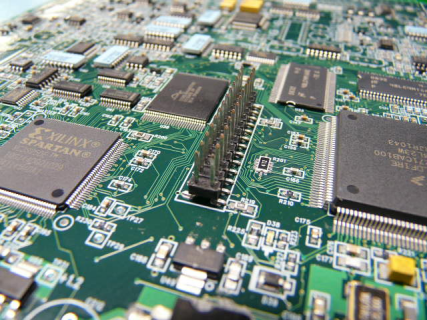
Turnkey PCB assembly means a service where the provider takes full charge of making assembled printed circuit boards. It covers buying electronic components. It also includes making bare PCBs, placing and soldering parts, doing inspections and testing. Often, it handles final packaging or box-build too. The word "turnkey" suggests the client simply gives design files. Then the supplier hands over ready-to-use assemblies. The client needs very little extra work.
This method works well for startups, small to medium enterprises, and bigger companies that want smoother operations. Businesses avoid keeping component stocks or running in-house assembly lines. Instead, they concentrate on main tasks like product design and market plans. Providers like PCBA Store give turnkey choices along with consignment models. In those, clients provide certain parts.
Services often included in turnkey PCB assembly cover:
· Quick-turn prototype assembly
· Full and partial turnkey assembly
· Consignment or kitted assembly
· RoHS-compliant lead-free processes
· Non-RoHS options
· Conformal coating
· Functional testing and X-ray inspection
· Final box-build and packaging
2. Quoting a Turnkey PCB Assembly
The quoting process for turnkey services usually starts with design file preparation. It moves through clear steps for correct pricing and feasibility checks.
Step 1: PCB Quote
Details such as layers, dimensions, material (e.g., FR-4, high-frequency laminates), thickness, copper weight, surface finish, and quantity produce an instant price. All boards go through electrical testing.
Step 2: PCB Assembly Quote
– Labor costs for assembly get calculated right away. This uses inputs like quantity, SMT sides, unique parts count, and choices for stencil, coating, or testing. Needed files include the BOM and CPL (component placement list or Centroid file).
Step 3: BOM Pricing
– When you upload the BOM, it lists quantities, reference designators, manufacturer names, and part numbers. This gives instant pricing for in-stock items or sourced components. Turnkey providers often get better component prices thanks to solid supplier networks.
Step 4: Component Placement File (CPL)
This file shows X-Y coordinates, rotations, and references for each component. It guides automated pick-and-place machines for accurate and efficient work.
Advanced providers offer online instant quoting systems, file uploads, and DFM (design for manufacturability) reviews. These help spot problems early.
3. The Benefits of Turnkey PCB Assembly
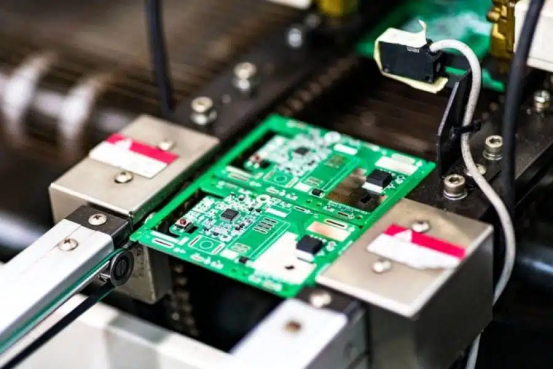
Turnkey assembly lets organizations focus more on innovation than on production details. Main advantages include:
1. Cost Reduction Turnkey contracts cut out shipping fees between facilities. They also use bulk buying power for components. Suppliers keep strong ties with vendors. This brings competitive pricing that smaller buyers rarely get. Passive components like resistors and capacitors may come at no extra cost in turnkey orders.
2. Issue and Error Identification Checks before assembly, such as netlist verification and DFM analysis, find design mismatches or possible faults. This forward-thinking step avoids expensive rework during or after production.
3. Streamlined Management Single-point coordination lowers the chance of miscommunication. This beats working with many vendors. A dedicated contact handles the project. It makes updates, changes, and tracking much simpler. Online portals for quotes, order status, and file management add even more efficiency.
Other benefits include quicker time-to-market with quick-turn features (as fast as 24-48 hours for prototypes). Quality stays consistent thanks to in-house controls. Scalability runs smoothly from prototypes to high-volume production without changing providers.
4. Partial Turnkey vs. Full Turnkey PCB Assembly
Turnkey services split into full and partial types. Each fits different project needs.
Full Turnkey PCB Assembly means complete outsourcing. The provider sources all components (or almost all, since passives are often free). They fabricate the PCBs, assemble, test, and ship. This fits clients who want the most convenience. It helps those without strong supply chains or who prefer to skip inventory tasks.
Partial Turnkey (or consignment/hybrid) lets clients supply some components. These are usually specialized or high-value parts. The provider manages everything else, like fabrication, assembly, and testing. This choice works when clients hold specific parts already. Or when they need certain vendors for compliance or cost reasons.
Full turnkey stands out for speed and ease. Partial turnkey gives more flexibility and possible savings on client-supplied items.
5. Full Turnkey PCB Assembly Process
The process moves in a clear order:
· PCB Prototyping: Early samples check design function and performance.
· High-Volume PCBA: Larger production starts after prototype approval. It uses automated SMT lines, through-hole, or mixed technology.
· Box Build: Assembled boards fit into enclosures. This includes wiring, cabling, and final assembly steps.
· End-User Shipment: Packaged products go straight to the destination.
Quality controls run throughout. These include AOI, X-ray for BGAs, functional testing, and IPC-A-610 standards compliance.
PCBA Store provides both partial and full turnkey solutions. It supports prototypes to mass production. Capabilities include 1-40 layer PCBs, fine-pitch components (down to 01005/0201), HDI, rigid-flex, and advanced testing. As a direct manufacturer and factory, it ensures controlled quality, fast lead times (24-hour express options), and competitive pricing.
Conclusion
Full and partial turnkey PCB assembly each bring clear advantages. Partial fits projects that watch costs closely and use client-supplied components. Full turnkey provides complete efficiency for fast and dependable production. The choice relies on supply chain needs, budget, and timeline demands. Turnkey models cut risks, speed up development, and allow scalable manufacturing in tough electronics markets.
PCBA Store stands out as a reliable PCB manufacturer, supplier, and factory. It delivers comprehensive turnkey services from its Shenzhen facilities.
FAQ
What is the difference between full turnkey and partial turnkey PCB assembly?
Full turnkey outsources all aspects, including component sourcing, while partial allows clients to supply select parts, with the provider handling the rest.
What files are required for a turnkey PCB assembly quote?
Gerber files for PCB fabrication, BOM (with manufacturer part numbers), and CPL for assembly placement are essential.
Does turnkey assembly support prototypes and high-volume production?
Yes, services scale from single pieces or prototypes to millions, with quick-turn options for fast iteration.
Are passive components included in turnkey pricing?
Many providers, including PCBA Store, offer passive parts free from inventory for qualifying turnkey orders.
What quality standards apply to turnkey PCB assembly?
Assemblies typically meet IPC-A-610 Class 2 or 3, with inspections like AOI, X-ray, and functional testing.
Ready to Streamline Your PCB Assembly Projects?
PCBA Store, as a dedicated PCB manufacturer, supplier, and factory, specializes in full and partial turnkey PCB assembly services. Benefit from one-stop solutions, instant online quotes, no MOQ, fast lead times starting at 24 hours, competitive pricing, and high-quality standards backed by ISO9001 certification and advanced equipment.
Upload design files today for an instant quote and experience seamless manufacturing from prototype to production. Contact the team at svc@pcbastore.com or start the process online at https://www.pcbastore.com/online_quote.html. Partner with PCBA Store to accelerate time-to-market and optimize costs for electronics projects.
You Might Like:
Flexible PCB Manufacturing Process: How to Fabricate
How One-Stop PCBA Services Cut Your Product Development Costs
Delivering High-Quality PCB&PCBA with Exceptional Service
Choosing the Best Turnkey PCB Assembly Manufacturer in China: A Comprehensive Guide



