General, quoting & support.
Add: Building E, No.58, Nanchang Road, Xixiang , Baoan District Shenzhen City, Guangdong, China
Tel : 0755-27348887
Fax : 0755-27349876
E-mail : svc@pcbastore.com

Ultimate Guide to Drone PCB Optimizing Design & Manufacturing
PCBA Store / 2026-01-23
Contents [hide]
Ultimate Guide to Drone PCB: Optimizing Design & Manufacturing
The use of drones has grown quickly in many fields. These include emergency rescue, industrial checks, consumer aerial photos, and farm tasks. Printed circuit boards (PCBs) act as the main control system in drones. They handle key jobs like processing data, managing power, sending signals, and linking to different sensors and parts. This guide looks closely at drone PCBs. It covers their makeup, choice of materials, ways to make them, design points, and ways to test quality.
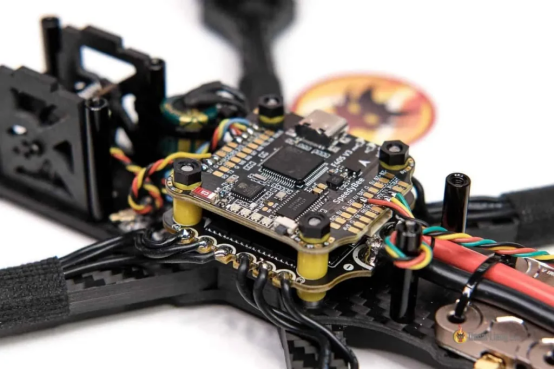
What is a Drone PCB?
A drone PCB works as the basic base for electronic links and physical support in unmanned aerial vehicles. It combines and manages important subsystems. These include flight controllers, GPS modules, electronic speed controllers (ESCs), radio transmitters and receivers, cameras and gimbals, sensors such as inertial measurement units (IMUs), barometers, compasses, and gyroscopes, power distribution boards (PDBs), and battery management systems (BMS).
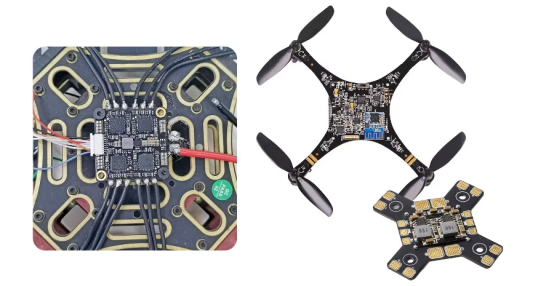
Types of PCBs in Drones
Flight Controller PCB
This board acts as the drone's brain. It controls flight position, stability changes, and navigation math. It does this with built-in processors and fused sensor data.
Power Distribution Board
The PDB makes sure power goes safely and evenly from the battery to motors and other electronic parts. It stops voltage drops and overloads while the drone flies.
Sensor PCB
This board focuses on sensing the surroundings and finding location. It links modules like cameras, GPS receivers, and IMUs. This setup allows exact data gathering and handling.
High-Speed PCB
These boards are built for fast sending of high-definition video streams (such as 4K FPV) and telemetry info. They cut down delay in pictures and control signals. They use controlled impedance traces to achieve this.
Hybrid PCB
Hybrid boards mix stiff FR4 areas with bendable polyimide layers. They give strong mechanical support. At the same time, they allow bending to match complicated drone shapes.
Important Components of Drone PCBs
Central Processing Unit
The microcontroller or processor serves as the main thinking part. It makes choices based on signals from many sensors.
Electronic Speed Controllers (ESCs)
These control the speed of brushless motors. In combined designs, ESCs attach right on the main board. This cuts down on wire weight and makes things simpler.
Inertial Measurement Unit (IMU)
The IMU includes accelerometers and gyroscopes. It picks up movement and direction. This helps the flight controller keep the drone level and perform turns.
Power Management Circuit
Voltage regulators, buck or boost converters, and filtering capacitors keep power steady across different parts. The BMS watches battery condition and stops over-discharge.
GPS Module
It gives accurate position info. This supports return-to-home features and waypoint flying when battery is low or signal is lost.
Telemetry and Communication Modules
These handle RF signals using protocols like LoRa, Wi-Fi, or 2.4GHz/5.8GHz bands. They allow contact with ground stations.
Camera Interface and Gimbal Control
This supports FPV video sending. It includes connectors, adapters, and motor drivers for steady gimbals in drones used for recording or live views.
Design Challenges & Considerations of Drone PCB
Weight Optimization
Drones need very low weight to increase flight time and carry more load. Ways to achieve this include high-density interconnect (HDI) technology, rigid-flex builds, smaller components with surface-mount devices, and smart layer setups to remove extra routing areas.
Signal Integrity & EMI Control
High-frequency signals and analog lines can face electromagnetic interference (EMI) or quality loss. This might lead to unstable flight or failed links. Multilayer setups (usually 4-8 layers) keep power, signal, and ground planes apart. Controlled impedance paths, differential pairs, EMI shields, and filtering capacitors help keep signals clear.
Thermal Management
Heat comes from power regulators and ESCs. It needs good removal. Thermal vias link hot pads to copper areas. Large copper sections and optional heat sinks improve cooling. They do this without adding much weight.
Harsh Environment Reliability
Drones work in tough spots with shakes, dampness, and changing temperatures. Conformal coatings, high-Tg materials, strong soldering, vibration-reducing mounts, and solid connectors make them last longer.
High-Speed Routing
Sensitive camera and sensor signals need exact impedance matching. Short, straight traces cut delay and loss. Analog areas stay separate from digital or power noise sources.
Materials and Manufacturing of Drone PCBs
Common Materials
FR4 stays common for consumer drones because it costs less and holds up well mechanically. Polyimide (PI) fits flexible or hot conditions. It handles over 250°C. Aluminum or copper-core bases work great for heat removal in power-heavy areas like motor drives. Carbon fiber composites provide better heat flow and low weight for advanced builds.
Manufacturing Technologies
High-density interconnect (HDI) uses microvias and buried/blind vias for tight layouts. Advanced surface finishes like ENIG, OSP, or immersion silver give good reliability. Laser drilling and exact plating support tiny features needed in drone boards.
How to Make a Drone PCB at Home?
Home making uses PCB design software to create layouts. Then it involves etching or milling steps. This works for basic prototypes. But professional manufacturing gives better accuracy for complex multilayer or high-speed drone needs.
Testing and Quality Control of Drone PCBs
Preliminary Electrical and Functional Testing
Visual checks with microscopes or AOI systems confirm soldering quality. Flying probe or fixture testers look at continuity and insulation. Functional checks make sure firmware loads and sensor data stays steady.
Signal Integrity and High-speed Performance Testing
Time-domain reflectometry (TDR) checks impedance match on fast traces. Oscilloscopes look at waveforms, jitter, and eye diagrams in different situations. This ensures signals stay good.
Environmental Durability and Structural Strength Testing
Thermal cycling, humidity-heat tests, mechanical shocks, and vibration tests copy real conditions. They prove the board holds up well.
Flight Simulation and Field Verification
Lab and outdoor tests check overall stability, heat behavior, and control response. They allow step-by-step improvements.
Applications of Drone PCBs
Agricultural Spraying Drones
require PCBs supporting multi-channel motor drivers and precision control modules.
Energy Inspection Drones
demand high-speed video processing and GPS integration for real-time transmission.
Logistics Delivery Drones
prioritize power management and vibration resistance for extended safe flights.
Emergency Response Drones
need extreme weather tolerance and low-latency imaging capabilities.
Conclusion
Drone PCBs make up the key support for UAV performance and safety. Progress in fast communication, AI addition, and light materials keeps pushing smarter, smaller, and more dependable designs. PCBA Store, a leading China-based manufacturer and supplier with extensive experience in multilayer PCB fabrication and PCBA services, delivers reliable solutions for drone electronics from prototyping to mass production.
FAQ
Q1: Why is weight a critical consideration for drone PCBs?
Weight affects flight length, payload amount, and general efficiency directly. Lightweight designs with HDI, rigid-flex, and smaller parts increase operation time.
Q2: What is the typical number of layers in a drone PCB?
Most drone PCBs use 4-8 layers. This balances signal quality, power spread, and EMI control. It also keeps size and weight small.
Q3: What are the main functional blocks in a drone PCB?
Key blocks include the central processor for computation, power management circuits, sensor interfaces (IMU, GPS), communication modules, ESCs, and camera/gimbal controls.
Q4: What factors influence the price of a drone PCB?
Pricing depends on layer count, materials (e.g., FR4 vs. polyimide), HDI features, surface finishes, production volume, and assembly complexity.
Partner with PCBA Store for Your Drone PCB Needs
PCBA Store operates as a direct manufacturer, supplier, and factory in Shenzhen, China. It offers full PCB fabrication and PCBA services in one place. It handles 1-64 layers, HDI, rigid-flex, advanced materials, quick-turn prototypes (as fast as 24 hours), and turnkey assembly. This includes component sourcing, testing (AOI, X-ray, functional), and no minimum order quantities. PCBA Store helps drone projects with good prices, high quality (IPC Class 2-3, ISO9001:2015), and on-time delivery. Upload Gerber files for an instant online quote or contact the team at svc@pcbastore.com to talk about custom needs and speed up drone electronics work.
You Might Like:
Previous article:High-Density SMT for Mini Drone PCB



