General, quoting & support.
Add: Building E, No.58, Nanchang Road, Xixiang , Baoan District Shenzhen City, Guangdong, China
Tel : 0755-27348887
Fax : 0755-27349876
E-mail : svc@pcbastore.com

7 Hidden Benefits of Choosing a One-Stop PCBA Turnkey Manufacturer
PCBA Store / 2026-06-12
Contents [hide]
Introduction
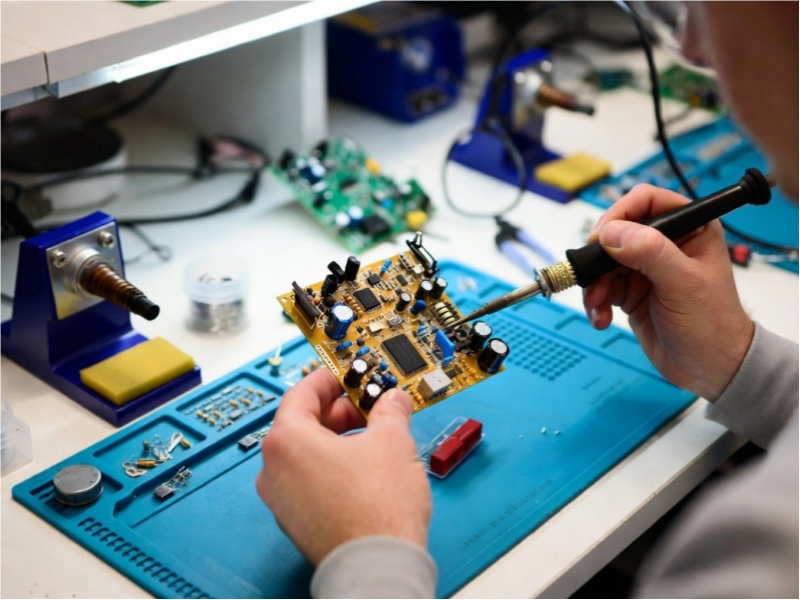
Most engineers choose a turnkey PCBA manufacturer for the obvious reasons: convenience and time savings. You send your files. The assembler buys the parts, builds the boards, and ships them to you. That alone is worth the switch from managing separate fabrication, component, and assembly vendors.
At PCBA Store, we have watched customers discover advantages they never expected when they first came to us. These hidden benefits show up in lower total cost, faster problem resolution, and fewer headaches across the entire product lifecycle. Here are seven that matter most.
Reduced Communication Overhead Across the Supply Chain
Managing multiple vendors creates communication chaos. Your bare PCB fabricator has questions about stackup. Your component distributor says a part is backordered. Your assembly house blames the PCB vendor for poor solderability. You become the middleman, relaying messages between parties who never talk to each other.
With a one-stop turnkey manufacturer, you have a single point of contact. One person reviews your complete package—Gerbers, BOM, and assembly drawings. That same person coordinates PCB fabrication, component procurement, and SMT assembly internally. When a question arises, the answer comes from one source. When a problem occurs, you do not chase three different vendors pointing fingers at each other.
Fewer Quality Escapes from Handoff Points
The most dangerous moment in any multi-vendor PCBA process is the handoff between suppliers. The PCB fabricator ships boards to the assembler. The assembler loads components onto the line. Somewhere in between, responsibility for quality gets lost.
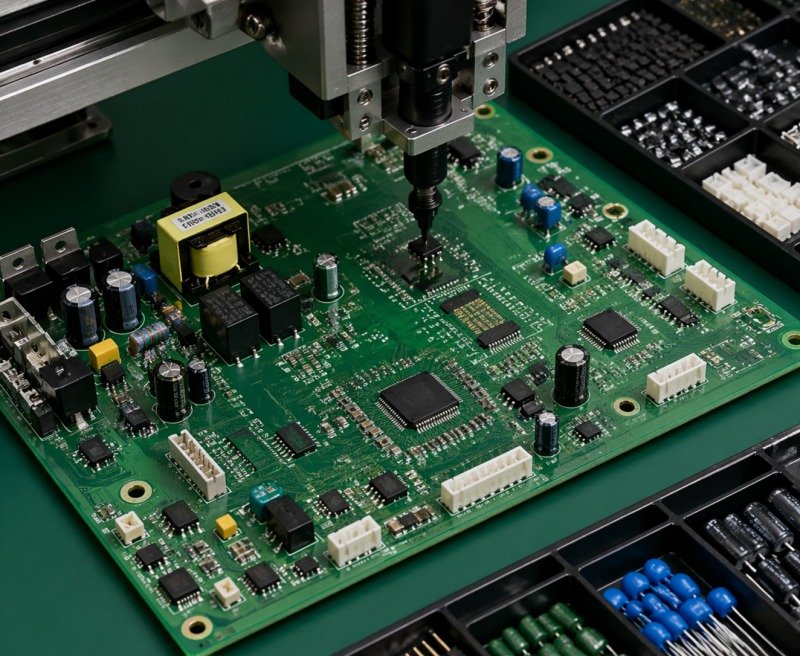
In a one-stop model, that handoff does not exist. The same quality team that fabricates the bare PCB also runs the SMT line. They know exactly what mask clearance works with their solder paste process. They catch the problem before fabrication, not after assembly. Defects that would have escaped across vendor boundaries get caught internally.
Centralized Warranty and Single-Party Accountability
When a fully assembled board fails in the field, multi-vendor sourcing creates a blame game. The PCB fabricator says the components are at fault. The component distributor says the assembly process caused the damage. The assembly house says the bare board had defects. You spend weeks—sometimes months—getting nowhere.
A turnkey manufacturer cannot play that game. We bought the components. We fabricated the bare PCB. We ran the SMT assembly. We performed the inspection and testing. If the board fails, the responsibility is ours.
This accountability extends beyond warranty claims. When you need engineering support to understand a failure, you talk to the people who actually built your boards—not a sales representative who forwards emails to three different factories.
Configurable Assembly Strategies for Mixed Technology
Many assembly houses force you into a single process. They run SMT for everything. Or they specialize only in through-hole. Mixed technology boards—with fine-pitch BGAs on one side and heavy connectors on the other—strain their capabilities.
A one-stop PCBA manufacturer with full in-house capabilities offers configurable assembly strategies. We can place 01005 passives alongside large transformers on the same panel. We can reflow some components while wave soldering others.
Faster Root Cause Analysis When Problems Occur
Problems happen. What separates good manufacturers from bad ones is how quickly they find the root cause. Multi-vendor setups drag this out. Each supplier runs their own investigation. Information moves slowly. Assumptions replace facts.
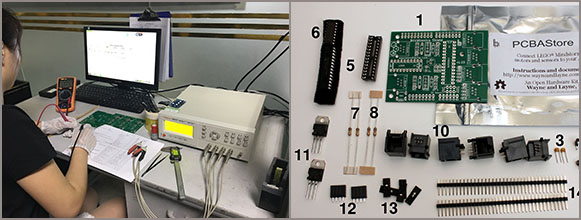
Inside a single facility, root cause analysis moves at production speed. The AOI operator sees a defect pattern. The SMT line engineer checks the solder paste print. The PCB fabrication team verifies the pad finish. All of this happens in hours, not weeks. We can trace a problem back to a specific reel of solder paste, a specific stencil cleaning cycle, or a specific batch of bare boards because we control every variable.
Lower Total Cost Through Process Integration
The per-board price from a turnkey manufacturer may look higher than a bare-bones assembly quote. But total cost tells a different story. Process integration eliminates dozens of hidden expenses.
Integrated processes that save you money:
· No shipping cost for bare boards moving from fabricator to assembler (they never leave our facility)
· No incoming inspection fees at the assembler (we already inspected them during fabrication)
· No separate stencil charges (we laser-cut stencils in-house for every assembly order)
· No expedite fees for coordinating multiple vendors (we control the entire schedule)
· No engineering hours spent reconciling conflicting quality reports from different suppliers
· No air freight for components ordered from separate distributors (we combine everything into one shipment)
When we quote your turnkey project, those savings show up in the final price. We are not adding margin at every handoff because there are no handoffs. The factory that builds your bare boards places your components and ships your finished assemblies.
At PCBA Store, we have run our own PCB fabrication and SMT assembly lines under one roof since 2006. That integration is not a marketing claim. It is how we deliver consistent quality, fast turnaround, and transparent pricing.
Our customers stay with us because they discover these hidden benefits after the first order. The convenience of PCBA Turnkey Manufacturer is obvious. The reduced risk, faster problem resolution, and lower total cost are what keep them coming back.
Frequently Asked Questions
Is a one-stop turnkey manufacturer more expensive than using separate vendors?
The per-board quote may be comparable or slightly higher. But total landed cost is almost always lower when you factor in shipping between vendors, incoming inspections, engineering time managing multiple suppliers, and risk of quality escapes at handoff points. We recommend comparing total project cost—not just assembly labor rates .
How does warranty work differently with a turnkey manufacturer?
With separate vendors, each warrants only their portion. The PCB fabricator warrants bare boards. The assembler warrants their workmanship. Component failures fall on you or your distributor. With a turnkey manufacturer, one party warrants the fully assembled board. If any part of the process causes failure, we own the resolution. That is a fundamentally different level of accountability .
What happens if a component goes obsolete during my production run?
We monitor component lifecycle status during BOM quoting. If a part shows EOL notices, we notify you and propose an approved alternative before we build. For ongoing production runs, we track changes and recommend last-time buys or alternate sources. This is a standard part of our turnkey procurement service—not an extra fee .
Can a turnkey manufacturer handle both leaded and lead-free assembly on the same board?
Yes, for mixed technology boards requiring different solder alloys on different sections. We run selective soldering processes that apply leaded solder to specific joints while using lead-free solder for the rest. This requires configurable assembly strategies that only a full-service shop can provide .
What is the minimum quantity for a one-stop turnkey PCBA order?
We have no minimum order quantity for turnkey assembly. Prototype runs of 10 to 50 boards are common. Production runs of thousands of boards use the same integrated process. The hidden benefits—single point of contact, centralized quality, faster problem resolution—apply equally to small and large orders .
You Might Like:
Quick Turn PCB Prototype Online Quote And Order in PCBA Store
PCBA Store’s Component Procurement and Delivery Models Explained
Previous article:What Goes Into an SMD PCB Assembly Quote



