General, quoting & support.
Add: Building E, No.58, Nanchang Road, Xixiang , Baoan District Shenzhen City, Guangdong, China
Tel : 0755-27348887
Fax : 0755-27349876
E-mail : svc@pcbastore.com

What Goes Into an SMD PCB Assembly Quote
PCBA Store / 2026-06-11
Contents [hide]
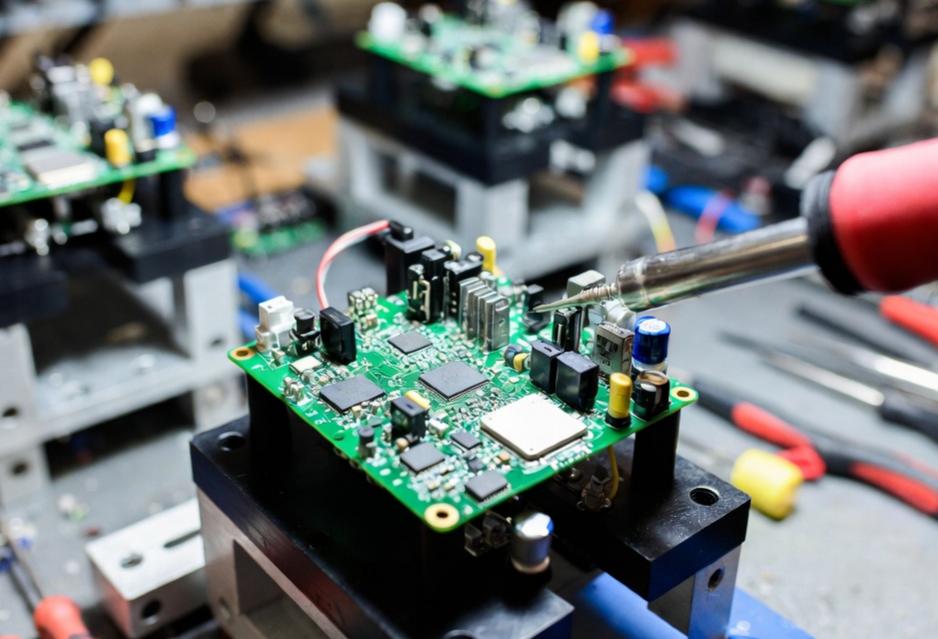
Understanding Your SMD PCB Assembly Quote: A Component-by-Component Breakdown
When you receive an SMD PCB assembly quote, you are looking at more than just a final price. You are looking at a detailed map of your project’s manufacturing requirements. At PCBA Store, we believe in full transparency. We do not hide costs behind vague line items. Instead, we break down exactly what drives the cost of your Printed Circuit Board Assembly.
Many buyers make the mistake of comparing only the bottom line. This often leads to unexpected charges later. A thorough PCBA cost analysis must separate fabrication, components, assembly, and testing. Let us walk you through each part of a professional SMT assembly quote so you know exactly what you are paying for and why.
Bare PCB Fabrication vs. PCB Assembly Services
The first distinction to understand is between the bare board and the assembly work. Some quotes bundle these together. We keep them separate for clarity. The bare PCB fabrication cost covers the physical board—layers, material, copper weight, and surface finish. The assembly quote covers the work of placing and soldering components onto that board.
For example, a standard 2-layer FR-4 board with HASL finish has a different cost structure than a 10-layer HDI board with ENIG plating . When you request a turnkey PCBA quote, we calculate both sides. But you will see them itemized. This helps you identify where your money goes. If you already have bare boards from another supplier, we can quote assembly-only pricing. Just provide the boards and your Gerber files.
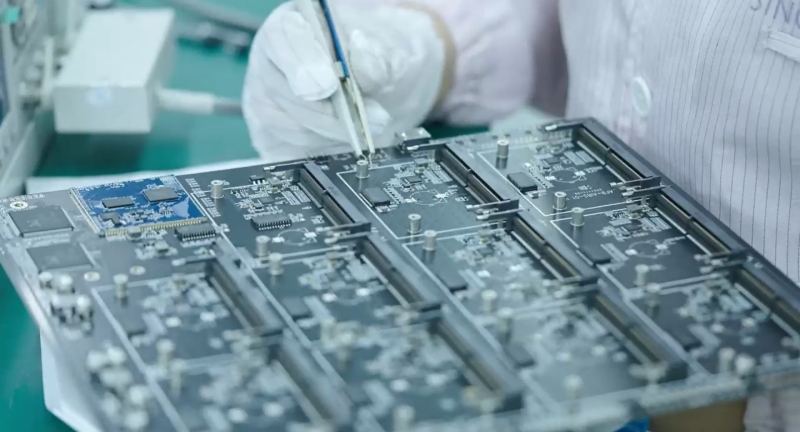
Bill of Materials (BOM) and Component Sourcing Costs
Component procurement typically accounts for the largest portion of any PCBA quote—often around 50% of the total . This is where the Bill of Materials (BOM) drives the price. We review every line of your BOM. The number of unique part numbers (BOM lines) directly affects sourcing effort. More unique parts mean more reel changes on the pick-and-place machine.
One area where we save you money is passive components. For turnkey orders, we stock thousands of resistors and capacitors. For prototype PCBA quantities like 10 or 20 pieces, these passives are often provided at no cost. That is not a gimmick. It reflects our inventory efficiency. However, if your BOM contains hard-to-find or obsolete parts, expect extended lead times and higher sourcing fees. We will alert you before we quote.
SMT Setup, Stencil, and Programming Fees
Before a single component is placed, setup work happens. This includes stencil fabrication, feeder loading, and pick-and-place programming. Many assembly houses charge a separate setup fee or NRE (Non-Recurring Engineering). We do not charge separate setup fees for standard SMT assembly. The stencil—a laser-cut stainless steel foil used for solder paste printing—is provided free with your assembly order .
However, there are scenarios where additional setup costs apply. Double-sided SMT assembly requires a second solder paste step and a second reflow pass. This increases labor and machine time. Mixed technology boards that combine SMT with through-hole components also require additional handling. Through-hole parts often need wave soldering or hand soldering after the SMT process. Each of these steps adds measurable cost to your SMD PCB assembly quote.
Automated Optical Inspection (AOI) and X-Ray Inspection Costs
Inspection is not optional for reliable electronics. But it is not always included in the base assembly price. Here is how we handle it. Automated Optical Inspection (AOI) is standard on every assembly order. Our AOI systems check solder joint quality, component placement, polarity, and missing parts. This catches visible defects before boards move to the next stage .
X-Ray inspection is different. It is required when your board contains components with hidden solder joints. BGA, QFN, LGA, and POP packages fall into this category. You cannot see the solder balls under these parts. An X-ray machine is the only way to verify proper wetting, voiding, and alignment. We perform X-Ray inspection on any board with BGA or QFN components. This is an itemized charge because it requires specialized equipment and operator time . For boards with more than 15 BGA parts, the per-board X-Ray cost decreases due to efficiency gains.
Some vendors only sample X-Ray a percentage of boards. We believe that approach introduces risk. If your design uses bottom-terminated components, we X-Ray inspect every board. That is our standard.
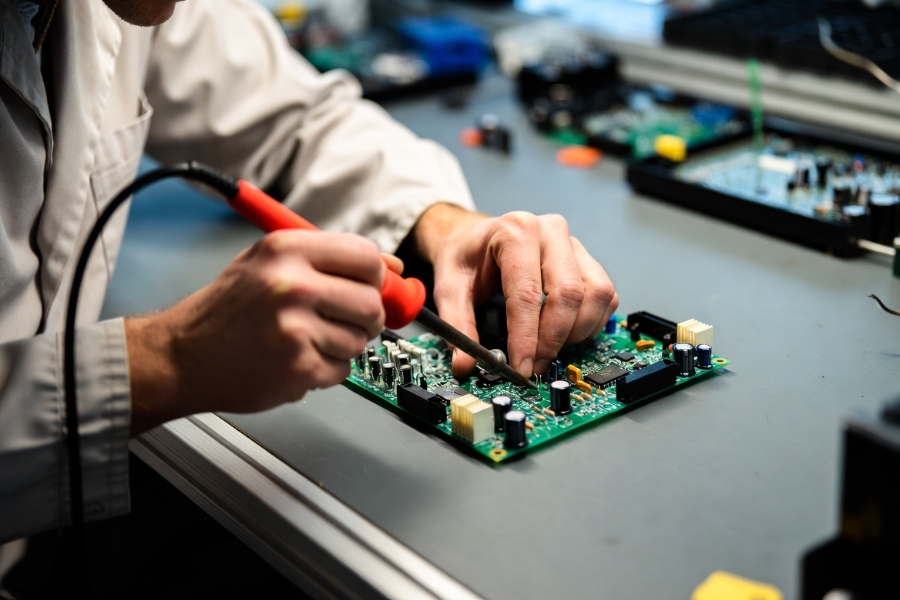
Functional Testing (FCT) and In-Circuit Testing (ICT)
Testing beyond visual and X-Ray inspection is often a separate line item. Functional Testing (FCT) verifies that the assembled PCBA performs its intended job. You provide the test procedure, test points, and expected outputs. We build a test fixture and execute your protocol. This is a billable service because it is unique to your product.
In-Circuit Testing (ICT) using a bed-of-nails fixture is another option for high-volume production. ICT checks individual components for correct values and isolation. The fixture itself costs several thousand dollars, so this is only economical for production runs. For prototype and low-volume PCBA, FCT is usually the better choice. We will advise you based on your volume and reliability requirements .
Engineering File Review and First Article Inspection
Before we start production, our engineering team reviews your Gerber files, BOM, and centroid data. This review is free and automatic with every order. We check for common issues: missing reference designators, BOM-to-centroid mismatches, and polarity conflicts. Catching these problems before assembly saves you rework costs.
First Article Inspection (FAI) is an optional service. For the first assembled board from a production run, we perform a complete inspection. We check component values, orientations, solder quality, and board cleanliness against your specifications. You receive a detailed report with images. FAI is a one-time charge per project. It gives you confidence before we run the remaining quantity.
Extras That Drive Cost: Lead-Free Assembly, Quick-Turn, and Box Build
Several optional requirements increase the quote. Lead-free (RoHS-compliant) assembly is our default process. If you request leaded solder for specific applications, we can accommodate it. But leaded processes require separate equipment setup and material handling.
Quick-turn service reduces normal lead times. Our standard SMT assembly turnaround is 3-5 days. Express service at 8 hours or 24 hours incurs a premium. This reflects overtime labor and expedited material flow. Box build assembly goes beyond bare PCBA. If you need us to mount assembled boards into enclosures, add wiring harnesses, or integrate displays, we quote that separately. These are labor-intensive steps.
How to Get an Accurate SMD PCB Assembly Quote
To receive a precise quote, prepare three files. Your Gerber file (or PCB CAD files) defines the board layout. Your BOM in Excel or CSV format lists every component with manufacturer part numbers. Your centroid (pick-and-place) file provides X-Y coordinates and rotation for each component. Missing any of these delays the quoting process.
Upload your files to our online quote system for an instant estimate. For complex projects, email your package to svc@pcbastore.com. Our team responds with a detailed breakdown within one business day .
Frequently Asked Questions (FAQ)
How does the number of unique BOM lines affect my assembly quote?
Each unique part number in your BOM requires a separate feeder on the pick-and-place machine. Changing reels takes time. More unique lines increase setup labor. For example, a board with 20 unique part numbers costs less per placement than a board with 80 unique numbers, even if the total component count is the same. This is a primary cost driver in SMT assembly pricing .
Do you charge extra for X-Ray inspection on every board?
Yes, when your design contains BGA, QFN, or other bottom-terminated packages, we recommend 100% X-Ray inspection. We charge for this as a separate line item because it requires dedicated equipment and analysis time. The per-board cost decreases as quantity increases. For boards without hidden solder joints, X-Ray is not required and we do not add this charge .
What is the difference between turnkey and consigned PCBA pricing?
Turnkey pricing includes component sourcing. We buy all parts from our approved vendors. This gives you a fixed per-board cost and transfers supply chain risk to us. Consigned (or kitted) pricing applies when you supply your own components. In this case, we charge only for assembly labor and inspection. Consigned pricing is lower per board, but you assume responsibility for part quality and shortages .
You Might Like:



