General, quoting & support.
Add: Building E, No.58, Nanchang Road, Xixiang , Baoan District Shenzhen City, Guangdong, China
Tel : 0755-27348887
Fax : 0755-27349876
E-mail : svc@pcbastore.com

How to Tell If a Circuit Board Is Bad: 7 Signs You Shouldn’t Ignore
PCBA Store / 2026-06-10
Contents [hide]
Introduction
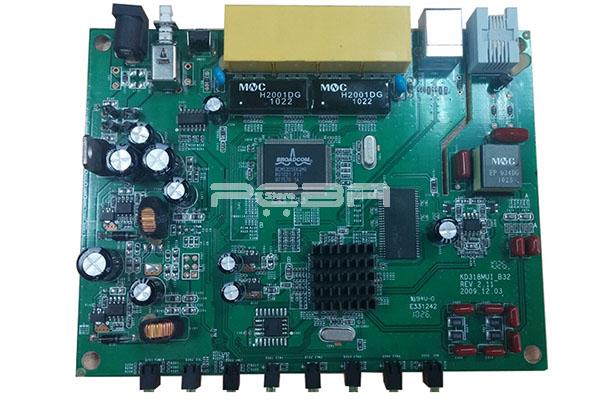
A circuit board usually doesn't just outright say it's broken. It gives hints that things have gone south, though you might not catch them at first. Knowing how to spot issues with a circuit board is essential for folks in design, building, or maintenance. If early warnings are ignored, what starts as an easy fix turns into a big hassle—replacing the whole board instead of just a component.
At PCBA Store, top China PCB assembly company, we have inspected thousands of failed boards that came back from the field. Most of them showed the same seven failure signs before they stopped working entirely. Here is what you need to watch for.
Visual Examination Reveals Burnt Components and Discoloration
The first thing to look for is physical damage you can see with your own eyes. Burnt components are hard to miss. A resistor that has turned black, an IC with a bubble on its plastic body, or a capacitor that has cracked open—these are clear indicators that excessive current or voltage damaged the part .
Discoloration on the board itself matters just as much. The normal green solder mask may turn brown or dark yellow in localized areas. That color change tells you that section of the board ran hot for an extended period. In severe cases, the fiberglass substrate itself may show charring.
What to check during a visual examination:
· Darkened or burned spots on any component body
· Solder mask discoloration around high-power sections
· Cracked or chipped IC packages
· Melted plastic on connectors or wire insulation
Unusual Smells Often Signal Overheating Components
Your nose is a legitimate diagnostic tool. A burnt smell that lingers around a circuit board points directly to overheating. Different failures produce distinct odors. A sharp, acrid smell often comes from a burnt IC. A fishy or chemical odor may indicate a leaking capacitor.
When you encounter a board with a strong burnt smell, do not simply apply power and hope for the best. That smell means something already failed. Powering up the board without investigating first could short out additional circuits .
Practical approach: Smell around the board before you plug it in. If you detect a burnt odor, locate the source visually before applying any power. The component that smells burnt is almost always the failed part.
Blown Fuses and Obvious Physical Damage
A fuse that has blown is not the problem—it is a symptom of the problem. When you see a fuse with a broken internal wire or blackened glass, something downstream drew too much current. Replacing the fuse without finding the root cause guarantees it will blow again .
Other forms of physical damage include cracked boards, broken connectors, and components that have physically separated from their pads. A board that flexed too much during installation may have cracked traces underneath the solder mask. These cracks are invisible to the naked eye but can be detected with a continuity test.
Key inspection points for physical damage:
· Fuses with blackened glass or broken internal elements
· Cracks in the board material, especially near mounting holes
· Bent or broken connector pins
· Components that wiggle when touched lightly
Bulging or Leaking Capacitors
Electrolytic capacitors have a limited lifespan. Heat accelerates their aging. When they start to fail, they show two classic signs: bulging on the top vent and leakage from the bottom seal.
A healthy aluminum electrolytic capacitor has a flat top. A failing one develops a dome or convex shape. That bulging means the internal pressure has built up beyond safe limits. Once you see this, the capacitor is already out of specification—even if the board still appears to work.
Leaking electrolyte appears as a crusty or wet residue around the base of the capacitor. This residue can become conductive over time, creating leakage paths between adjacent traces. Boards stored in hot environments for years almost always develop capacitor problems .
Corrosion and Contamination on PCB Surfaces
Moisture and contaminants destroy circuit boards slowly but surely. Corrosion starts as a dulling of exposed metal surfaces. It progresses to green or white crystalline deposits on copper pads and component leads.
Battery leaks are a common source of corrosive damage. The electrolyte from a leaking battery spreads across the board, eating through traces and component leads. Boards recovered from equipment with old batteries often have extensive damage radiating outward from the battery holder.
Where corrosion most often appears:
· Around battery holders and coin cell contacts
· Near board edges that were exposed to humidity
· Under uncoated connectors and test points
· Around heat sinks where condensation may collect
Short Circuits Between Power and Ground
A short circuit between the power and ground planes is one of the most common failure modes—and also one of the easiest to confirm. Use a multimeter set to continuity mode. Touch one probe to a power rail test point and the other to a ground point. If the meter beeps, you have a direct short .
The challenge is locating where the short occurred. A failed capacitor is the usual suspect. Ceramic capacitors often fail shorted when subjected to voltage spikes or mechanical stress. Once shorted, they pull the entire power rail down to ground.
How to locate a short: Apply a low current to the shorted rail and use a thermal camera or your finger to feel for the hot spot. The component that heats up is the failed part. This technique works because the shorted component dissipates power as heat .
Intermittent Failures from Cracked Solder Joints
Some boards work sometimes and fail other times. This intermittent behavior is maddening to diagnose but often points to a single cause: cracked solder joints.
A cracked joint looks dull and grainy compared to a healthy shiny solder fillet. The crack may be too small to see without magnification. But when the board heats up during normal operation, thermal expansion opens the crack and the connection fails. When the board cools down, the crack closes and the connection returns .
Where cracked joints most often occur:
· On large components that experience mechanical stress
· Under heavy transformers and coils
· On connectors that get plugged and unplugged frequently
· On boards subject to vibration or thermal cycling
Quick test: Gently flex the board while monitoring the circuit with power applied. If the failure comes and goes with flexing, you almost certainly have cracked solder joints or broken traces.
When to Repair Versus When to Replace
Once you have identified that a board is bad, the next question is whether to fix it or replace it. Simple failures—a blown fuse, a bulging capacitor, a single cracked solder joint—are usually worth repairing. Complex failures like burnt multilayer boards, damaged vias, or shorted internal planes often cost more to repair than to replace.
At PCBA Store, we build every board to IPC-A-610 Class 2 standards, with 100% AOI and X-Ray inspection on every assembly run. We also test every board before it leaves our facility. That means when you receive a board from us, you can trust it to work.
If you have a board that you suspect is bad—or if you need a reliable replacement manufactured to specification—send us your Gerber files and BOM. We will quote you a price and deliver working boards that meet your exact requirements.
Need a replacement board? Upload your Gerber and BOM files for an instant quote. For urgent inquiries, email svc@pcbastore.com. We respond within 24 hours.
Frequently Asked Questions
What is the most common sign that a circuit board has failed?
A burnt smell combined with visible discoloration on the board surface is the most common failure signature. Overheating components leave both visual and olfactory evidence. If you smell something burnt and see a darkened area on the board, you have found the failed section .
Can a circuit board be bad even if no physical damage is visible?
Yes. Internal failures—such as cracked via barrels, delaminated inner layers, or shorted internal planes—do not always show on the surface. In these cases, you need electrical testing with a multimeter or more advanced tools like X-Ray inspection to confirm the failure .
How do I test for a short circuit on a board?
Set your multimeter to continuity mode. Place one probe on a power rail test point and the other on a ground point. If the meter beeps, you have a short between power and ground. Do this test with the board completely powered off .
Why does my board work sometimes but fail when it gets hot?
That pattern almost always points to a cracked solder joint or a fractured trace. Heat causes the board materials to expand. The expansion opens the crack, breaking the electrical connection. When the board cools, the crack closes and the connection returns .
Should I repair a bad board or order a new one?
Repair simple failures like bulging capacitors or cracked solder joints. Replace boards with burnt substrate, damaged vias, or shorted internal layers. If repair labor costs exceed 50% of a new board price, ordering a replacement is usually the better decision.
You Might Like:
Previous article:Comparing SMD PCB Assembly Quotes — What to Look for in Pricing



