General, quoting & support.
Add: Building E, No.58, Nanchang Road, Xixiang , Baoan District Shenzhen City, Guangdong, China
Tel : 0755-27348887
Fax : 0755-27349876
E-mail : svc@pcbastore.com

Automotive PCB Assembly - What You Need to Know
PCBA Store / 2026-01-08
Contents [hide]
Over the past ten years, cars have changed a lot because of electronics. From electric motors to smart safety systems (ADAS), electronic parts now make up as much as 40% of a car’s total cost. Printed circuit boards (PCBs) are the key pieces that make safety, speed, and connection possible. This article looks at the main points of automotive PCB assembly and explains how today’s EMS companies handle the tough needs of this field. As a leading manufacturer, supplier, and factory with 16 years of experience, PCBA Store provides high-reliability automotive PCB assembly services all over the world.
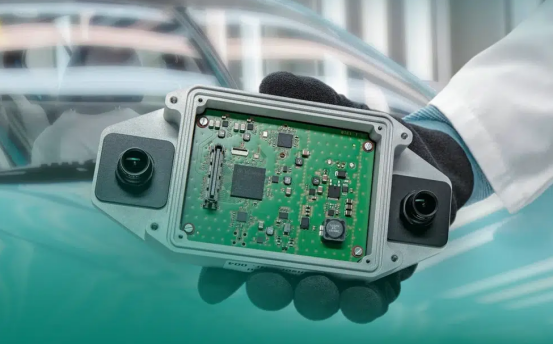
PCB Assembly for the Automotive Industry
Today’s cars, especially electric vehicles (EVs), often have more than 100 electronic control units (ECUs). Each one needs strong PCB assemblies. McKinsey says the global automotive electronics market should hit $462 billion by 2030 and grow at a 5.5% CAGR.
Automotive PCB assembly means placing and soldering parts onto boards that can survive very cold and very hot weather (-40°C to +125°C). They also face constant shaking, damp air, and electrical noise. These boards must be much more dependable than those in phones or laptops. Car makers and big Tier-1 suppliers check every supplier very carefully. They want zero defects before any board goes into a vehicle.
Key Considerations in Automotive PCB Assembly
1. Material Selection
Cars work in harsh places. PCBs face huge temperature swings from -40°C to over 125°C. They also deal with bumps, constant vibration, and shocks. Choosing the right materials is extremely important for long life and good performance. High-Tg laminates, such as FR-4 types with Tg above 170°C, stay stable when it gets hot. They stop layers from peeling apart. For power-heavy parts like inverters in EVs, insulated metal substrates (IMS) with aluminum or copper bases move heat away quickly.
Special protective coatings and tough solder masks keep water and rust out. For fast radio signals in communication units, low-loss materials like PTFE-based laminates keep the signal clear. All materials must follow green rules. Halogen-free and RoHS-compliant choices are common now. By picking these materials, EMS companies make boards stronger and more reliable. These boards work well in everything from entertainment screens to power control boxes.
2. Compliance with Industry Standards
Very strict quality and safety rules control automotive PCBs. Lives depend on them. ISO 26262 covers functional safety. It sets rules for risk checks and safe designs in electrical systems. IATF 16949 builds on ISO 9001 but focuses on stopping defects and full supply chain tracking.
IPC-6012DS lists rules for high-reliability rigid PCBs. It sets standards for track spacing and plating thickness. AEC-Q200 describes hard tests for passive parts, like hot-cold cycles and wet conditions. These rules touch every step, from design checks to final assembly. Following them meets legal needs and earns trust from original equipment manufacturers (OEMs). It also makes fitting the boards into cars easier.
3. Soldering and Assembly Techniques
Assembly methods must be accurate yet tough. They handle many different parts and board layouts. Surface Mount Technology (SMT) is the most common choice. It works great for packing parts close together. Reflow soldering creates clean joints even on tiny 0.4mm pads. This method is perfect for fine-pitch chips, BGAs, and QFNs used in ADAS units.
Through-Hole Technology (THT) is still used for strong connectors and relays. Wave soldering quickly joins leads that face heavy force. Many boards mix both methods. For example, power modules use THT for big pins and SMT for signal lines. Modern factories use nitrogen in reflow ovens. This cuts oxidation and empty spots in solder. Selective soldering protects sensitive parts from too much heat.
4. Testing and Quality Assurance
Zero defects is the goal. That needs many kinds of tests. Automated Optical Inspection (AOI) spots surface problems fast. In-Circuit Testing (ICT) checks connections and part values with special fixtures. X-ray machines look inside solder joints. They find hidden voids or shorts under BGA packages.
Functional tests copy real driving conditions. Vibration tables and hot-cold chambers push boards hard. Boundary scan and flying probe tests work well for small batches. Burn-in tests run boards for hours to catch early failures. Top EMS factories reach yields over 99%. They log every serial number for full traceability. Strong testing stops problems on the road and keeps cars safe.
Current Trends Shaping Automotive PCB Assembly
Surge in EV Demand EVs need high-voltage, heavy-copper PCBs (up to 20 oz) for battery management systems, inverters, and chargers. Good heat control and high current handling are required.
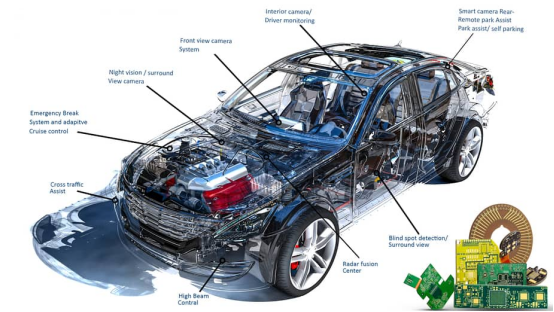
Miniaturization and HDI ADAS cameras, radar, and sensors need tiny HDI boards with microvias, very thin lines (≤75 μm), and stacked vias. This keeps signals clean in small spaces.
Smart Manufacturing Fully automatic SMT lines, AI inspection cameras, and live data tracking raise quality and speed. This matters when millions of the same boards are built.
Types of PCBs Used in Automotive Applications
Different PCB types fit different jobs in cars.
Rigid PCBs are the most common. They are strong and used in ECUs and control units. High-temperature FR-4 with halogen-free flame retardants is normal. They can have up to 40 layers and deep vias with 16:1 aspect ratio.
Flexible PCBs bend easily. They fit in dashboards, lights, and sensors. Polyimide material handles bending and heat up to 260°C.
Rigid-Flex PCBs combine both. They save space and remove extra connectors. They are popular in tight transmission modules.
Metal-Backed and High-Frequency PCBs solve heat and signal issues. IMS boards with aluminum cores cool LED drivers and power amps. PTFE high-frequency boards keep radio and V2X signals strong and clear.
Remaining Challenges
Thermal Dissipation: Getting rid of heat stays hard in small modules. Supply Chain Disruptions: Chip and special material shortages slow production. Regulatory Compliance: Rules on safety and the environment keep changing.
Conclusion
Cars are becoming more electric, connected, and self-driving every year. Reliable automotive PCB assembly matters more than ever. Picking an experienced EMS partner makes projects succeed. PCBA Store, as a professional manufacturer, supplier, and factory, offers full turnkey automotive PCB assembly. Services include full compliance, fast prototypes, and large production runs for global OEMs and Tier-1 suppliers.
FAQ
What standards are mandatory for automotive PCBs?
ISO 26262, IATF 16949, IPC-6012DS, and AEC-Q100/200 are the core requirements. How long does automotive PCB assembly take?
Prototypes: 3–7 days; medium-volume production: 2–4 weeks.
What is the typical defect rate expected by automotive customers?
Usually ≤50 PPM, with many programs targeting zero defects.
Does PCBA Store support heavy-copper and high-voltage boards for EVs?
Yes, capabilities include up to 20 oz copper and 1000 V+ isolation.
Get Automotive-Grade PCB Assembly from a Trusted Factory
PCBA Store is a professional PCB assembly manufacturer, supplier, and factory with 16 years of experience serving the automotive industry. The company offers turnkey solutions including DFM review, rapid prototyping, SMT & THT assembly, AOI/X-ray/ICT/functional testing, conformal coating, and full box-build. ISO 9001-certified lines support HDI, heavy copper, rigid-flex, and metal-core boards with no MOQ and 24-hour quoting. Request an instant quote today at https://www.pcbastore.com/online_quote.html or email svc@pcbastore.com to start the project.
You Might Like:



