General, quoting & support.
Add: Building E, No.58, Nanchang Road, Xixiang , Baoan District Shenzhen City, Guangdong, China
Tel : 0755-27348887
Fax : 0755-27349876
E-mail : svc@pcbastore.com

What is Quick Turn PCB Assembly Know About Its Fabrication and Manufacturers
PCBA Store / 2026-01-04
Contents [hide]
Quick turn PCB assembly has become a major step forward in electronics manufacturing. It allows very fast production without losing quality or accuracy. This method speeds up the making of printed circuit boards (PCBs) from the first idea to working prototypes. It meets the growing needs of fields like consumer electronics, cars, and telecom. By making old processes simpler, quick turn assembly cuts waiting time from weeks to just a few days. This helps companies create new ideas faster and react quickly to market changes. Well-known manufacturers that handle both fabrication and assembly in one place, like PCBA Store, show how this way gives complete solutions to customers all over the world who want speed and good results.
Benefits of Choosing Quick Turn PCB Assembly
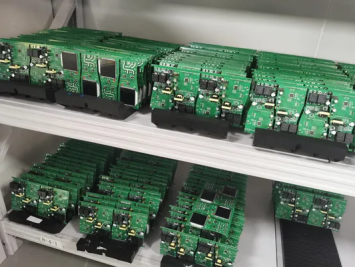
Quick turn PCB assembly brings many clear advantages that fit the fast world of today’s electronics work. Saving time is the biggest plus. The whole process—from checking the design to finishing the assembly—happens much quicker. This shorter production time lets teams test new ideas fast, cut waiting periods, and bring products to market sooner.
Flexibility in how boards are built is another strong point. Many quick turn assemblies use bendable materials. These create boards that can bend, stay small, and handle shaking or tough conditions. Such features work great for things like wearable gadgets or parts used in planes, where hard boards simply do not work well.
Prototyping is also a huge benefit. The fast pace helps engineers build and try out ideas very early. This finds problems quickly and lets teams add better features. In the end, the product works better and lasts longer.
Using Design for Manufacturability (DFM) rules from the start stops many delays. Experts check the design against real factory limits right away. That makes the move from prototype to full production smooth and cuts mistakes. For companies that make original equipment (OEMs), this means they meet promises on time and keep customers happy.
Durability matters too. Quick turn boards usually manage heat better, let air flow freely, and feel strong overall. These things make the boards last longer even in hard jobs. All together, quick turn PCB assembly helps companies stay ahead with top quality and enough supply when the market asks for more.
Quick Turn PCB Fabrication and Various Related Steps
Quick turn PCB fabrication turns circuit drawings into real bare boards. Those boards become the base for later assembly. Every tiny detail counts because small errors can ruin the final product. Choosing trusted fabrication partners is very important. Good talk between designers and the factory keeps everything on the same page.
The work starts by printing the layout onto copper-covered sheets. This step carves exact circuit paths. Extra copper on inside layers gets removed with chemicals. That cleans the board’s inner parts.
Next comes stacking the layers. Separate sheets get pressed together with heat and strong pressure. This builds a solid multilayer board. Holes for vias and mounting spots are drilled afterward. These holes let parts connect and hold the board in place.
Plating adds metal inside the holes so electricity can flow properly. A protective layer called solder mask goes on top. It stops rust and short circuits. Surface finishes such as HASL or ENIG get added last. They make copper ready for soldering.
Labels, logos, and part numbers are printed for easy reference. The whole job follows very tight rules. Modern machines like laser plotters and CNC drills keep everything exact. Knowing these steps shows how design choices affect speed, scaling, and how well the board works for years.
How PCB Fabrication is Different from PCB Assembly Process
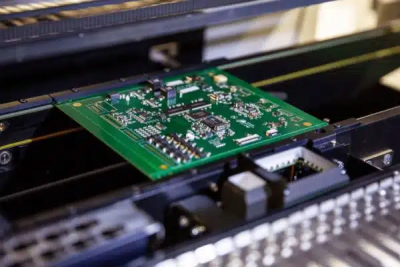
PCB fabrication and assembly are two separate but linked stages in quick turn work. Fabrication builds the empty board only. Think of it as creating roads and power lines in a new city. It turns the drawing into a real base with traces, pads, and vias that is ready for parts.
Assembly then adds all the electronic parts. It places resistors, capacitors, chips, and connectors. After that, soldering locks everything in place. Using the city example, assembly builds the houses and offices on the empty streets. It makes the board actually work.
Fabrication cares about the base material. Assembly cares about putting parts together, testing, and making sure the circuit runs right. In quick turn jobs, both steps must stay perfectly in sync. Fabrication’s fast etching and pressing has to match assembly’s quick part placement and soldering. Some factories mix the two, but keeping them clear helps avoid slowdowns when making many boards.
Quick Turn PCB Manufacturing Process – An Overview
The quick turn PCB journey begins when designers send Gerber files. These files are the standard way to share exact layout information. They include every layer image, drill data, and specs. This keeps communication clear and safe.
When the factory receives the files, they do a Design for Manufacturability (DFM) check. Experts look for possible problems like traces too close together or wrong material choices. They pick the best base material—usually FR-4 or special high-frequency types—based on what the board needs to do.
After the design passes, customers get a fast quote with price, time, and choices. Real work starts with fabrication: grouping boards on panels, printing, etching, drilling, plating, and finishing. Small test batches prove everything works. Electrical tests make sure connections are good and nothing touches that should not.
Early production runs fine-tune the process. Machines check appearance with AOI and test circuits with ICT. Full production then uses fast SMT machines for surface-mount parts and careful soldering for through-hole parts.
Quality checks happen at every step—from incoming parts to final tests. Tracking numbers let customers watch shipping. Express service can deliver prototypes in 24 hours. Quick turn has grown from just prototypes to a key part of bringing new electronics to market fast.
Things to Look for in Quick Turn PCB Manufacturers
Picking a quick turn PCB manufacturer needs more than just looking at speed. Real turnaround time matters most—good companies finish prototypes in 24-48 hours and small runs in 3-5 days. Many promise 99% on-time delivery. Factories that do both fabrication and assembly inside one building keep things smooth and easy to track.
Look for quality certificates like ISO 9001 and IPC Class 2/3. Strong inspection tools—AOI, X-ray, flying probe—keep bad boards under 0.2%. The ability to buy all parts for you (turnkey BOM) saves a lot of work. No minimum order quantity helps when you only need a few boards.
Top companies give instant online quotes, support any time of day, and sign NDAs to protect designs. Prices stay clear with no hidden charges. Years of work in medical, car, or RF fields prove they can handle hard jobs. Fast worldwide shipping is normal now.
Many also follow green rules with lead-free and halogen-free options. In the end, the best manufacturers become real partners that help your projects succeed.
FAQ
What distinguishes quick turn PCB assembly from standard PCB production?
Quick turn assembly focuses on speed. It often finishes prototypes in 24-48 hours with special fast lines. Standard production can take weeks for big orders.
How does quick turn fabrication ensure board quality during rapid production?
It uses careful DFM checks, automatic AOI and X-ray inspections, and follows IPC standards. Defect rates stay below 0.2% even when moving fast.
What materials are commonly used in quick turn PCB manufacturing?
FR-4 laminates are the most common because they cost less. High-Tg types add heat resistance. Polyimide works for flex boards. Rogers materials suit high-frequency needs.
Can quick turn services handle mixed-technology assemblies?
Yes. They manage both SMT and THT parts. They place tiny 01005 components and check BGA solder joints with X-ray.
What turnaround times can businesses expect from quick turn manufacturers?
Prototypes usually ship in 1-2 days. Small batches take 3-5 days. Medium volumes finish in 1-2 weeks. Rush service can be as fast as 8 hours for assembly.
How do quick turn processes impact prototyping costs?
No setup fees and no MOQ keep costs low. Ten-piece assemblies can start around $100. Turnkey part buying often saves more money.
Partner with PCBA Store for Streamlined Quick Turn Solutions
Companies that need dependable quick turn PCB assembly choose experienced manufacturers that do everything in-house. As a direct factory and supplier, PCBA Store offers full turnkey PCBA services with 24-hour prototyping, no MOQ, and ISO-certified quality. Upload Gerber and BOM files today at pcbaStore.com for an instant quote. Enjoy 99% on-time delivery that moves projects ahead fast. Contact svc@pcbastore.com to talk about special needs and gain your advantage in electronics manufacturing.
You Might Like:
Where to Find Reputable Companies Offering Quick-Turn PCB Assembly Services



