General, quoting & support.
Add: Building E, No.58, Nanchang Road, Xixiang , Baoan District Shenzhen City, Guangdong, China
Tel : 0755-27348887
Fax : 0755-27349876
E-mail : svc@pcbastore.com

Conformal Coating vs. Potting for PCB Protection
PCBA Store / 2026-10-24
Contents [hide]
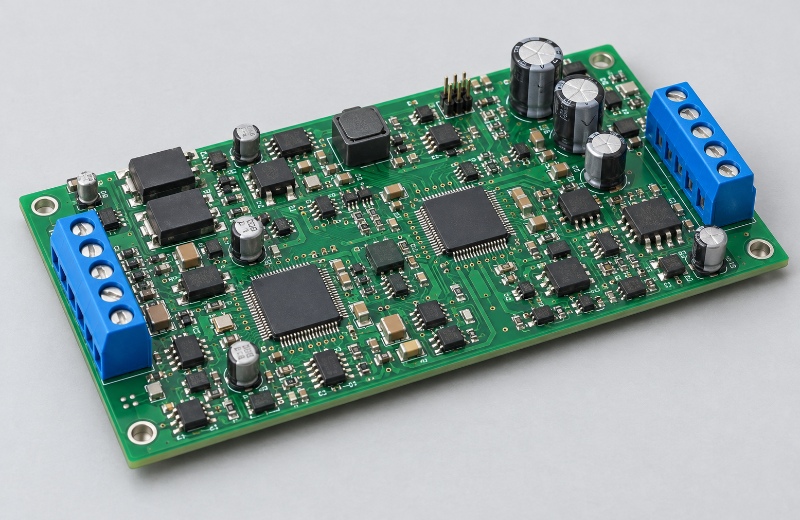
An encapsulated board can turn a one-part failure into a module decision. Reaching the faulty part may mean removing material from surrounding good components. Coating usually leaves more of the board available to inspect, although local removal can still be demanding. Compare those consequences with the product's exposure and the service action you can support.
A Surface Film and a Filled Volume
Conformal coating leaves the populated board recognizable under a thin insulating film. Component outlines and joint shapes generally remain visible, although this varies with the material. Potting involves filling around components within a cavity or housing. Once that volume is filled, reaching the embedded board becomes a very different job.
Coating adds a thin layer; potting fills a defined volume. That difference shows up in the product's weight and available space. Count the material and check the housing before selecting a method for a compact instrument.
Appearance is a poor basis for accepting PCB protection after assembly. A shiny film might miss a joint behind a tall component; a smooth potting surface tells you little about the space underneath. Decide what evidence will establish coverage or fill quality on the actual assembly.
Practical Question | Conformal Coating | Potting |
How much space is added? | A relatively thin surface film | A fill volume around components |
Can the board be inspected? | Many features remain visible, depending on the coating | Embedded joints are difficult to view directly |
Can a component be replaced? | Local removal may be possible | Access may be difficult or destructive |
What needs design attention? | Coverage, masking, adhesion, and cure | Fill path, voids, cure, stress, and heat flow |
What happens in service? | Repair and recoating may be practical | Module replacement may be the better plan |
Where Moisture Actually Reaches the Board
An exposure description needs more detail than “waterproof.” Take a controller installed inside a ventilated cabinet: direct spray might be unlikely, but condensation may still be relevant. Now consider a module beside a washing process. It has a different route for moisture to reach it. Record the conditions for this product before comparing treatments.
The untreated interfaces can control the result. Water at a mating contact remains a concern after the rest of the board has been covered. Follow the route from outside the housing to that contact. Set a job for the seal, connector, enclosure, and board treatment instead of expecting the coating to solve every entry path.
Coverage Matters at the Awkward Features
Open board area is the simplest part of a coating job. The spaces beside tall parts, shields, close gaps, and edges need their own inspection. Mark masked boundaries so a reviewer can separate an intentional keep-clear area from a missed area.
A PCB moisture protection strategy needs trials that include those awkward features. A flat material sample can establish useful properties, but the finished product also has corners, contacts, and interfaces. Use representative units and the relevant temperature changes to find out how the chosen treatment behaves there.
A Film Leaves Some Access Available
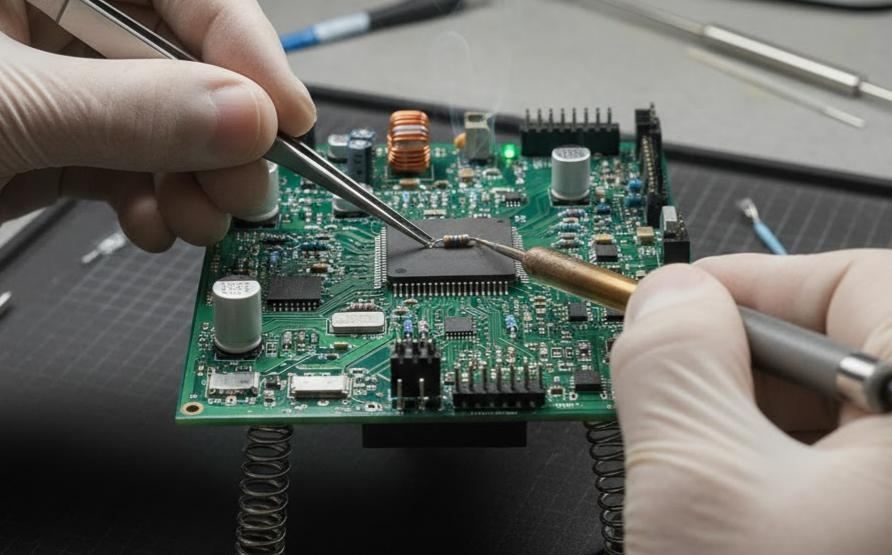
Local component replacement is a reason to investigate coating carefully. Some formulations can be removed from the repair area, after which the area is treated again. Others make removal much harder. Try the proposed repair on a representative assembly before promising component replacement to customers.
Keep-clear features can affect both production and service. A connector contact may not tolerate material, and a sensor may require an exposed surface. Include programming points and test pads, then decide which ones must remain accessible after the unit enters service.

What a Potting Compound Changes
The path into a potting cavity can be more troublesome than its overall size. Compound has to reach the required spaces around and beneath parts, with air able to escape. Include the populated board in the process trial; an empty housing will not reproduce those obstacles.
Potting changes the surroundings of a hot component. A thermally conductive compound may help move heat, provided there is a suitable path onward to a surface that dissipates it. Test the filled assembly under representative load. The useful result is the component temperature in that construction, rather than a conclusion drawn from the compound's description alone.
Curing introduces conditions the assembled board must tolerate. Compare the proposed process with the component and housing limits. Then examine shrinkage, stiffness, and thermal expansion in the filled construction. “Encapsulant” is a category, not a prediction of how one formulation will behave around a fragile lead or housing wall.
Module replacement may be the sensible service route for a potted design. Decide where that module begins and ends: does the technician exchange a small housing, or a larger assembly with cables attached? That boundary affects spare parts and fault diagnosis. Settle it before assuming a failed component can simply be unsoldered.
A Comparison on the Real Assembly
A trial assembly gives both the production and service teams something concrete to examine. Use the intended board and housing. Check whether the treatment reaches the required areas, then run the agreed exposure and thermal evaluations. Try the proposed service action as well; a satisfactory environmental result does not tell you whether the repair procedure is practical.
Consider a hypothetical controller with an accessible connector and a replaceable sensor interface. On the coated version, examine the masked contact boundary and try the intended local repair. On the potted version, check containment around the connector and attempt the proposed module exchange. Both samples must meet the same exposure requirement, but the service work is quite different.
Record the comparison against a short set of questions:
· Exposure conditions and the way moisture reaches the assembly.
· Contacts, sensing surfaces, and test features that must stay clear.
· Material compatibility with components, plastics, and the housing.
· Added mass, occupied space, and measured thermal behavior.
· Inspection before treatment and repair or replacement afterward.
The board's condition at handoff matters to the protection operation. With PCBA Store, surface-mount, through-hole, and mixed assembly are available. When discussing circuit board protection choices, agree the treatment scope separately and settle which checks occur before it. Once joints are obscured, returning to a missed inspection is a different job.
Protection That Fits the Service Plan
The material choice should follow the exposure and service decisions. If a qualified film meets the requirement, its retained access may be valuable. If encapsulation is needed, design around the resulting repair boundary. In either case, verify the interfaces and heat path on the actual construction before committing the production process.
For an assembly that needs environmental protection, contact us with the exposure conditions and whether component repair or module replacement is planned.
FAQ
Is Potting Always Better Than Conformal Coating?
Extra fill does not settle the question. The assembly still has to pass its exposure requirement, and the product has to tolerate the resulting weight, thermal behavior, and loss of access.
Does Conformal Coating Make a PCB Waterproof?
Ask for the tested exposure of the finished product. Calling the board coated provides no waterproof rating for its connectors, housing, or assembled interfaces.
Can a Potted Board Be Repaired?
The chosen compound and construction determine whether removal is practical. Establish a removal method on a sample, or plan to exchange the module where access would damage the board.
Should Connectors Be Coated or Potted?
Keep mating contacts clear unless the connector design expressly accommodates the treatment. The surrounding body and cable entry need their own application-specific assessment.
Can the Same Resin Work on Every Board?
Do not assume so. A formulation that works in one housing may have unsuitable cure conditions, flow, or thermal behavior in another. Qualify the new assembly before carrying over the choice.
Previous article:PCB vs PCBA vs Main Board: What Are You Ordering?



