General, quoting & support.
Add: Building E, No.58, Nanchang Road, Xixiang , Baoan District Shenzhen City, Guangdong, China
Tel : 0755-27348887
Fax : 0755-27349876
E-mail : svc@pcbastore.com

Global PCB Assembly Supply Chain Guide
PCBA Store / 2026-08-26
Contents [hide]
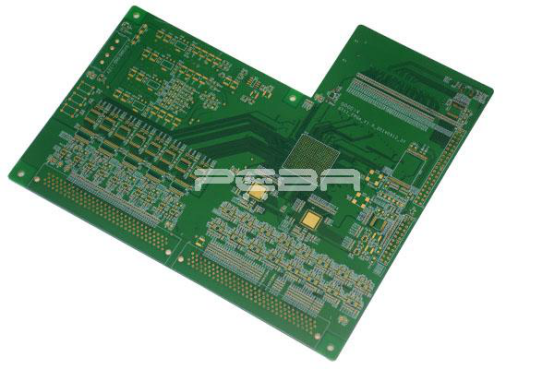
A PCB assembly supply chain is not a simple line from purchase order to shipment. Design data, bare boards, components, programming, assembly, testing, packaging, and logistics must converge on the same revision and schedule. Global OEMs reduce disruption by controlling those handoffs as one evidence trail rather than managing each vendor in isolation.
The Supply Chain Begins With Configuration Control
Sourcing risk appears early when the BOM, drawings, and approved changes do not describe one buildable product. Release identifiers should connect Gerbers, drill files, stackup, fabrication notes, assembly drawings, centroid data, firmware, test procedures, and packing instructions. A supplier cannot protect delivery or quality when the design authority is unclear.
BOM health determines sourcing options
BOM sourcing PCB assembly works best with manufacturer part numbers, quantities, reference designators, package details, approved alternates, and critical characteristics. Generic descriptions invite mismatches, while single-source parts create schedule exposure. Classify components by availability, substitution risk, lifecycle, authenticity concern, and effect on function.
Ownership must stay visible in every model
Full turnkey, partial turnkey, and consigned-part models distribute responsibility differently. The buyer may own approved sources and excess material; the assembler may own procurement, storage, moisture control, and traceability; or duties may be shared. Put those boundaries in the purchase scope, including how shortages, minimum buys, substitutions, and leftover inventory are handled.
· Name the approved manufacturer and part number for every critical item.
· Require approval before substitutions, brokerage, or date-code exceptions.
· Define traceability records for high-risk parts and assembled lots.
· Set escalation rules for allocation, obsolescence, and schedule changes.
Evaluate Controls, Not Just Supplier Access
A reliable PCBA supplier should explain how it qualifies sources, verifies incoming parts, controls storage, links material lots to production, and obtains approval for changes. Access to a broad market is useful only when purchasing discipline prevents unidentified or unsuitable material from reaching the line.
Supply-chain point | Failure mode | Control to request |
Design release | Mismatched revisions | Single approved build package |
Component sourcing | Wrong, obsolete, or suspect part | Approved sources and substitution workflow |
Incoming material | Damage or uncontrolled storage | Inspection, labeling, and handling records |
Assembly | Setup or process drift | First article and process inspection |
Testing | Escapes or weak diagnostics | Defined coverage, limits, and failure analysis |
Logistics | Damage, delay, or lot confusion | Packing, traceability, and shipment plan |
Supplier assessment should match product risk. A PCB supplier providing only bare boards needs different evidence from a partner managing components, PCBA, programming, test, and export logistics. The wider the scope, the more important it becomes to define data ownership, nonconformance response, change notification, and records that remain available after delivery. Each PCB supplier should be judged against the scope it actually controls.
Risk reviews should be time-based as well as supplier-based. A component that is available today may enter allocation, reach end of life, or change packaging before the next release. Revisit critical parts at design freeze, purchase authorization, pilot, and scheduled reorder points so the team can act before a shortage reaches the line.
Connect Sourcing Decisions to Assembly Reality
A part can be electrically acceptable yet create assembly trouble through package variation, terminal finish, moisture sensitivity, coplanarity, thermal mass, or polarity marking. Engineering approval should consider land pattern, stencil, placement, reflow, cleaning, inspection, and test. Substitution decisions made only from a distributor or PCB supplier description can transfer hidden risk to production.
Forecasts also affect the assembly plan. Long-lead components may justify planned purchases, but excessive commitments increase inventory aging and exposure to design changes. Rolling demand, approved alternates, strategic safety stock, and scheduled releases should be used selectively. The objective is continuity with controlled liability, not maximum inventory.
Commercial terms should explain what happens when demand changes. Define cancellation windows, noncancelable material, excess inventory disposition, ownership of tooling and fixtures, storage limits, and the evidence required before a liability is accepted. Transparent rules make shortage and forecast discussions faster because the financial boundary is already understood.

Carry Traceability Through Test and Delivery
PCBA manufacturing for overseas customers adds communication, time-zone, documentation, and logistics handoffs to the production flow. PCBA overseas customers should define the technical contact, response time, milestone evidence, shipment terms, packing, labels, customs data, and the escalation path for a failed or delayed lot.
Inspection and testing should produce decisions, not only files. Visual checks, AOI, X-ray, in-circuit testing, and functional testing detect different conditions. Specify which methods apply, what constitutes acceptance, how serial or lot identity is captured, who reviews failures, and when corrective action blocks shipment. Traceability is valuable only when it can connect a field concern back to material and process evidence.
A recurring operating review can keep that evidence useful. Track open shortages, approved changes, supplier escapes, first-pass yield, rework, test failures, overdue corrective actions, and shipment performance. Trends should trigger an owner and due date, while isolated numbers without a response path should not be mistaken for supply-chain control.
PCBA Store offers full and partial turnkey assembly, BOM sourcing, SMT, through-hole, mixed-technology assembly, AOI, X-ray, and functional test options. A one-stop model can reduce handoffs, but buyers still need one approved package and clear ownership for material, changes, testing, and delivery.
Summary: Manage One Chain of Evidence
A resilient PCB assembly supply chain aligns configuration, approved sourcing, incoming controls, process verification, test evidence, traceability, and logistics. The best commercial model is the one with explicit ownership and fast escalation, not automatically the one with the fewest vendors. Global teams should be able to see what changed, who approved it, and which lots were affected.
To scope an international assembly program, send the released BOM, build data, test plan, and delivery needs to PCBA Store for a coordinated review.
FAQ
What information is essential for component sourcing?
Provide manufacturer part numbers, quantities, reference designators, package data, critical ratings, approved alternates, lifecycle concerns, date-code or traceability needs, and the required production schedule.
Is full turnkey always less risky than consigned material?
No. Full turnkey can simplify coordination, while consignment can preserve buyer-controlled sources. Risk depends on sourcing controls, ownership, traceability, availability, and how exceptions are approved.
How should alternate components be approved?
Compare electrical function, package, footprint, environmental rating, lifecycle, assembly behavior, firmware impact, and test needs. Critical changes may require sample builds or product-level validation.
What traceability should an overseas buyer request?
Request the level needed to connect shipped units or lots with material identity, board and assembly revisions, production date, inspection and test results, deviations, and any approved changes.
How can logistics risk be reduced after testing?
Define packing protection, moisture or ESD controls where needed, labels, quantities, shipment terms, customs documentation, carrier milestones, and a response path for delay or transport damage.
Previous article:Beyond FR-4: PCB Materials for Future Electronics



