General, quoting & support.
Add: Building E, No.58, Nanchang Road, Xixiang , Baoan District Shenzhen City, Guangdong, China
Tel : 0755-27348887
Fax : 0755-27349876
E-mail : svc@pcbastore.com

How to Choose a Professional PCBA Supplier
PCBA Store / 2026-09-17
Contents [hide]

Choosing a PCBA supplier is a risk assessment disguised as a price comparison. A professional partner should be able to explain how the board will be built, inspected, tested, documented, and supported when the design or supply chain changes. The strongest evaluation starts with process fit, not with a logo or a single low quotation.
Capability Fit Matters More Than a Long Equipment List
The first question is whether the supplier's process matches the board you actually need to build. A compact industrial controller, medical instrument board, robot module, or drone electronics assembly may require different combinations of SMT, through-hole, double-sided placement, fine-pitch handling, BGA inspection, and functional testing.
A supplier can list many machines and still be a poor fit if it cannot connect those machines to your package mix, board dimensions, solder requirements, and test procedure. Ask for the relevant capability rather than a generic factory tour.
Capability evidence worth checking
· Assembly methods that match SMT, THT, or hybrid requirements.
· Component and pitch limits that cover the actual BOM.
· Inspection methods suited to visible and hidden joints.
· Test access, fixture planning, and functional test support.
· Rework and engineering feedback for prototype or production changes.
The Supplier Should Make Risk Easy to See
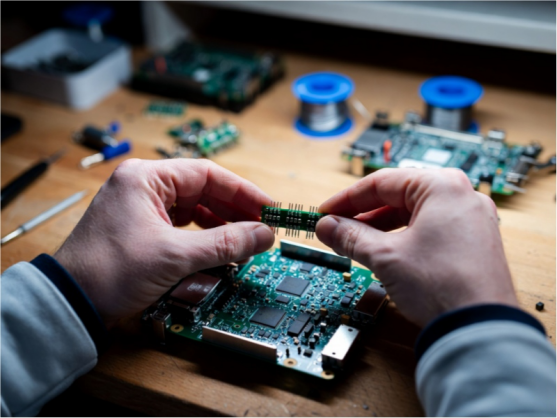
A reliable PCBA supplier surfaces uncertainty before the line starts. The review should identify incomplete data, conflicting BOM revisions, unavailable parts, unclear polarity, difficult footprints, limited test access, and mechanical or thermal concerns that could change the build.
PCBA Store describes support for fine-pitch parts, BGA, rigid and flex boards, and several inspection methods. The professional supplier evaluation criteria help turn a broad capability claim into questions tied to the actual design.
The best technical review is specific enough to change a decision. If the supplier only repeats that the board is manufacturable without identifying the assumptions behind that conclusion, the review has not reduced much risk.
A concise supplier scorecard
Evaluation area | Useful evidence | Warning sign |
Process fit | Relevant assembly route, package limits, and board-size confirmation. | Generic equipment list with no design-specific review. |
Quality control | AOI, X-ray, electrical, functional, and traceable records. | Inspection named without limits or records. |
Data handling | Revision control, BOM review, and clear approval points. | Frequent clarification after production has started. |
Supply chain | Part status, substitutions, shortages, and customer-owned material rules. | Lead time quoted without material assumptions. |
Communication | Named contacts, engineering feedback, and change-control path. | Sales answers cannot be connected to production decisions. |
Quality Systems Need Product-Level Meaning
A quality certificate alone does not prove that a supplier understands your product risk. The evaluation should connect the supplier's quality system to incoming inspection, component verification, process control, solder acceptance, testing, rework, and final release.
AOI can check visible placement and polarity, X-ray can support hidden-joint inspection, and functional testing can verify the assembled board's behavior. A reliable PCBA sourcing support conversation should explain how those methods will be selected for the board rather than presented as decorative checklist items.
IPC-A-610 is commonly used as a reference for electronic assembly acceptability, but the project still needs drawings, critical-to-function limits, and test requirements. A professional supplier should be comfortable separating general workmanship from customer-specific acceptance.
Documentation Shows How the Partnership Will Work
Documentation quality is an early indicator of production quality because it shows whether the supplier can keep decisions traceable. Look for clear records of BOM revision, approved alternates, customer-supplied material, test programs, inspection results, nonconformance handling, and shipment release.
The data handoff should also be practical. PCBA Store identifies Gerber or other PCB files, Pick-and-Place data, BOM information, and supporting documents or images as assembly inputs. The supplier should explain how those files are reviewed and how an ambiguity is escalated.
Change control deserves its own question because a small package or polarity change can affect stencil, placement, inspection, and test. A supplier that records the change and its approval route protects both the schedule and the next build.
Delivery Reliability Is More Than a Lead-Time Number
Lead time is meaningful only when its start point and assumptions are visible. Ask whether the clock begins at order placement, file approval, component readiness, or a first-article decision, and ask how shortages or substitutions affect the promise.
A reliable supplier also distinguishes prototype speed from repeat production stability. Quick-turn service can help an engineering team validate a design, but the production discussion should cover repeatability, inspection records, material continuity, and escalation when the build changes.
Communication quality is easiest to judge before the first order. Ask who reviews the files, who approves alternates, who owns a nonconformance decision, and how urgent engineering questions are answered across time zones. A clear communication path is part of manufacturing reliability because it keeps small uncertainties from becoming line delays.
The PCBA manufacturing partner overview gives buyers a broader place to review assembly and manufacturing scope. The important comparison is still the supplier's ability to connect those services to your board, volume, test, and documentation needs.
The Practical Takeaway for Supplier Selection
A professional PCBA supplier earns confidence by making the process legible. The buyer should be able to see the relevant capability, the quality evidence, the material assumptions, the data-control path, the test coverage, and the response when something changes.
Before choosing, send the same controlled design package to shortlisted suppliers and compare the questions they ask, not just the numbers they quote. The depth and relevance of those questions often reveal more than a polished factory description.
When you are ready to compare a board against an actual production route, contact PCBA Store with the current BOM, PCB files, expected quantity, component constraints, and required inspection or test coverage.
FAQ
What makes a professional PCBA supplier?
A professional supplier combines relevant assembly capability with clear quality controls, traceable documentation, realistic material and delivery assumptions, engineering feedback, and a defined response to changes or failures.
How can I compare PCBA suppliers fairly?
Send the same controlled data package to each supplier and compare process assumptions, inspection coverage, test support, material ownership, lead-time rules, and the questions raised during review.
What quality evidence should a PCBA supplier provide?
Useful evidence may include inspection results, test records, revision-controlled documents, nonconformance handling, approved substitutions, and release records tied to the actual board and lot.
Is a low PCBA quote a sign of a good supplier?
Price is only one part of the decision. A low quote may exclude testing, tooling, sourcing work, or realistic material and schedule assumptions, so the full scope must be compared.
What information should I send to a PCBA provider?
A typical package includes the BOM, Gerber or other PCB files, Pick-and-Place data, drawings, photos, expected volume, component restrictions, inspection requirements, and functional test information.
Previous article:Double-Sided Mixed-Technology PCB Assembly Guide



