General, quoting & support.
Add: Building E, No.58, Nanchang Road, Xixiang , Baoan District Shenzhen City, Guangdong, China
Tel : 0755-27348887
Fax : 0755-27349876
E-mail : svc@pcbastore.com

How to Evaluate PCBA Factory Flexible Production Capabilities?
PCBA Store / 2026-07-30
Contents [hide]
Introduction
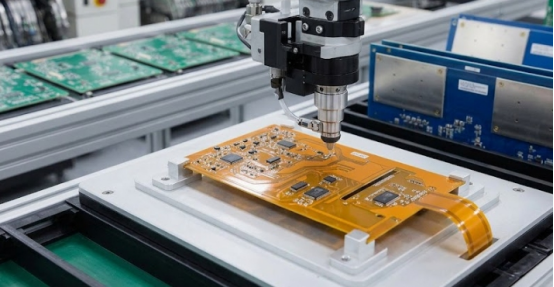
Flexible assembly has become an essential capability in modern electronics manufacturing, allowing factories to produce different PCB designs, materials, and production volumes within adaptable manufacturing systems. By combining flexible production lines, skilled operators, and optimized processes, manufacturers can efficiently switch between prototype development and mass production while maintaining quality and delivery efficiency.
As market demands and product designs continue to change, flexible PCB assembly enables faster responses, reduces material waste, and supports various requirements through SMT, through-hole, and mixed technology assembly capabilities.
Key Factors That Determine a Factory’s Flexible Production Capability
Equipment and Technology Adaptability
A truly flexible PCBA factory depends on advanced surface mount technology (SMT) lines capable of handling a variety of component sizes, from fine-pitch BGAs to large connectors. Automated optical inspection (AOI) systems must be adjustable for different product specifications to ensure consistent quality.
Compatibility with both rigid and flexible printed circuits is also essential.Buried & Blind holes, laser-drilled micro via boards (HDI), heavy copper up to 30 oz, via-in-pad, microwave & RF boards, Rigid-flex board and more are all fabricated with our advanced PCB manufacturing equipment. All types of projects are serviced including medical, automotive, and IoT products. This capability supports diverse project requirements across industries such as medical devices, automotive systems, and IoT products.
Workforce Skills and Process Management
Having cross-trained technicians to run a number of different machines within a flexible production environment effectively is key. Continuous training and development programs are in place to address emerging technologies and ensure that production operators are kept up to speed by the engineering teams, and design updates are implemented quickly and effectively.
At PCBA Store, approximately 25% of the employees are engineers, this high technical ratio strengthens internal collaboration and process optimization throughout every stage of flexible PCB assembly.
Supply Chain Responsiveness
A responsive supply chain complements technical flexibility by ensuring timely access to components. Factories employing just-in-time inventory models can manage sudden fluctuations in demand without extending lead times.
Evaluating a PCBA Factory’s Flexibility During Selection
Reviewing Production Line Configurations
When evaluating potential partners for China PCB assembly or cheap PCB assembly solutions, it’s crucial to assess whether their production lines use modular setups or fixed configurations. Modular lines allow faster changeovers between different product types.
Reflow soldering machine for one side / double sides PCB soldering shows that dual-side processing capabilities increase throughput efficiency when handling multi-project orders simultaneously.
Assessing Prototype Support Capabilities
Flexible PCB Prototype Handling
For companies seeking quick-turn flexible PCB prototype services, the ability to produce small batches efficiently is key. Turnaround time from design submission to delivery often defines customer satisfaction levels.
Prototype Assembly PCB fabrication Short-run Assembly Components procurement Quote Now demonstrates how short-run projects can be handled economically without compromising speed or quality.
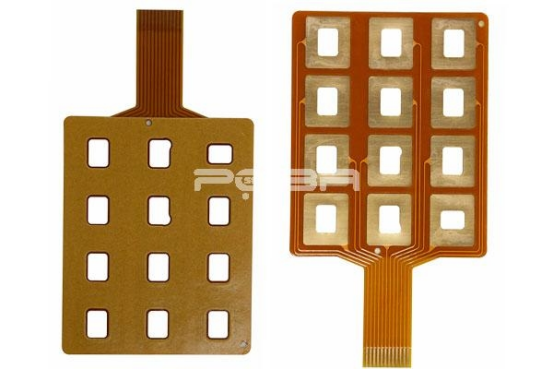
Additionally, experience with materials like polyimide (PI) or PET films ensures reliability when producing flexible printed circuits used in wearable electronics or compact consumer devices.
Transition from Prototype to Mass Production
The transition from prototype runs to full-scale manufacturing should be smooth and documented through standardized procedures that guarantee consistency across scales. PCB prototype and fabrication, electronic components sourcing, PCB assembly, and box build assembly highlight how integrated services streamline this scale-up process effectively within one facility.
Measuring Performance Indicators of Flexible Assembly Systems
Lead Time and Changeover Efficiency Metrics
Lead time serves as a primary metric for assessing flexibility performance. Factories offering express options such as PCB Fab with 24 hours express demonstrate superior responsiveness compared with traditional suppliers. Measuring changeover duration between product variants also reveals how efficiently resources are utilized during production shifts.
Quality Assurance Across Product Variations
Defect rates during transitions between projects reflect the robustness of quality control systems. Adaptive inspection tools like AOI ensure uniform standards even when switching between rigid boards and flexible circuits.
AOI, an automatic optical inspection system for PCB quality control, reinforces consistent monitoring across variable designs.
Technological Innovations Enhancing PCBA Flexibility
Smart Manufacturing Integration
Smart manufacturing enables instant adjustments by IoT-enabled machines based on real-time data feedback. Data analytics, on the other hand, optimizes scheduling on SMT lines in order to avoid idle time. This results in cost-efficient production while maintaining precise placement of even complex components.
Automation and Robotics in Flexible Assembly Lines
Scalable flexibility in production is achieved through automation. Industrial robots, for example, are able to place even the smallest of components with great precision. Through automation, the number of manual interventions is kept to a minimum even during changes. A monitoring system with AI is able to respond to changes in production quickly and to keep the yield at a constant high level, even in prototype PCB assembly with fast-changing designs.

Practical Tips for Companies Seeking Flexible PCBA Partners
Questions to Ask Potential Manufacturing Partners
When selecting a partner for printed circuit board assembly projects:
How do you handle mid-production design revisions?
What is your average turnaround time for flexible PCB prototypes?
Can you manage simultaneous orders involving both rigid-flex boards and standard FR4?
These questions reveal operational transparency regarding workflow agility.
Site Visit Observations That Indicate True Flexibility
Signs of a Well-Adaptive Factory Floor Layout. During site visits, look for readily movable workstations, which can be set up to work on different types of projects or to increase output as required. Clear zoning between different stages such as component soldering, product inspection, and packaging helps to avoid bottlenecks when re-configuring the work area for different tasks.
Indicators of Effective Process Control Systems. Digital dashboards displaying live performance metrics indicate strong process control maturity. Quick-response protocols observed during maintenance activities highlight readiness for unexpected disruptions—a hallmark of true operational flexibility found at leading facilities like PCBA Store located in Shenzhen’s Silicon Valley region.
Conclusion
Flexible production capabilities measure the performance of modern PCBA factories by means of the flexible interplay between production technology and company organization. Also, prototypes of small batch sizes as well as large volume production can be produced effectively and cost efficiently and on time by production companies that are equipped for flexible production, in order to compete on the world market in the area of electronics manufacturing services (EMS).
FAQs
What makes a PCBA factory truly flexible?
A truly flexible factory integrates modular SMT equipment, cross-trained staff, responsive supply chains, and smart automation technologies that allow seamless transitions between various project types without compromising quality or speed.
How does PCBAStore support rapid prototyping?
PCBAStore offers rapid PCB prototyping services for quick-turn PCB at high quality and low cost that not only makes your PCBs quick, but also makes your job right as well as cost-effective.
Can flexible printed circuits be mass-produced efficiently?
Yes. Advanced factories equipped with automated inspection systems and precision placement machines can mass-produce flexible printed circuits using materials like polyimide while maintaining IPC Class 3 standards.
What should I check before choosing a China PCB assembly partner?
Review their equipment list, verify certifications such as ISO9001:2015, confirm lead times (24-hour express options), and request sample builds before committing to large orders.



