General, quoting & support.
Add: Building E, No.58, Nanchang Road, Xixiang , Baoan District Shenzhen City, Guangdong, China
Tel : 0755-27348887
Fax : 0755-27349876
E-mail : svc@pcbastore.com

How Turnkey PCB Assembly Simplifies Electronics Manufacturing
PCBA Store / 2025-12-19
Contents [hide]
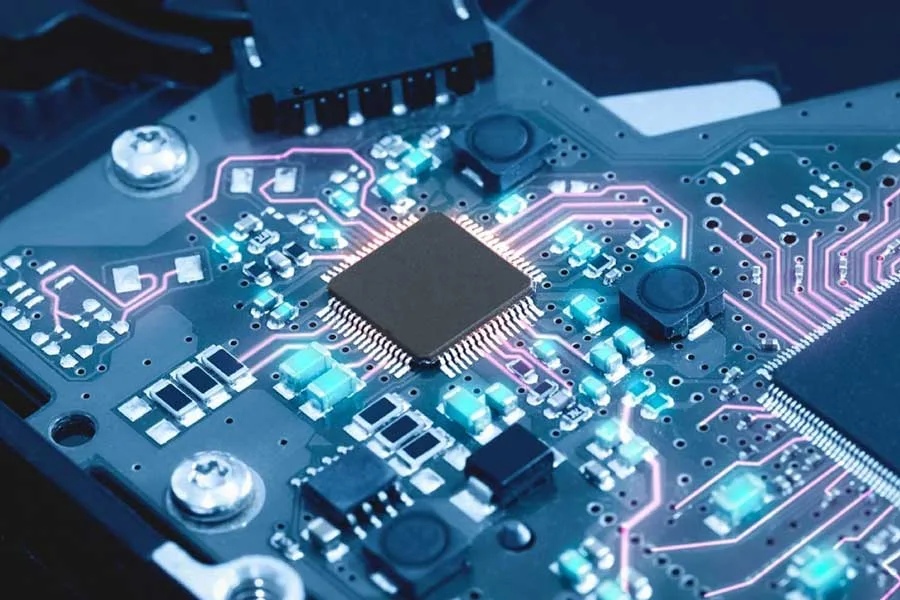
Bringing an electronic product to market needs more than just a good idea — it calls for accuracy, speed, and perfect manufacturing. Whether you launch the newest consumer gadget or build vital medical equipment, one key part supports it all: the printed circuit board (PCB).
img.Turnkey PCB Assembly Electronics Manufacturing.jpg
But, making high-quality PCBs inside your company is usually too hard and expensive for many businesses. That’s where turnkey PCB assembly comes in. It provides a smooth, complete solution that guides you from idea to finished product without the trouble of dealing with many suppliers.
By managing everything from component sourcing to final testing, turnkey PCB services let you get products to market quicker. They cut extra costs. And they guarantee excellent quality at each step.
Let’s explore how turnkey assembly can make your manufacturing easier and help you create outstanding products. Trusted providers like PCBA Store, with over 16 years in PCB fabrication and 8 years in assembly, show how combined services improve operations in Shenzhen's tech area.
What is Turnkey PCB Assembly?
Turnkey PCB assembly means a full manufacturing service. One provider handles every stage of PCB production. This covers component sourcing, board fabrication, assembly, testing, and packaging. The result is a ready-to-use product. People often call this a box build. This approach differs from broken-up processes. It centers control in one place. So, it lowers coordination work and possible mistakes.
In usual setups, electronics manufacturers deal with different groups for design, buying, and assembly. This causes longer timelines and higher chances of parts not matching. Turnkey solutions join these parts. They use set supplier networks and internal skills to give steady results.
For fields that need exactness, like telecommunications or industrial automation, this single way makes sure it meets standards like IPC Class 2-3. And it allows easy fitting into bigger systems.
Full vs. Partial Turnkey PCB Services
Electronics manufacturers pick between full and partial turnkey choices. They base this on project size and available resources.
Full turnkey PCB services handle every step: design check, component buying from worldwide sellers, fabrication with modern materials like FR-4 or high-frequency laminates, assembly using SMT or THT methods, strict testing, and final shipping. This full control fits important uses, such as automotive ECUs, where complete responsibility cuts defects.
Partial turnkey assembly, on the other hand, lets manufacturers provide certain components or design files. The provider does the rest. This mixed model works for cases with special parts or limited budgets. Yet, it keeps gains like faster assembly and quality checks.
Both types allow growth, from prototypes of 1-10 units to amounts over 1 million pieces. Leading providers set no minimum order quantities.
img.Turnkey PCB Assembly Electronics Manufacturing factory.jpg
The Benefits of Turnkey PCB Assembly
Turnkey PCB assembly brings many advantages. It improves workflows for electronics manufacturers in various fields. By joining operations, it fixes common problems in production stages.
1. Cost Reduction Through Streamlined Operations
Putting production in one place cuts costs from dealing with many vendors. Shipping between suppliers can take up to 15% of total costs in split chains. This drops a lot. Manufacturers gain from group buying discounts. Providers keep ties with checked distributors. They get components at good prices without extra fees. Extra work from managing vendors—like talks on contracts and quality reviews—also falls.
For example, combined sites remove repeat checks. They focus efforts on main creativity. In small runs, no setup fees or non-recurring engineering (NRE) charges make it more affordable. This helps startups testing IoT devices.
2. Faster Time-to-Market
In quick-changing areas like consumer electronics, waits hurt your edge. Turnkey assembly speeds delivery. It matches buying with fabrication and assembly. It often reaches 24-48 hour turns for prototypes. Separate communication ends. Real-time tracking through online sites takes its place. This keeps teams in sync. This speed matters for medical device companies. Approvals depend on on-time files. Providers with automatic pick-and-place machines and reflow ovens handle orders in 3-5 days for normal amounts. They beat old ways by weeks. As a result, products hit markets earlier. They catch high demand times and lower stock holding costs.
3. Improved Quality Control
Single control allows tough quality steps all through the line. Component buying follows realness rules. It avoids fakes that harm split supplies. Design-for-manufacturability (DFM) checks spot problems before production. They improve layouts for tight fits like 2.5 mil trace widths. Testing includes automated optical inspection (AOI), X-ray for BGA voids, and functional circuit testing (FCT). It reaches defect rates under 0.2%. Following ISO 9001 and IPC-A-610 standards gives reliability. This is key for rigid-flex boards in aerospace uses. This full control beats models that depend on vendors. There, differences come from varied steps.
4. Efficient Issue Identification and Risk Reduction
Late problems in usual manufacturing cause costly fixes. These often go over 20% of project funds. Turnkey processes add early tests with tools like Altium Designer. They predict heat and power performance. Pre-production prototypes get in-circuit testing (ICT). This checks connections. It lowers risks from part mismatches. For high-density interconnect (HDI) boards, laser-drilled vias and impedance-controlled routing stop signal losses. By fixing issues early, manufacturers skip recalls. This builds brand trust in areas like telecommunications. There, stops cost millions each year.
5. Simplified Supply Chain Management
Split chains leave operations open to breaks. These come from shortages or world delays. Turnkey models set one-point responsibility. They ease inventory with ERP systems that predict needs right. Ties with preferred suppliers keep special parts ready. Examples include Rogers laminates for RF uses, even in global ups and downs. Admin tasks get lighter. This frees engineering teams for R&D instead of shipping. In box-build cases, final cases join without issues. They cut handling mistakes and support just-in-time delivery.
6. Flexibility for Customization and Scalability
Changeability marks turnkey services. They handle design changes without switching vendors. Manufacturers grow from 10-piece prototypes to big runs. They adjust for material changes like halogen-free FR-4. Support for mixed assemblies—SMT with THT—allows custom fits for wearables or industrial controls. Quick line changes, helped by 24/7 work, manage volume jumps. They keep things going in busy times.
The Turnkey PCB Assembly Process
This careful order turns designs into working assemblies. It stresses accuracy at every point.
7. Design & Documentation Review
Engineers look closely at Gerber files, BOMs, and assembly drawings. They do DFM and design-for-test (DFT) checks. Fits for layer build-up and via spots get confirmed against skills like 40-layer multilayers or 0.1mm blind holes.
8. Component Sourcing & Procurement
Sourcing pulls from checked global stocks. It favors RoHS-compliant parts. For turnkey orders, passive components often cost nothing extra for small amounts. This speeds buying.
9. PCB Fabrication
Boards form per details. They use materials from FR-4 to PTFE. Features include edge plating or embedded cavities. Following IPC-6012 gives strength for rigid boards.
10. PCB Assembly (SMT & Through-Hole)
Exact placement with Yamaha or Panasonic machines manages 01005 packages and BGAs. Then, reflow or wave soldering makes strong joints.
11. Testing & Quality Assurance
AOI finds wrong placements. X-ray checks hidden solder. FCT copies work stresses. Heat profiling watches reflow patterns for evenness.
12. Final Inspection & Packaging
Sight and size checks come before ESD-safe packaging. It fits for world shipping via DHL.
Choosing the Right Turnkey PCB Manufacturer
Picking a provider needs checking proofs. Certifications like ISO 9001, ISO 13485 for medical, and AS9100 for aerospace show strong systems. Engineering strength shows in DFM help and prototyping with tools like CAM350. Growth from no-MOQ prototypes to high-volume needs steady supply chains. This appears in 95% on-time rates. Flexibility for rigid-flex or HDI boards, plus 24-hour help, builds teamwork. Proven quick turns—like 8-hour express assembly—and after-delivery promises, such as 100% refunds for defects, highlight trustworthiness.
Why Turnkey PCB Assembly is the Smart Choice for Your Product
Turnkey PCB assembly goes beyond basic service. It acts as a key helper for ongoing growth. It lets electronics manufacturers focus on new ideas in tough competition. They leave production details to expert sites. This model not only cuts costs and times but strengthens quality. It sets companies for top spots in changing markets. For manufacturers wanting a solid partner, PCBA Store offers turnkey excellence from its Shenzhen-based factory. It gives instant quotes, free engineering reviews, and full skills from prototyping to box builds.
FAQ
What distinguishes full turnkey from partial turnkey PCB assembly?
Full turnkey covers all processes, including design verification and component sourcing. Partial turnkey allows suppliers of certain elements. The manufacturer handles assembly and testing.
How does turnkey assembly ensure quality in PCB production?
It joins DFM reviews, AOI, X-ray inspections, and FCT in one facility. It follows IPC standards and reaches defect rates under 0.2%.
What industries benefit most from turnkey PCB services?
Sectors like medical devices, automotive, telecommunications, and consumer electronics gain from its speed, growth options, and compliance traits.
Can turnkey services handle high-volume production?
Yes, providers support scaling to over 1 million units. They have flexible lines for mixed technologies and no minimum orders.
What turnaround times are typical for turnkey prototypes?
Prototypes often finish in 3-5 days. Express options go as fast as 8-24 hours for assembly.
Partner with a Trusted PCB Assembly Supplier
Electronics manufacturers need a reliable supplier to improve production. They avoid hurting quality or timelines. As a leading PCB assembly manufacturer and factory, PCBA Store provides turnkey solutions fit for needs. These range from quick prototyping to high-volume box builds. Submit an RFQ via the online quote tool at https://www.pcbastore.com/online_quote.html for instant pricing. Or check assembly details at https://www.pcbastore.com/pcb-assembly.html. Contact the team today to ease operations and speed market entry.
You Might Like:
The Benefits of Turnkey Services for Low Volume PCB Assembly
Low Volume PCB Assembly Strategic De-Risking Your Path to Market
Ultra-Fine Pitch Assembly Solutions for Complex PCB & PCBA Manufacturing
A Comprehensive Guide to BGA Assembly in SMT PCB Manufacturing: Step-by-Step Breakdown



