General, quoting & support.
Add: Building E, No.58, Nanchang Road, Xixiang , Baoan District Shenzhen City, Guangdong, China
Tel : 0755-27348887
Fax : 0755-27349876
E-mail : svc@pcbastore.com

PCBA: Most Common Soldering Techniques
PCBA Store / 2025-12-19
Contents [hide]
Soldering stays a basic step in printed circuit board assembly (PCBA). It helps join electronic parts to the board with melted solder mixes. Common types include lead-free Sn-Cu rosin core kinds, plus flux to help sticking and stop rust. The choice of soldering ways—wave, reflow, and selective—affects how fast assembly goes, part safety, and total product strength.
These ways fit different board styles, from surface mount technology (SMT) to through-hole technology (THT). They make sure best work in uses across fields like automotive, medical devices, and consumer electronics.
For OEMs handling tough needs, working with skilled PCBA manufacturers such as PCBA Store gives access to top soldering skills made for certain production sizes.
An Overview of the PCBA Process
The PCBA steps include many linked parts. Each helps build working electronic sets. Changes happen based on tech and amount, but the main order stays the same. Soldering acts as the key joining part.
Apply Solder Paste
Solder paste putting starts the work. It places an exact mix of powder solder and flux on set pads with stencil printing. This keeps even cover. It cuts extra stuff that might cause issues like bridging. Auto stencil printers reach tiny-level exactness. They support big runs and keep steady for test models.
Place the Components
Component putting, or pick-and-place, comes right after. It sets items like resistors, capacitors, and integrated circuits on the paste. Auto machines deal with small-pitch parts down to 01005 sizes. Hand ways fit low-amount or custom sets. Exact line-up matters to stop wrong place in later heat.
Soldering
This part hardens links by melting the solder paste or sending melted solder over leads. For SMT-most boards, reflow ovens heat sets in set patterns to hit mix points without heat harm. THT boards often use wave soldering. There, a pumped solder wave touches pre-fluxed vias. Selective soldering aims at mixed styles. It uses focused nozzles for exact spot use. After soldering, cooling hardens joints. It keeps electric and strength traits.
Inspect the Assembly
Checking confirms joint good through eye, auto optical (AOI), and X-ray ways. It spots empty spots, breaks, or wrong lines. Rules like IPC-A-610 lead checks. They make sure fit before next steps.
Testing
Last work testing, including in-circuit (ICT) and boundary scan, proves running good. Flying probe systems give bend for test models. Bed-of-nails tools support big making. They find faults early to cut fix work.
This set process shows soldering's job in linking design plan with makeable results. Technique pick lines with part thickness and board hardness.
Primary PCBA Soldering Techniques: Reflow, Wave, and Selective
Auto PCBA lines use three main soldering paths. Each fits certain part sets and making needs. Wave fits mostly THT sets. Reflow shines in SMT spots. Selective handles mixed tech. Skills reach boards up to 1200mm x 400mm, with layer numbers from 1 to 64. They support stuff like FR-4, high-Tg kinds, and rigid-flex mixes.
Wave Soldering
img.Wave Soldering in PCBA.jpg
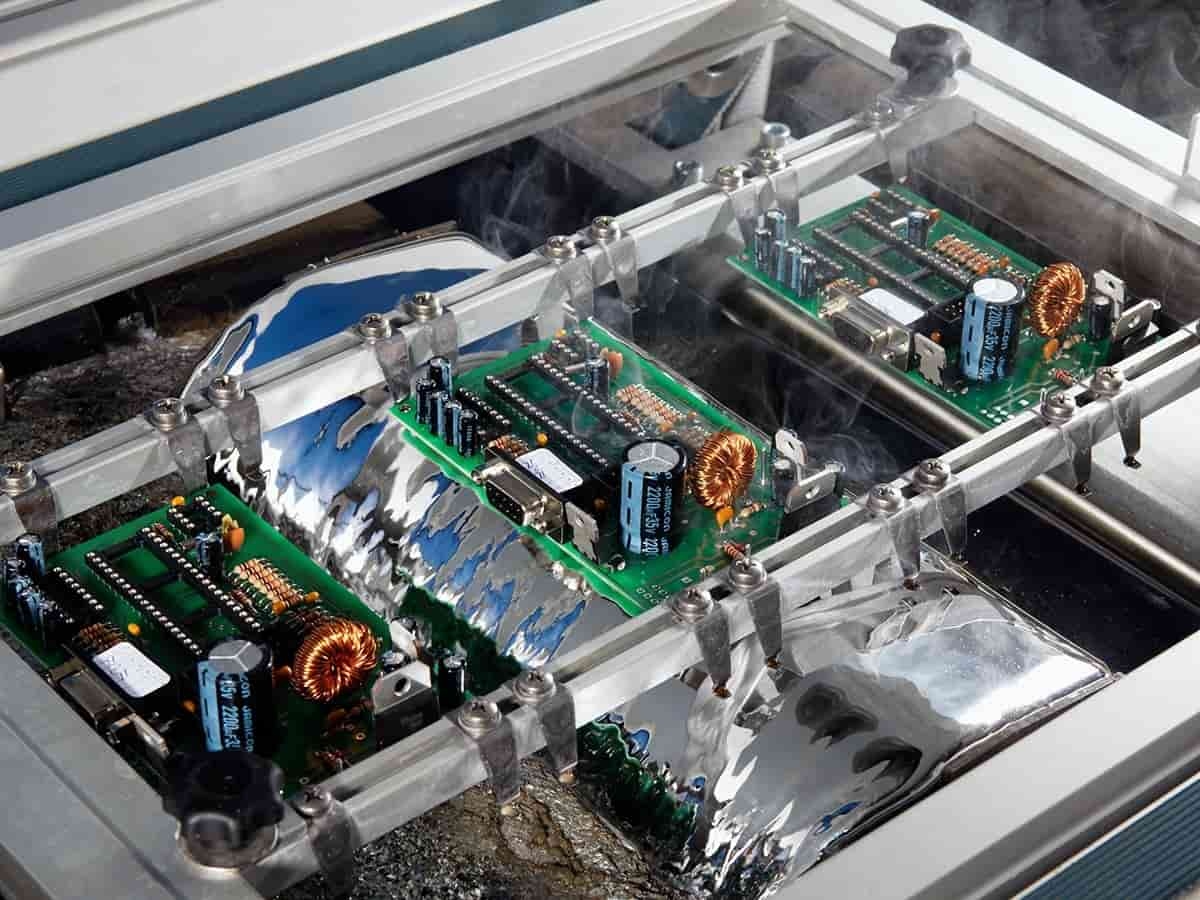
Wave soldering means moving fluxed boards over a hot solder pool. A rough wave touches the bottom to fill vias and wet leads. Pumps make the wave, often in multi-spot sets for pre-heat and end soldering. Fast cooling follows to form strong round joints.
This way works well in THT uses. It reaches high speed for amounts over 1,000 units, with solder types including lead-free SAC305 for RoHS fit.
Though SMT use has cut its common spot, wave stays key for old styles or where via fill needs beat reflow skills. Good points include low cost for one-side boards and little paste work. But issues like hiding on thick SMT need careful flux pick to cut rust. New systems add nitrogen air to boost joint even. It cuts waste build by up to 50%.
Reflow Soldering

img.Reflow Soldering PCBA factory.jpg
Reflow soldering puts paste first. Then it heats sets in belt ovens through set patterns: preheat (to start flux), soak (for even heat spread), reflow (above liquid point, usually 217-260°C for lead-free), and cooling. Air heat makes sure even melt. It forms metal bonds without direct fire touch.
Perfect for two-side SMT boards, reflow supports small-pitch BGAs and QFNs. Patterns fit via heat sensors to stop stand-up or head-in-pillow issues. For THT mix, paste-filled vias allow mixed use. But selective add often proves needed. Oven spots—up to 10 steps—let exact control. It matters for high-layer boards where heat diffs could bend bases. Nitrogen clean further cuts empty spots. It lifts good rates above 99%.
Selective Soldering
Selective soldering uses robot nozzles to send hot solder right to aimed joints. It skips wide touch common in wave or reflow. Flux dip or spray comes before nozzle touch. Stay times change for via deep and lead number. This exact fits mixed SMT/THT boards. It solders connectors or odd-shape parts without bothering nearby SMDs.
Main good include less heat harm on warm-easy parts, lower flux left (via no-clean steps), and fit to hard shapes like edge links. Systems add sight guide for nozzle line. They support batch sizes from test models to mid-amount. Waste drops much compared to wave. Solder amount per joint makes best stuff use. For sets mixing 0.4mm-pitch SMDs with pin-through-hole, selective makes sure fit with IPC Class 3 rules. It cuts fix work.
Summary
PCBA soldering ways—reflow for SMT speed, wave for THT strength, and selective for mixed fit—make the base of trusty electronics making. Each way handles special issues in part join, heat control, and issue stop. It allows grow making from test models to millions. As needs for small size and mixed tech rise, picking the right way makes best cost, quality, and market time.
FAQ
What is the most common solder alloy used in modern PCBA?
Lead-free Sn-Cu alloys, such as SAC305, lead due to RoHS rules. They offer a melting point around 217°C and better strength over old Sn-Pb.
How does reflow soldering differ from wave soldering in PCBA?
Reflow heats pre-put paste in ovens for SMT-focus bonds. It gives even heat for thick boards. Wave sends hot solder over fluxed THT leads for via fill. It fits higher-amount, one-side sets.
When should selective soldering be chosen for PCBA projects?
Selective soldering works best for mixed SMT/THT styles or warm-easy parts. It aims certain joints with little heat touch. It cuts issues in hard layouts.
What role does flux play in PCBA soldering techniques?
Flux clears rust, helps wetting, and stops new rust in heat. It matters for strong metal bonds across reflow, wave, and selective ways.
Can wave soldering handle SMT components effectively?
While possible with cover, wave is less best for SMT due to hide risks. Reflow or selective is liked for small-pitch parts to stop bridging.
Elevate Your Production with Trusted PCBA Factory Partnerships
PCBA manufacturers and wholesale supplier seeking smooth join of top soldering ways—reflow for high-thick SMT, wave for strong THT, and selective for mixed exact—gain from teaming with set factories like PCBA Store. As a Shenzhen-based leader with 16 years in making and 8 in assembly, PCBA Store gives full solutions. These include quick online quotes, no-MOQ test models, and fast turns (24-hour fab, 12-hour assembly).
Upload Gerber and BOM files at pcbastore.com/online_quote.html for fast pricing on skills spanning 1-64 layers, small-pitch BGA/QFN, and IPC Class 3 quality. 99% on-time send, full issue refunds, and free DFM check.
Contact svc@pcbastore.com today to grow work well—your next trusty supplier waits.
You Might Like:
The Power of Miniaturization How Surface Mount Technology is Transforming Modern Electronics
Ultra-Fine Pitch Assembly Solutions for Complex PCB & PCBA Manufacturing
How does double-sided SMT assembly work
The Benefits of Turnkey Services for Low Volume PCB Assembly



