General, quoting & support.
Add: Building E, No.58, Nanchang Road, Xixiang , Baoan District Shenzhen City, Guangdong, China
Tel : 0755-27348887
Fax : 0755-27349876
E-mail : svc@pcbastore.com

Reflow Soldering VS. Wave Soldering: What’s the Difference?
PCBA Store / 2025-12-19
Contents [hide]
Soldering plays a key role in printed circuit board assembly (PCBA) manufacturing.
Wave soldering and reflow soldering show different ways to apply solder. Each fits certain assembly needs. Wave soldering dips the PCB into a stream of melted solder. It works best for through-hole technology (THT). Reflow soldering uses careful heat to melt solder paste put on before. It suits surface-mount technology (SMT). The main gap comes from how they work: wave uses moving liquid solder touch, but reflow depends on heat plans for even melting. This basic gap leads to changes in tools, speed, and uses. It affects choices in PCB design and making steps.
As a trusted PCB manufacturer and assembly supplier with over 18 years in Shenzhen's ecosystem, PCBA Store shares these tips. It also provides full services for prototypes to high-volume runs.
What Is Wave Soldering?
img.What Is Reflow Soldering.jpg
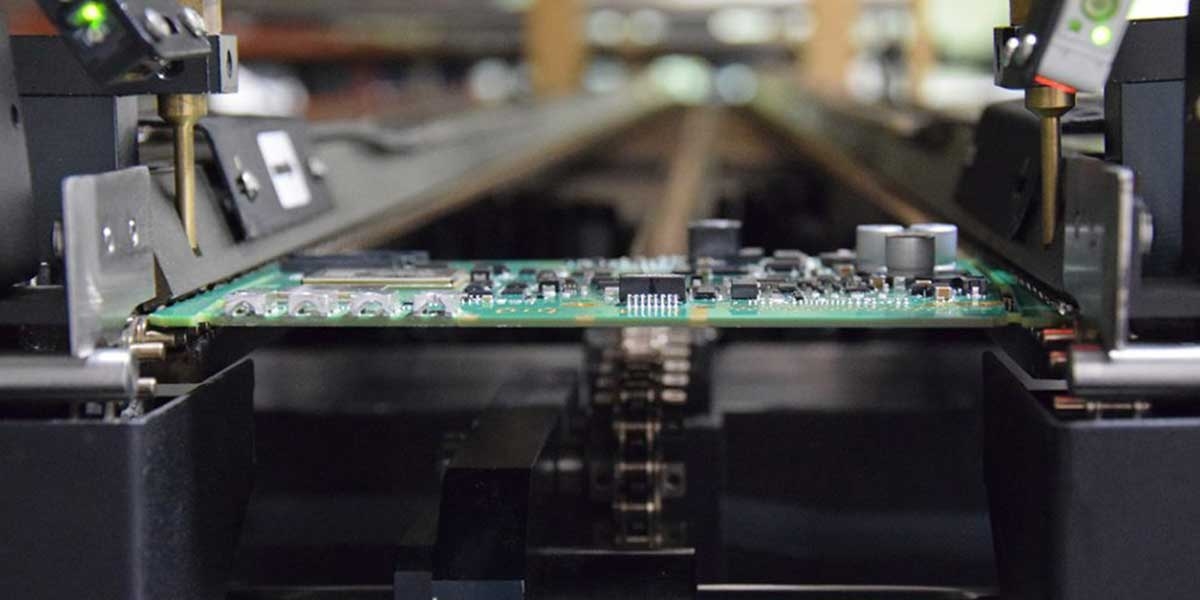
Reflow soldering differs by putting solder paste—a mix of flux, alloy bits, and starters—onto pads with stencil print. Parts stick to this paste. It then melts in a belt oven. This pulls items into exact joints.
The Reflow Soldering Process
Reflow starts with solder paste spread. Then comes auto placement and heat plans.
First steps include warming the bare PCB to 60-100°C. This dries moisture and steadies heat. Next soak at 150-200°C starts flux. It clears dirt without full solder melt. The unit then hits the reflow area. It peaks at 220-260°C to liquid paste. This allows self-fix by surface pull. Cooling hardens the mix. It locks parts in spot.
Temperature Curve in Reflow Soldering Oven
The reflow plan shows a bell shape: slow rise (1-3°C/s) to warm-up, a flat for soak (60-120 seconds), a quick top to peak temp (above solder liquidus by 10-20°C), and steady drop (2-4°C/s) to stop weakness. Exact plans, watched by heat sensors, stop stand-up or gaps. They meet IPC-A-610 rules.
Advantages of Reflow Soldering
Reflow soldering gains favor for its exactness and flex in modern electronics.
1. Soldering quality in reflow often hits Class 2-3 IPC levels. This builds trust for OEMs and users.
2. Reflow leads in SMT PCB assembly. It handles tight layouts with little board space.
3. For big making, reflow ovens handle thousands of boards hourly. This boosts work in auto lines.
4. It works with many SMT packages—from 01005 passives to fine-pitch QFNs. This eases mixed-tech joins.
5. Work settings, like belt speed and zone heats, allow live watch by software. This improves track records.
6. Paste amount control by stencils cuts link risks. Slow heat guards parts from heat strain. It lengthens average work time.
These strengths place reflow as the main for high-pack, lead-free builds.
Reflow Soldering vs Wave Soldering
Complexity
Wave soldering needs fine machine setup. This includes wave height (2-5mm) and belt slant (5-7°). It requires skilled workers to stop scum build or uneven spread. Flux thickness and warm-up evenness add more trouble. Small changes can cause solder misses.
Reflow soldering eases with standard paste print and oven areas. Auto plan tweaks cut changes.
Environmental Conditions
Wave steps depend on steady room wetness (<60% RH) and solder bath clean. Shifts upset wave steady and bring rust. Nitrogen flush adds extra for rust control.
Reflow handles wider settings. Yet paste thickness reacts to storage at 5-10°C. This needs careful stock care. Oven inert gas stays optional. It lightens site needs.
Constraints
Wave soldering limits by dip time (3-5 seconds max) to stop overheat. Pad shapes favor 0.8-1.5mm holes. Big parts risk shade.
Reflow limits focus on paste life (6-12 months) and peak stay (<60 seconds). But stencil holes give fine pitch control to 0.3mm.
Speed
Wave soldering speeds big THT runs. It clocks 500-1000 boards per hour by steady flow.
Reflow, slowed by paste spread and multi-zone pass, gives 200-500 boards hourly. Parallel paths raise output for SMT.
Cost
Wave setups pay off over big volumes. They have lower tool costs ($50,000-150,000) versus reflow ovens ($100,000-500,000). Paste and stencil costs raise reflow for test runs.
For large THT, wave cuts reflow by 20-30% in work costs.
Usage
Wave soldering thrives with THT items like electrolytic capacitors and relays. Here, firm strength beats pack.
Reflow soldering rules SMD worlds. It enables small, double-side fills in smartphones and IoT units.
Which One Should Be Chosen, Wave Soldering or Reflow Soldering?
Choice between wave and reflow soldering rests on build layout, size, and work needs. THT-full designs pick wave for its pace and joint power. SMT-common boards need reflow's exact touch. Mixed cases often do reflow for top SMDs. Then selective wave for bottom THT. Dual reflow with glues fixes flux clashes. Part heat limits, board bend risks, and rules (e.g., RoHS) also guide picks. Talks with skilled PCBA suppliers match design files, BOMs, and test steps. This stops pricey fixes.
FAQ
What is the primary difference between reflow and wave soldering?
Reflow soldering melts pre-applied paste through oven heating for SMT, while wave soldering dips boards into molten solder waves for THT.
When should wave soldering be preferred over reflow?
Wave soldering suits high-volume THT assemblies requiring strong mechanical joints, such as power supplies with large connectors.
How does reflow soldering ensure better quality for SMT components?
Reflow's controlled thermal profiles minimize defects like voids or bridging, achieving uniform wetting on fine-pitch pads.
Can wave and reflow soldering be used together in one assembly?
Yes, in mixed-technology PCBA, reflow handles SMDs first, followed by selective wave for THT to optimize efficiency.
What factors influence the cost difference between the two methods?
Wave soldering incurs lower upfront costs for THT volumes, whereas reflow demands stencils and paste, elevating expenses for SMT prototypes.
How do environmental regulations impact these soldering processes?
Both support lead-free alloys per RoHS, but reflow's enclosed ovens better contain fluxes, aiding compliance in cleanroom settings.
Partner with a Reliable PCBA Factory Today
Clients who want smooth mix of reflow and wave soldering in their making lines will find great worth in working with a focused PCBA factory like PCBA Store. As a leading PCB manufacturer, supplier, and assembly factory, PCBA Store gives full solutions with no minimum order quantities. It starts at $100 for 10-piece assemblies. Upload Gerber and BOM files for a quick online quote at pcbastore.com/online_quote.html. Use 24-hour prototyping, free component sourcing for passives, and full testing including AOI and X-ray.
Contact the team at svc@pcbastore.com or +86-755-27348887 to talk skills fit to your B2B needs—from hybrid assemblies to box-build services. Secure 95% on-time delivery with full defect refunds. Boost your supply chain work. Ask for a free DFM analysis now to test your next design.
You Might Like:
Previous article:PCBA: Most Common Soldering Techniques



