General, quoting & support.
Add: Building E, No.58, Nanchang Road, Xixiang , Baoan District Shenzhen City, Guangdong, China
Tel : 0755-27348887
Fax : 0755-27349876
E-mail : svc@pcbastore.com

Humanoid Robotics PCB Design and Advanced Manufacturing Techniques
PCBA Store / 2026-01-16
Contents [hide]
The fast growth of humanoid robotics combines major advances in artificial intelligence, sensor tech, and mechanical parts. These advances help build machines that can sense, think, and move much like humans. At the heart of these complex systems sit special printed circuit boards (PCBs). They give the needed electrical base for smooth connection of different parts. As humanoid robots move from lab models to real-world products, the need for better PCB designs and production rises a lot.
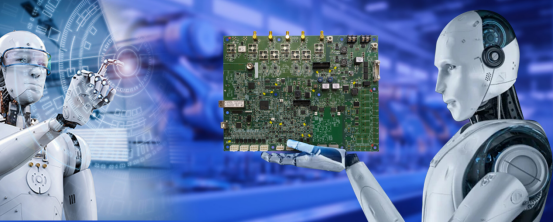
The global humanoid robotics PCB market, valued at approximately USD 4.40 billion in 2025, keeps its solid path forward. Forecasts point to big growth into 2030 and later. This comes from AI use and factory uptake. PCBA Store, a direct PCB manufacturer and assembly factory based in Shenzhen, China, supplies full fabrication and PCBA services. These support tough needs in this field. The company handles work from early samples to large-scale output.
Humanoid Robotics PCB Market Insights
Humanoid Robot Manufacturers
Top developers push new ideas in humanoid robotics. In the United States, well-known firms include Boston Dynamics, Agility Robotics, Figure AI, 1X, Tesla, and Apptronik. In China, main names cover Unitree Robotics, Deep Robotics, Agibot, Ecovacs Robotics, Rokae, and Beijing HRIC Robotics. These makers target many uses. They range from factory automation to home help.
Market Size and Growth Projections
Global Humanoid PCB Market Size
The global humanoid robotics circuit board market stood at USD 4.40 billion in 2024. Predictions show steady strong rise. Related humanoid robot markets expect values from USD 1.9 billion in 2025 to USD 11 billion by 2030 in certain studies. These reflect CAGRs from 17% to 45% based on the focus area. Progress in parts such as actuators, sensors, and AI processors helps fuel this increase.
Key Industries Utilizing Humanoid Robots
Humanoid robots work in various fields:
· Military and defense — Improving watch duties, search-and-rescue, and tasks in risky places.
· Manufacturing and logistics — Handling repeat, exact, or hard physical jobs. They use AI for quality checks.
· Home assistance and personal use — Helping with elder care, daily home tasks, and friendly company.
These fields gain from PCBs that allow steady, instant action.
How PCBs Help Humanoids Sense, Think, and Move
PCBs link sensors to detect surroundings. They connect processors to study data and make choices. They also join drivers for movement control. Working together, these parts let the robot adjust well in changing places.
Rigid PCBs show limits in tight, active spots like joints. Flex and rigid-flex PCBs bend to fit curved forms. They cut weight, keep links during action, and hold signal strength. This setup supports instant data handling, fixing mistakes, and learning-based improvements. The Sophia robot shows how advanced PCBs create very lifelike exchanges.
6 Key Humanoid PCB Design Considerations
1. Incorporate HDI and Fine-Pitch Technologies to Save Space
Tight inside space calls for small yet powerful layouts. High-density interconnect (HDI), multi-layer boards, and fine-pitch parts make this possible. Special shapes match arms, legs, and body. Stacked vertical (mezzanine) setups and module styles aid repair and future changes.
2. Use High-Speed Interfaces to Integrate PCB Subsystems
Different subsystems need quick, low-delay links. Protocols like SPI work well for vital fast-response ties (motor control, IMUs). Meanwhile I2C manages sensor groups. Smart layout, trace paths, and power setup lower delay.
3. Adopt Thermal and Shock-Resistant Techniques to Withstand Vibrations and Stress
Active work creates heat and shakes. Materials like DuPont Pyralux TK and Panasonic FELIOS R-F775 bring lasting strength. Thermal vias, metal-core PCBs, SAC305 solder, tear-drop routing, stiffeners, conformal coatings, and dampers boost dependability.
4. Place PCBs Close to Sensors and Motors to Avoid Transmission Delays
Short distance cuts delay, signal loss, EMI, and voltage fall. Matched impedance and paired traces keep signal clear for steady control.
5. Implement Power Gating to Prolong Battery Life
Systems with many voltages gain from DC-DC converters, decoupling capacitors, power gating on unused parts, PWM motor drive, energy recovery braking, and battery management ICs.
6. Design for Scalability to Support Future Upgrades
Uniform connectors and module setups allow easy updates and shifts to full production.

Core PCB Subsystems Required for Humanoid Robotics
1. Control Systems for Real-Time Decision-Making
Main boards with microcontrollers/processors deal with sensor fusion, AI rules, and movement orders.
2. Sensor Interface for Perception and Awareness
Special links join cameras, IMUs, LiDAR, touch sensors, and mics for clear data flow.
3. Motor Drivers for Precision Control
Boards manage servo, BLDC, and stepper motors for even, matched motion.
4. Power Management PCBs for Stable and Efficient Energy Distribution
They control voltages, handle charging, and guard against too much load.
5. Communication Modules for Data Exchange
They back CAN, UART, SPI, Wi-Fi, Bluetooth, and others for inside and outside links.
6. Audio Processors for Voice Interaction and Sound Recognition
They control input and output for natural talk.
Advanced setups add AI accelerators for sight, language work, and learning.
The Role of Flex Printed Circuits in Humanoid Robots
Flex and rigid-flex PCBs allow flexible fitting across robot body parts:
· Head — Sensor groups for spotting and identifying.
· Torso — Main processing area.
· Arms — Skillful handling and work.
· Legs — Steady balance and walking.
These circuits handle repeated bends. They carry many connections and aid AI-based changes.
Advanced Materials and Manufacturing Techniques
High-frequency flex materials (polyimide, LCP), nano-silver ink for build-up methods, ELIC HDI with low Dk/Df dielectrics, embedded parts, and SiP cut overall size. AI-powered AOI and X-ray checks confirm accuracy.
IoT-Enabled PCBs for Enhanced Autonomy
IoT links allow instant data sharing. This boosts detection, safety, and smooth work.
Key Takeaways
Humanoid robotics needs PCBs that balance bendability, lasting strength, tight packing, and strong function. HDI, flex methods, better materials, and module layouts tackle main issues. As use grows faster in many sectors, well-tuned PCB answers push the field ahead.
PCBA Store, as a leading manufacturer and supplier with full in-house capabilities including up to 64-layer PCBs, HDI, rigid-flex, and turnkey assembly, supports such innovations with reliable, cost-effective production.
FAQ
What are the main challenges in designing PCBs for humanoid robots?
Achieving high density in constrained spaces, managing thermal and mechanical stress, ensuring low-latency signals, and optimizing power for extended operation.
Why are flexible and rigid-flex PCBs important in humanoid robotics?
They conform to joints and curves, maintain connectivity during movement, reduce weight, and support dynamic performance.
What materials are commonly used for high-performance humanoid PCBs?
Polyimide substrates like DuPont Pyralux TK, Panasonic FELIOS R-F775, LCP, and advanced laminates for flexibility and high-frequency needs.
How does the humanoid robotics PCB market outlook appear in 2026?
Strong growth continues, with global humanoid robot markets projected from several billion in 2026 onward, driven by AI and industrial applications.
What role do AI accelerators play in robot PCBs?
They enable on-board deep learning for vision, language processing, and adaptive motion.
Partner with PCBA Store for Your Humanoid Robotics Projects
PCBA Store operates as a direct manufacturer and factory in Shenzhen, China, providing end-to-end PCB fabrication and assembly. Capabilities include 1-64 layers, HDI with microvias, rigid-flex, heavy copper, RF/microwave boards, quick-turn prototypes (as fast as 24 hours), no MOQ, and turnkey solutions with component sourcing. ISO9001-certified processes ensure quality, with online quoting, tracking, and 24/7 support.
Obtain an instant quote at https://www.pcbastore.com/online_quote.html, review assembly services at https://www.pcbastore.com/pcb-assembly.html, explore capabilities at https://www.pcbastore.com/pcb-capabilities.html, or contact the team for humanoid robotics project requirements.



