General, quoting & support.
Add: Building E, No.58, Nanchang Road, Xixiang , Baoan District Shenzhen City, Guangdong, China
Tel : 0755-27348887
Fax : 0755-27349876
E-mail : svc@pcbastore.com

Turnkey PCB Assembly vs Partial Assembly: Which One to Choose?
PCBA Store / 2026-07-10
Contents [hide]
Introduction
In PCB and PCBA projects, the choice between turnkey PCB assembly and partial assembly directly affects cost control, lead time stability, and supply chain risk. For B2B electronics manufacturing, this decision is not only technical but also operational. In our PCBA service practice at PCBA Store, we support both models depending on procurement maturity and project complexity. A clear understanding of each option helps reduce production uncertainty and improve overall manufacturing efficiency.
Turnkey PCB Assembly vs Partial PCBA in Real Production Environments
Turnkey PCB Assembly and partial PCB assembly represent two different supply chain structures in PCB and PCBA manufacturing. In turnkey PCB assembly, all processes from PCB fabrication to component sourcing, SMT assembly, testing, and final delivery are handled by a single supplier. In partial PCB assembly, the customer supplies part or all of the components while the manufacturer focuses on assembly and testing.
What Turnkey PCB Assembly Means in Full Service PCBA Production
Turnkey PCB Assembly is a full service PCBA model where we manage PCB fabrication, BOM sourcing, component procurement, SMT placement, soldering, inspection, and final shipment under one integrated workflow. This model is widely used in industrial electronics, IoT devices, and consumer hardware development.
The key value of turnkey PCB Assembly is supply chain simplification. Customers do not need to coordinate multiple vendors or manage procurement risks such as counterfeit components or inconsistent part sourcing.
What Partial PCB Assembly Means in Flexible Supply Chain Models
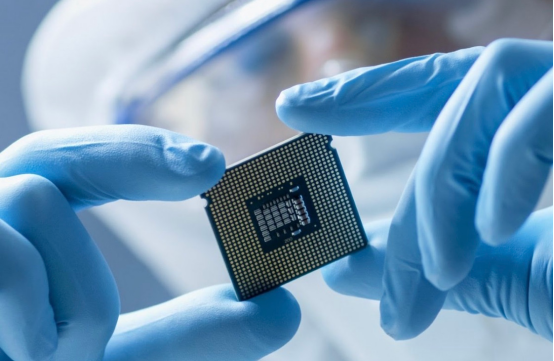
Partial PCB Assembly allows customers to provide critical components while outsourcing only PCB assembly and testing. This model is often used when companies have preferred suppliers, strict compliance requirements, or locked component contracts.
However, partial PCB Assembly increases internal coordination workload. Customers must manage inventory timing, component compatibility, and shipping synchronization to avoid production interruptions.
In practice, partial PCB Assembly requires stronger engineering coordination and more precise BOM control compared with turnkey PCB Assembly.
Key Differences Between Turnkey PCB Assembly and Partial PCBA
Dimension | Turnkey PCB Assembly | Partial PCB Assembly |
Component sourcing | Managed by supplier | Managed by customer |
Supply chain risk | Lower | Higher |
Lead time stability | High | Depends on buyer readiness |
Cost transparency | Integrated pricing | Split cost structure |
Engineering workload | Lower | Higher |
Risk of component mismatch | Low | Medium to high |
This structure shows why turnkey PCB Assembly is often selected for scalable production, while partial PCB Assembly is preferred for controlled sourcing environments.
When to Choose Turnkey PCB Assembly for Risk Reduction and Efficiency
Turnkey PCB Assembly is recommended when supply chain risk control is a priority. It is suitable for companies without stable component sourcing channels or those entering mass production stages.
In our production flow at PCBA Store, turnkey PCB Assembly is frequently used in fast product iteration projects where BOM changes and engineering validation occur frequently.
This model reduces exposure to counterfeit IC risks, reduces procurement delays, and improves production scheduling accuracy. It is also aligned with China-based integrated electronics manufacturing ecosystems, where component sourcing and SMT production are tightly connected.
When Partial PCB Assembly Is More Suitable for Controlled Procurement
Partial PCB Assembly is more suitable when procurement strategies require strict component selection. Some industries require approved vendor lists or long-term component contracts, making full outsourcing impractical.
This model is also used when companies want to directly control key ICs, sensors, or high-value components. However, the trade-off is increased coordination complexity and higher supply chain risk exposure.
For engineering teams with strong procurement systems, partial PCB Assembly provides flexibility but requires disciplined BOM management and tighter production communication.
Cost Structure Comparison Between Turnkey and Partial PCB Assembly
Cost Factor | Turnkey PCB Assembly | Partial PCB Assembly |
Component procurement | Included | Customer responsibility |
Logistics handling | Included | Split responsibility |
Engineering coordination | Lower | Higher |
Total operational cost | Predictable | Variable |
Turnkey PCB Assembly includes procurement handling, logistics coordination, component sourcing, and testing integration. Partial PCB Assembly reduces supplier-side procurement cost but adds internal sourcing cost on the customer side.
Supply Chain Risk Control in PCB and PCBA Manufacturing
Supply chain stability is a core factor in PCB and PCBA manufacturing decisions. Turnkey PCB Assembly reduces risks such as delayed component arrival, substitution errors, and inconsistent quality between suppliers.
Partial PCB Assembly shifts these risks to the buyer's side. Any delay in component delivery directly impacts SMT scheduling and final shipment timing.
In turnkey PCB Assembly workflows at PCBA Store, BOM verification and alternative component matching are used to maintain production continuity and reduce stoppage risk.
Manufacturing Capabilities in PCB and PCBA Production
A complete PCBA system requires integrated capabilities including PCB fabrication support, SMT placement, through-hole assembly, multi-layer board handling, and automated inspection systems.
Our PCBA service structure at PCBA Store is designed to support multi-category electronics production, including industrial control boards, communication modules, and consumer electronics assemblies.
This capability integration improves production consistency and supports both turnkey PCB Assembly and partial PCB Assembly models under one manufacturing system.
Online Quotation and Project Workflow in PCBA Projects
Efficient quotation systems are essential in PCB and PCBA procurement. Customers typically submit Gerber files, BOM lists, and assembly requirements through an online system to receive cost estimation and manufacturing feedback.
This system reduces manual communication delays and improves engineering response time, especially for turnkey PCB Assembly projects where BOM validation is required before production starts.
Why Choose a Full Service PCBA Partner for Scalable Production
Full service PCBA partners are critical for companies scaling from prototype to mass production. Turnkey PCB Assembly supports faster iteration cycles, reduced procurement risk, and improved production predictability.
Our full service PCBA model at PCBA Store is designed to support engineering teams that require stable supply chain execution and flexible BOM management.
For project evaluation or cost estimation, customers can upload files and request real-time quotation or explore capabilities.
A structured PCBA partner reduces operational uncertainty and improves time-to-market performance.
Conclusion
Turnkey PCB Assembly and partial PCB Assembly serve different supply chain strategies in PCB and PCBA manufacturing. Turnkey PCB Assembly focuses on risk reduction, operational efficiency, and predictable delivery, while partial PCB Assembly prioritizes sourcing control and component-level flexibility. At PCBA Store, we support both models with integrated manufacturing capabilities, helping B2B customers optimize production strategy and reduce overall project risk.
FAQ
What is the main difference between turnkey PCB Assembly and partial PCB Assembly?
Turnkey PCB Assembly covers full procurement, fabrication, and assembly, while partial PCB Assembly requires customers to supply some or all components.
Which model reduces supply chain risk more effectively?
Turnkey PCB Assembly reduces risk by centralizing component sourcing, verification, and production control under one supplier.
Can I switch from partial PCB Assembly to turnkey PCB Assembly later?
Yes, most projects can transition once BOM validation and supplier alignment are completed with the PCBA provider.
How is pricing calculated for full service PCBA?
Pricing is based on PCB complexity, BOM cost, assembly process, testing requirements, and order volume.
What support is available for urgent PCB and PCBA orders?
Fast quotation and expedited production support are available through online RFQ submission and engineering review channels.



