General, quoting & support.
Add: Building E, No.58, Nanchang Road, Xixiang , Baoan District Shenzhen City, Guangdong, China
Tel : 0755-27348887
Fax : 0755-27349876
E-mail : svc@pcbastore.com

PCB Assembly Cost Factors Explained (SMT, BGA, Testing)
PCBA Store / 2026-07-07
Contents [hide]
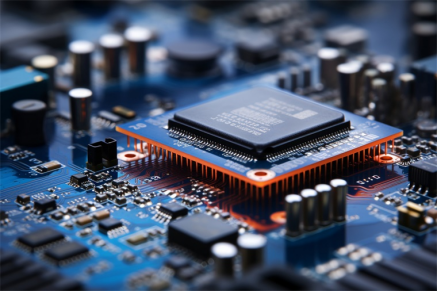
PCB Assembly Cost in modern electronics manufacturing is no longer a fixed quotation item. It is a structured outcome of PCB design complexity, SMT process stability, component sourcing strategy, and testing depth. In our PCBA projects at PCBA Store, we treat cost as a measurable reflection of manufacturability risk and production yield performance. For B2B buyers, PCB Assembly Cost control must start from design and supply chain decisions, not final production.
How PCB Assembly Cost Is Structured in Manufacturing
PCB Assembly Cost is formed through multiple interconnected stages rather than a single pricing point. In China’s PCBA manufacturing system, cost is typically divided into engineering setup, SMT processing, component procurement, and testing validation. Each stage carries different cost sensitivity and risk exposure.
We standardize this structure through file-based evaluation at PCBA Store Online Quote, where BOM and Gerber files are converted into production-ready cost models.
Cost Element | Main Driver | Risk Level |
Engineering setup | NRE, programming | Medium |
SMT process | Placement density | High |
Component sourcing | Supply stability | High |
Testing | AOI, ICT, FCT | High |
PCB Assembly Cost is therefore directly linked to production risk distribution rather than simple labor calculation.
PCB Assembly Cost Calculator and Quotation System
The pcb assembly cost calculator is widely used in procurement and engineering workflows to estimate cost before production commitment. It converts design inputs into structured manufacturing pricing and helps teams compare different technical solutions.
Through our online quotation system, users can upload files for instant evaluation.
Key inputs include BOM list, PCB layer count, SMT Assembly type, testing requirements, and order volume. This improves early-stage visibility and reduces repeated engineering communication.
In practical B2B projects, this system helps identify cost drivers early, especially when design revisions still have flexibility.
SMT Assembly Cost Factors in Production
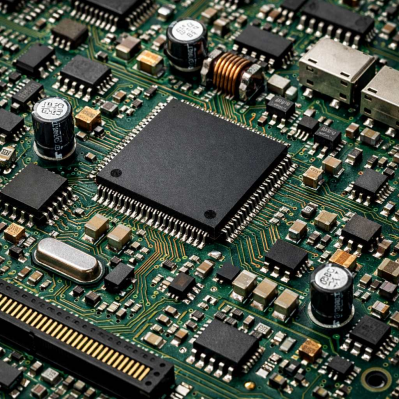
SMT Assembly Cost is one of the most sensitive components of PCB manufacturing because it reflects automation efficiency and process stability. In high-mix production environments, SMT cost is driven by machine setup, placement density, and inspection workload.
Key influencing factors include solder paste printing accuracy, stencil design quality, pick-and-place speed, reflow temperature control, and production changeover time.
High-density layouts or fine-pitch components increase SMT Assembly Cost because they require slower machine speed and more inspection steps.
SMT Factor | Cost Impact | Explanation |
High-density layout | High | Reduced placement efficiency |
Standard SMT board | Low | Stable automated production |
Fine-pitch ICs | High | Higher inspection demand |
Mixed SMT + THT | Medium | Dual process handling |
Even small layout optimizations at the design stage can significantly reduce SMT Assembly Cost without affecting performance.
BGA and High-Density Component Cost Impact
BGA, QFN, and similar high-density packages increase PCB Assembly Cost due to inspection complexity and hidden solder joints. Unlike standard SMT components, BGA connections cannot be visually inspected, requiring X-ray validation.
Cost drivers include X-ray inspection per batch, lower first-pass yield, higher rework difficulty, and thermal profile tuning for reliability.
These requirements are especially common in industrial control, automotive electronics, and communication systems, where failure risk must be minimized.
Testing and Quality Control Cost Structure
Testing is a critical cost component because it directly affects product reliability and field failure risk. At PCBA Store Capabilities, we integrate multiple testing layers based on product application requirements.
Common testing methods include AOI, ICT, and FCT, each serving different validation levels.
Test Type | Cost Level | Function | Risk Reduction |
AOI | Low | Visual defect detection | Medium |
ICT | Medium | Circuit validation | High |
FCT | High | Functional verification | Very High |
Testing increases PCB Assembly Cost but significantly reduces long-term failure and warranty risks, which is essential in B2B procurement decisions.

Component Procurement and Supply Chain Risk
Component sourcing is one of the most variable factors affecting PCB Assembly Cost. Market fluctuations, supply shortages, and lead time instability directly influence total manufacturing cost.
Key risks include IC price volatility, long lead-time components, discontinued parts replacement, and MOQ restrictions.
In real production planning, supply chain stability is often more important than lowest unit price, especially for long lifecycle industrial products.
PCB Design Complexity and Cost Influence
PCB design has a direct impact on SMT workload and overall assembly cost. Higher layer counts, dense routing, and fine via structures increase production difficulty and inspection requirements.
Cost increases come from longer SMT programming time, higher inspection frequency, more complex material handling, and higher rework probability.
Early-stage DFM optimization is one of the most effective ways to reduce SMT Assembly Cost while maintaining performance requirements.
Prototype vs Mass Production Cost Structure
PCB Assembly Cost behaves differently between prototype and mass production stages. Prototype builds carry higher setup cost per unit, while mass production distributes engineering cost across volume.
Stage | Unit Cost | Setup Impact | Risk Level |
Prototype | High | High | High |
Pilot Run | Medium | Medium | Medium |
Mass Production | Low | Low | Controlled |
This structure explains why early engineering decisions have long-term cost impact on production economics.
China PCB Assembly Manufacturing Advantage
China PCB manufacturing provides structural cost advantages through integrated supply chains, mature SMT automation, and scalable production capacity. At PCBA Store, we combine these advantages with standardized process control to ensure consistent output quality.
For global B2B buyers, the key advantage is not only cost efficiency but also predictable scalability and stable delivery performance across production volumes.
PCB Assembly Cost Calculator for Engineering Teams
The pcb assembly cost calculator is widely used for early-stage engineering evaluation. It allows comparison of multiple design options and helps identify cost impact before final production decisions.
By uploading design files, users can receive instant SMT Assembly Cost estimation and full PCB Assembly Cost breakdown.
This reduces iteration cycles between engineering and procurement teams and improves decision efficiency.
Why PCBA Store Supports Cost Transparency
We operate a manufacturing-focused PCBA system with emphasis on cost transparency, engineering validation, and production stability. Our SMT lines, testing systems, and supply chain integration support projects from prototype to mass production.
We encourage users to upload BOM and Gerber files for real-time quotation and evaluation at PCBA Store.
This ensures cost estimation is aligned with real manufacturing conditions rather than theoretical assumptions.
Conclusion
PCB Assembly Cost optimization requires coordinated control of design structure, SMT process stability, and supply chain management. At PCBA Store, we support B2B clients with transparent quotation systems, scalable SMT manufacturing, and engineering-driven cost control.
For fast evaluation, upload your files or use the pcb assembly cost calculator.
FAQ: PCB Assembly Cost Control and Risk Management
What factors most influence PCB Assembly Cost?
PCB complexity, SMT density, component sourcing stability, and testing depth are the main drivers of PCB Assembly Cost in real production environments.
Why does SMT Assembly Cost vary between projects?
SMT Assembly Cost changes based on placement density, component type, machine setup time, and inspection requirements, especially for fine-pitch designs.
How reliable is a pcb assembly cost calculator?
A pcb assembly cost calculator provides accurate early-stage estimates, but the final cost depends on component availability and production scheduling conditions.
Why does testing increase PCB Assembly Cost?
Testing ensures reliability and reduces field failure risk. AOI, ICT, and FCT processes add cost but prevent long-term maintenance and warranty losses.
How can PCB Assembly Cost be reduced effectively?
Cost can be optimized through early DFM optimization, component standardization, layout simplification, and supply chain planning without reducing reliability.
Previous article:What Is Reflow Soldering and How It Works in PCB Assembly



