General, quoting & support.
Add: Building E, No.58, Nanchang Road, Xixiang , Baoan District Shenzhen City, Guangdong, China
Tel : 0755-27348887
Fax : 0755-27349876
E-mail : svc@pcbastore.com

SMT PCB Assembly Process Explained Step by Step
PCBA Store / 2026-07-02
Contents [hide]
Introduction
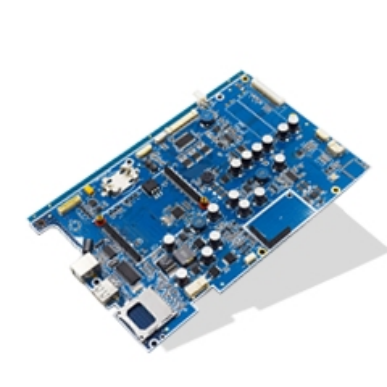
SMT PCB Assembly is a core manufacturing process in electronics production where electronic components are mounted directly onto SMT boards to form a fully functional SMT PCBA. For B2B buyers, this process directly impacts product reliability, production yield, and long-term supply chain stability. At PCBA Store, we build our SMT production system around automation, IPC standards, and full-process quality control to support global OEM and ODM customers.
SMT PCB Assembly Process Overview in B2B Manufacturing
SMT PCB Assembly is a structured production flow that converts a bare SMT PCB board into a tested and shipment-ready SMT PCBA. Each stage is designed to reduce defect risk, stabilize yield, and control SMT assembly cost for scalable production.
To support early-stage planning, we provide SMT assembly quote evaluation and internal SMT calculator-based cost estimation before production starts. Buyers can upload files directly for fast engineering feedback.
Step 1: PCB File Review and DFM Engineering Validation
Step 1 ensures the design is manufacturable before entering production.
Key engineering checks include:
· Gerber file and stack-up verification for SMT PCB boards
· Design for Manufacturability (DFM) analysis
· BOM validation for SMT component compatibility
· Pad design and footprint alignment review
This step reduces production risk and ensures SMT PCB board readiness for assembly.
Step 2: Incoming PCB and Component Quality Inspection (IQC)
Step 2 focuses on material control before SMT production begins.
Quality control includes:
· PCB warpage, copper thickness, and surface finish inspection
· SMT component authenticity verification
· Moisture sensitivity level (MSL) control
· ESD-safe handling and storage management
This ensures only qualified materials enter the SMT production line.
Step 3: Solder Paste Printing for SMT PCB Board Accuracy
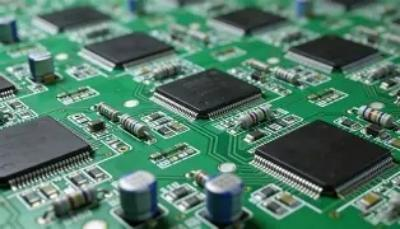
Step 3 determines solder joint quality in later stages.
Process controls include:
· Laser-cut stencil alignment for SMT PCB board precision
· Solder paste viscosity and temperature control
· Printing pressure and speed calibration
· SPI (Solder Paste Inspection) for volume accuracy
Accurate solder paste printing is essential for stable SMT PCBA performance.
Step 4: Pick and Place SMT Component Assembly
Step 4 is the core automation stage of SMT PCB Assembly.
Key operations include:
· High-speed automated component placement based on CAD data
· Precision mounting of resistors, capacitors, ICs, and BGAs
· Vision system alignment correction
· Real-time placement verification
This step defines circuit density and electrical stability of the SMT PCBA.
Step 5: Reflow Soldering and Thermal Profile Control
Step 5 permanently bonds components to SMT boards through controlled heating.
Key process parameters include:
· Multi-zone temperature curve (preheat, soak, reflow, cooling)
· Nitrogen protection to reduce oxidation
· Controlled thermal ramp for sensitive components
· Stable cooling to prevent micro-cracks
Proper thermal control ensures long-term SMT PCBA reliability.
Step 6: AOI and X-Ray Inspection for SMT PCBA Quality Control
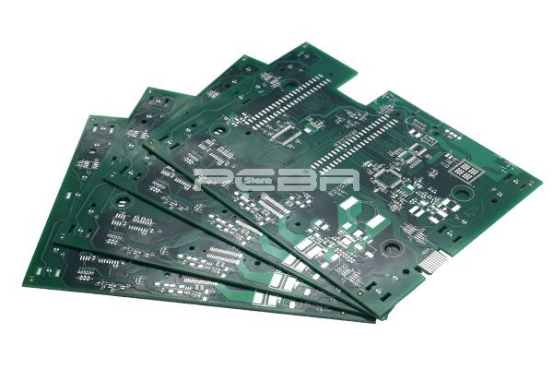
Step 6 detects assembly defects after reflow soldering.
Inspection coverage includes:
· AOI for missing components, misalignment, and polarity issues
· X-Ray inspection for BGA hidden solder joint defects
· Solder bridge and short circuit detection
· Void analysis in internal joints
This ensures high-precision quality control before functional testing.
Step 7: Functional Testing and Electrical Verification
Step 7 validates the real-world performance of the SMT PCBA.
Testing scope includes:
· Power-on voltage and stability testing
· Signal continuity and circuit integrity checks
· Load testing under working conditions
· Firmware programming validation when required
This ensures SMT PCB boards meet end-product application requirements.
Step 8: Cleaning, ESD Protection, and Final Packaging
Step 8 prepares SMT PCBA for global shipment.
Key processes include:
· Flux residue cleaning using deionized water or ultrasonic methods
· Ionic contamination control
· Anti-static packaging for SMT boards
· Moisture barrier packaging for export logistics
This step ensures long-distance transportation reliability.
SMT Assembly Cost Structure and Quotation System
SMT assembly cost is determined by multiple engineering and production variables. Our SMT assembly quote system evaluates:
Cost Factor | Impact on SMT Assembly Cost |
PCB layer count | Higher complexity increases cost |
Component density | More SMT parts increase placement time |
BOM sourcing difficulty | Rare parts increase procurement cost |
Order volume | Higher volume reduces unit cost |
Testing requirements | Functional testing increases labor cost |
We also use an internal SMT calculator model to support early-stage cost estimation, helping buyers reduce budget uncertainty before production.
Quality Control System for SMT PCB Manufacturing
A stable SMT PCBA process requires full-process quality management rather than single inspection points.
Key systems include:
· IPC-A-610 international assembly standard compliance
· Full traceability from SMT PCB board to final shipment
· Batch-level defect tracking system
· Supplier qualification and audit control
These systems ensure consistent quality for global B2B production.
Why China SMT PCB Assembly Services Are Widely Used
China remains a global hub for SMT PCB Assembly due to its integrated manufacturing ecosystem.
Key advantages include:
· Large-scale SMT production capacity
· Mature automation equipment for SMT PCBA lines
· Strong supply chain integration for components
· Competitive and transparent SMT assembly cost structure
As a China-based manufacturer, we support global clients with fast quotation response and scalable production capability.
Conclusion: SMT PCB Assembly as a Controlled Engineering System
SMT PCB Assembly is a structured engineering process that transforms SMT PCB boards into fully tested SMT PCBAs through precise printing, automated placement, thermal control, and multi-stage inspection. At PCBA Store, we focus on stable yield, transparent SMT assembly quote systems, and reliable manufacturing support for global B2B buyers.
Upload your BOM or PCB file for fast quotation.
FAQ
What factors affect SMT assembly cost?
SMT assembly cost depends on PCB complexity, component density, BOM sourcing difficulty, production volume, and testing requirements.
How is SMT assembly quote calculated?
An SMT assembly quote is based on PCB design files, BOM data, component sourcing, and production parameters.
What is the difference between SMT boards and SMT PCBA?
SMT boards refer to bare PCBs designed for surface mounting, while SMT PCBA refers to fully assembled and tested circuit boards.
Can SMT calculator accurately estimate production cost?
An SMT calculator provides early-stage cost estimation, but final SMT assembly cost depends on engineering validation and BOM confirmation.
What quality risks are controlled in SMT PCB Assembly?
Key risks include solder defects, misalignment, thermal stress, and hidden joint failures, controlled through AOI, X-Ray, and functional testing.



