General, quoting & support.
Add: Building E, No.58, Nanchang Road, Xixiang , Baoan District Shenzhen City, Guangdong, China
Tel : 0755-27348887
Fax : 0755-27349876
E-mail : svc@pcbastore.com

What Makes AI Robot PCB Assembly Reliable for Next-Generation Robotics?
PCBA Store / 2026-08-06
Contents [hide]
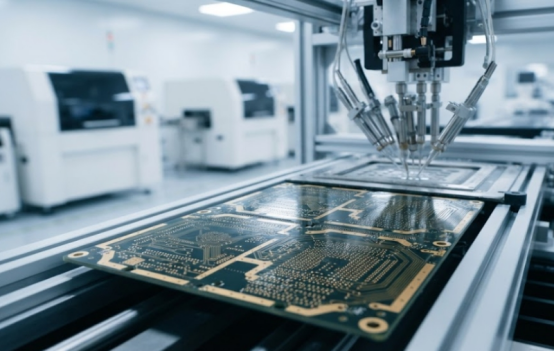
What Does a PCBA Mean in AI Robotics?
AI robots depend on reliable electronic systems to control movement, process data, and connect different hardware components. Understanding what a PCBA is helps explain why these assemblies are essential in modern robotics. A well-designed PCBA integrates processors, sensors, power units, and communication modules into a stable platform. From an AI robot sensor module PCB to complete control systems, every board affects robot accuracy and safety. Advanced AI robot PCB manufacturing ensures precise assembly, consistent quality, and long-term performance for next-generation robotic applications.
Core Requirements of Reliable AI Robot PCB Manufacturing
Electrical Stability for High-Performance Robotics
Trustworthy AI robotics PCB manufacturing always focuses on stable electrical performance. Signal clarity, power distribution, and heat control are three critical factors that affect robotic systems. Smart processors, motor drivers, and wireless modules need clean power and proper grounding to avoid failures caused by noise or interference.
PCBA Store can produce complex structures like buried and blind holes. PCBA Store also make laser drilled microvias boards (HDI) and handles heavy copper up to 30 oz. PCBA Store builds via-in-pad, microwave & RF boards, and Rigid-flex boards using state-of-the-art PCB equipment. They matter greatly when engineers pack heavy currents and dense wiring into a single small layout.
Mechanical Durability in Dynamic Robot Applications
Automated machines are constantly moving. They endure daily vibrations, sudden shocks, and constant cable pulling. They also face shifting temperatures. For factory robots, tough solder joints are necessary. Weak builds usually break near heavy parts or hot sections.
Lasting success in AI robotics PCB manufacturing relies on excellent stack-up strength. It also requires uniform solder connections and firm mounting hardware to survive years of hard work.
Precision and Consistency Across Production Runs
A machine might perform perfectly in a testing lab. However, it will fail in the market if mass production lacks consistency. Strict rules for pad alignment and solder paste application are crucial. Careful placement checks ensure high quality from the first test unit to the final retail batch.
PCBA Store possesses advanced capabilities for SMT assembly, through-hole, and mixed technology PCB assemblies. This allows PCBA Store to handle all customer needs efficiently in one place. For robotic designs, this wide range of skills is highly beneficial.
Why AI Robotics PCB Manufacturing Demands Specialized Processes?
The Challenge of Dense and Complex Board Designs
Hardware for automation usually packs processors and memory into very tight spaces. They also include power stages and wireless chips. This density makes AI robot PCB manufacturing much more difficult than building normal household gadgets.
Crowded wiring layouts increase the chances of signal interference. They also trap unwanted heat. Small parts and closely placed pads demand strict factory rules. Standards like High quality with IPC class 3 are necessary. Handling Fine pitch like LCC, BGA, and QFN is especially critical for modern automation hardware.
Integration of Control, Power, and Communication Circuits
One single machine might feature battery managers and edge computing chips. It could also have motor drivers and wireless networks spread across several boards. Close teamwork between designers and factory workers improves the final product. Component placement, heat routing, and connector angles all deeply impact how well the device runs.
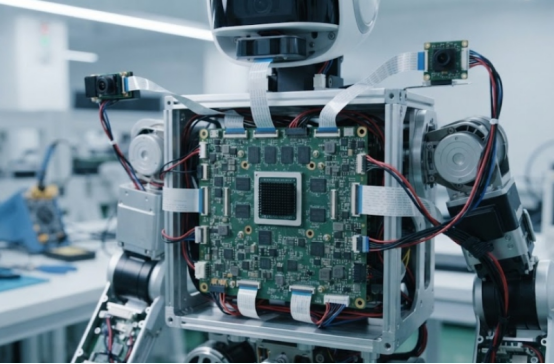
The Role of AI Robot Sensor Module PCB in Robotic Accuracy
An AI robot sensor module PCB acts as the base for gathering environmental data. It connects cameras, pressure monitors, and LiDAR systems. The accuracy of these sensors relies heavily on a clean surface. It also depends on proper grounding, careful shielding, and perfect part placement.
Proper construction of these modules gives the machine better navigation skills. It improves object tracking and daily choices. In smart networks, the quality of incoming data shapes every single physical movement that follows.
How Double-Sided PCB Assembly Supports Compact Robotic Design?
Why Double-Sided Layouts Are Common in Robotics?
The practice of double-sided PCB assembly is very popular today. Tech companies constantly want their products to be lighter and much smaller. Putting parts on both surfaces helps engineers save valuable space. This method easily fits complex features into tiny drones and smart service machines.
Saving space shrinks the outer plastic shell. It also balances the overall weight. This approach gives designers far more freedom during the drafting phase.
Reliability Considerations in Double-Sided Assembly
A sturdy two-sided board needs careful part balancing and exact oven temperatures. Strong solder connections are mandatory. These strict rules prevent common issues like heat stress and solder bridging. This is especially true when one surface holds delicate logic chips while the reverse side carries heavy power plugs.
Why BGA PCBA Matters for Advanced AI Processing Boards?
BGA PCBA plays an important role in advanced AI processing boards by supporting high-speed data transmission and compact hardware designs. The BGA PCBA technology allows processors and memory chips to achieve more connections within limited space, making it suitable for machine vision, robotics, and intelligent control systems. Reliable assembly requires precise placement, accurate soldering, and strict inspection methods. Advanced processes such as stencil printing, X-ray inspection, and automated placement help detect hidden defects and improve the long-term stability of AI electronic systems.
Prototype PCB Assembly and the Path to Scalable Robotics Production
Why Prototyping Is Essential for Robotics Development?
Using prototype PCB assembly lets engineering teams check electrical limits and heat levels early on. They can also verify the physical fit before starting mass manufacturing. Testing early lowers financial risks. It uncovers hidden problems that computer models usually miss completely.
PCBAStore offers rapid PCB prototyping services for quick-turn PCBs at high quality and low cost. This approach ensures you get your hardware fast. It also keeps your project highly accurate and very budget-friendly.
Moving Smoothly From Prototype to Volume Manufacturing
Growing a project requires clear paperwork and smart part sourcing. Small pilot runs are also necessary. Getting feedback early from the factory floor boosts the final success rate. It stops costly delays caused by missing parts or overly complex layouts.

Choosing a Reliable Partner for AI Robotics PCB Manufacturing
Technical Capabilities That Support Long-Term Reliability
A solid factory partner needs deep experience with an AI robot sensor module PCB. They must excel at BGA PCBAs and double-sided PCB assembly. Furthermore, they should offer excellent prototype PCB assembly. Clear factory rules and honest engineering advice prevent expensive mistakes before the official launch.
Signs of a Manufacturing Partner Worth Trusting
Seek out factories that reply quickly and offer helpful design tips. They should possess great testing tools and deliver on time. A friendly working relationship makes future hardware upgrades much smoother.
FAQs
What is a PCBA and how is it different from a PCB?
A bare board without parts is just a PCB. Once workers attach and solder all the chips, it becomes a PCBA.
Why is AI robot PCB manufacturing more demanding than standard electronics assembly?
Smart machines pack heavy computing chips and motor drivers into very small cases. They also include power wires and wireless tools. This tight fit demands much stricter rules for heat control. It also requires tougher physical strength and better testing.
Why is an AI robot sensor module PCB so important?
This specific board acts as the eyes and ears of the machine. If it suffers from electrical noise or dirt, the machine will gather bad data. Bad data leads to terrible navigation choices and poor obstacle tracking.
When should I choose double-sided PCB assembly?
Pick this method when your project requires many features but lacks physical space. It works perfectly for small flying drones and tiny service machines.
Why is prototype PCB assembly essential before mass production?
Building a test unit lets engineers check the heat levels and physical fit. It ensures the design actually works before spending money on huge orders.



