General, quoting & support.
Add: Building E, No.58, Nanchang Road, Xixiang , Baoan District Shenzhen City, Guangdong, China
Tel : 0755-27348887
Fax : 0755-27349876
E-mail : svc@pcbastore.com

A Deeper Dive into PCBA Testing: Ensuring Mission-Critical Reliability in PCB Assembly
PCBA Store / 2026-03-20
Contents [hide]
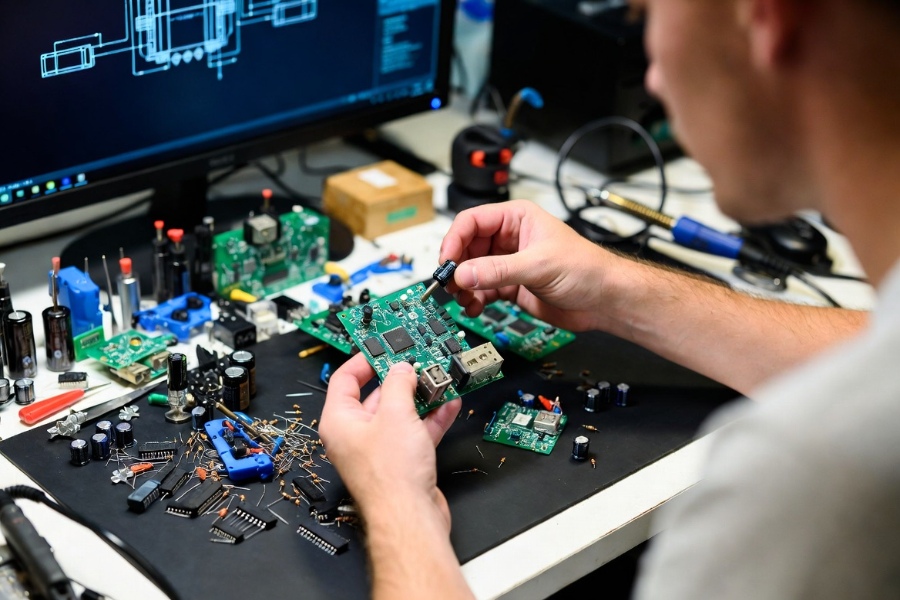
In the demanding area of PCB production, even one weak solder connection or a tiny electrical short can cause major product pullbacks and lasting harm to a company's image. As a skilled electronics manufacturer, we at PCBA Store know that PCB quality testing goes beyond a simple term. It comes from a careful, step-by-step testing setup. For our business clients, the building stage marks just the start. The real worth shows in how we confirm that each board from our plant will run smoothly in its final setting.
This close look covers the detailed testing methods we use at PCBA Store. We apply them to make sure your plans turn into dependable, strong hardware.
The Foundation of Quality: Why Testing Cannot Be an Afterthought
In today's PCBA production, the move to smaller sizes—with parts like 01005 components or very narrow pitch BGAs—has made hand checks almost unworkable. When you team up with us, you gain more than just building services. You get a safeguard against breakdowns. Testing plays three key roles:
· Defect Detection: Spotting problems such as bridges, gaps, or absent parts before they enter the casing.
· Process Optimization: Drawing on test results to adjust our SMT lines. This leads to better output for later groups.
· Long-term Reliability: Mimicking real-world pressures to make sure the item holds up after months in use.
Automated Optical Inspection (AOI): The First Line of Defense
At PCBA Store, we build Automated Optical Inspection (AOI) into several points along our PCB assembly production path. We use clear 2D and 3D cameras. These pair with smart image programs, ensuring that every PCB goes through automated optical inspection to catch defects. Our AOI setups match your boards to a reference Golden Board or CAD files right away.
AOI avoids the tiredness that affects people doing checks. It delivers full steadiness every time. It shines at finding:
· Parts out of place or showing tombstoning.
· Wrong part sizes or wrong directions.
· Too little or too much solder paste.
· Solder bridges and shorts.
For our B2B customers, this setup means large orders still get a close-up review. Manual work cannot reach that level.
Automated X-Ray Inspection (AXI): Seeing the Unseen
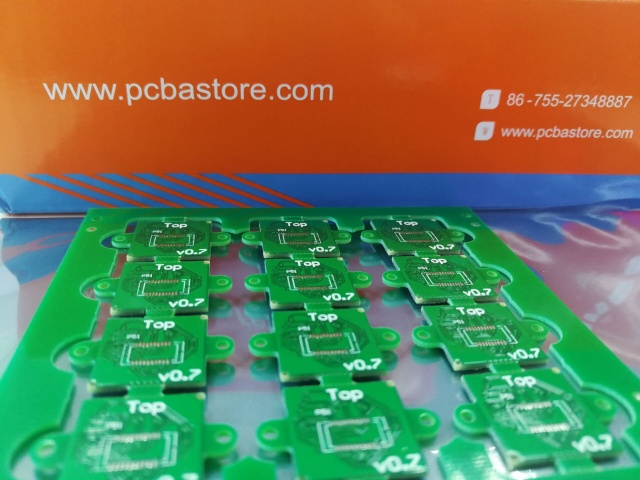
Designs grow more intricate these days. Parts like Ball Grid Arrays (BGA) and Quad Flat No-leads (QFN) keep their solder spots under the chip. That is when our AXI tools prove essential.
X-ray checks let our experts look inside the silicon and wraps. They examine the strength of covered solder balls. We check for inside gaps, links between hidden spots, and head-in-pillow issues. Optical tools miss those. In fields like health care and air travel, where breakdowns cost too much, X-ray checks form a must-have for build checks.
In-Circuit Testing (ICT) and Flying Probe: Electrical Verification
AOI and X-ray handle the build side. But ICT and Flying Probe handle the electrical side.
Feature | In-Circuit Test (ICT) | Flying Probe Test |
Setup Cost | High (Requires custom “Bed of Nails”) | Low (No custom fixtures) |
Test Speed | Very Fast (Seconds per board) | Slower (Minutes per board) |
Best For | High-volume production | Prototypes & Small batches |
Coverage | Comprehensive (Passive & Active) | High precision for dense boards |
At PCBA Store, we suggest ICT for partners with ongoing large orders. The reason is clear. Once the setup tool exists, it cuts the cost per check to the lowest. For quick sample making and small runs of tricky boards, our Flying Probe options give room to check without waiting for tool builds. These checks make sure every resistor, capacitor, and IC sits in place. They also confirm that each works inside its set electrical limits.
Functional Circuit Testing (FCT): The Final Exam
FCT stands as the key phase to check if the PCBA runs as planned. Here, we copy the end work conditions. We supply power and input signs to the board.
We team up tightly with customers. Together, we create special FCT tools and program steps. This could mean testing a signal module's power or checking a power circuit's output voltage. FCT proves the build fits your exact needs. At PCBA Store, we hold that a board lacks completion until it starts up well in our test space.
Reliability and Environmental Stress Testing
Some products head to tough spots, such as car sensors or factory controls, where environmental stress testing becomes crucial. For these applications, basic electrical checks fall short. We conduct thermal cycling and vibration testing to ensure PCB reliability in harsh conditions. We supply forward reliability tests, such as:
· Burn-in Testing: Powering the boards at higher temperatures for 24–72 hours. This spot early breakdowns.
· Thermal Cycling: Exposing the PCBA to quick heat changes. This tests solder joint toughness.
· Vibration Testing: Confirming the build handles shakes from shipping or machine work.
Why B2B Clients Choose PCBA Store for PCB Assembly and Testing Services
Our focus on testing pairs with our full production skills. We follow ISO 9001 rules. We also meet IPC-A-610 Class 2 and 3 standards. This covers every part of your PCB. From the base material to the last protective layer, it all hits world measures.
We offer a complete service under one roof. We manage part buying to end FCT checks in house. This cuts out finger-pointing across sellers. When a shipment arrives from PCBA Store, it brings a product that has undergone full review, power-up, and proof.
FAQ
What is the difference between ICT and Functional Testing?
ICT, or In-Circuit Test, looks at single parts like resistors, caps, and shorts on the board. It checks if they got soldered right and hold the correct values. Functional Testing, or FCT, turns on the full board. It sees if the whole thing does its job, such as handling data or starting a motor. ICT spots build errors. FCT shows the board works as one unit.
Is X-ray testing necessary for every project?
It varies depending on your parts. If your plan includes BGAs, QFNs, or other bottom-ended pieces with hidden solder spots, X-ray helps a lot. For basic boards with only seen leads, AOI and eye checks often work well enough for quality.
Can PCBA Store help design the test fixtures for my project?
Yes. We work side by side with customers. We build special FCT holders and ICT bed-of-nails tools from your drawings and needs. Share clear test spots and hoped-for input-output during planning. This makes the work smoother.
How does PCBA Store ensure that components are not counterfeit?
Quality begins at the source. We get parts from approved sellers. We run a tight check on suppliers. Our entry quality review includes looks and, when needed, lab proofs. This makes sure each chip on your board is real and fits the marks.
Why should I choose ICT over Flying Probe for high-volume orders?
ICT costs more at first for the special tool. But each board test runs in seconds. For big runs of thousands, that speed drops the full production expense. Flying Probe bends more but takes longer. So it costs more for mass production.
You Might Like:
PCBA Manufacturing Process: Full-Step Guide to PCB Assembly, Testing & Delivery
How X-Ray Inspection Detects Hidden Defects in PCB Assemblies
How Flying Probe Testing Works for PCB Assembly
How to Test a Circuit Board: A Comprehensive Troubleshooting Guide



